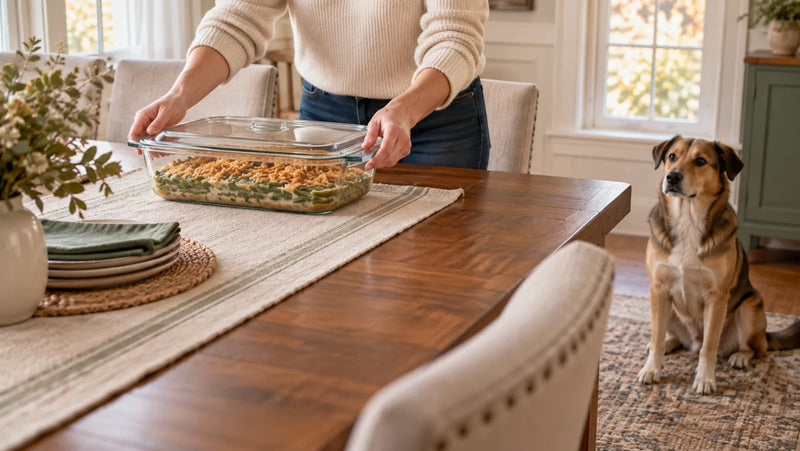

Can dogs eat rice? Yes—many dogs can eat a small amount of fully cooked, plain white or brown rice. Serve it without butter, oil, salt, broth, sauces, onion, garlic, or other seasoning. Introduce it slowly, measure it with every other extra, and keep complete and balanced dog food at the center of the diet.
Rice beside a healthy dog's regular food is one decision. Rice during diarrhea is another. The familiar chicken-and-white-rice combination is a traditional short-term transition that a veterinarian may use in a specific case; it is not a complete long-term meal, an automatic diarrhea cure, or a substitute for finding out why a dog stays sick.
Can Dogs Eat Rice? The Quick Answer
- Plain cooked white rice: often the easiest form to digest, but it can raise blood glucose faster than brown rice.
- Plain cooked brown rice: safe for many dogs, though its outer layer and extra fiber can make it harder for some dogs to digest.
- Seasoned, buttery, fried, or sauced rice: skip it. A mixed dish is no longer simply rice.
- Rice for an upset stomach: use only within a veterinarian's plan; do not let a bland bowl delay care for persistent or serious signs.
- Rice for a diabetic dog or a dog on a prescription diet: ask the veterinary team before changing the food, amount, or timing.
The American Kennel Club's rice guidance supports a qualified yes, water-only preparation, gradual introduction, and a real difference between white and brown rice. The dog's health, existing food, and reason for offering rice still decide whether it fits.
White Rice vs Brown Rice for Dogs
Both start as rice, but processing changes their texture and digestion. White rice has had the outer layers removed. It cooks soft, has less fiber, and is commonly chosen when a veterinarian wants an easily digested starch. That does not make it a medicine or a complete meal.
Brown rice retains its seed coat. AKC notes that this outer layer holds nutrients but can also make brown rice harder to digest. A healthy dog that already tolerates brown rice may do well with a small plain serving. A dog with active gastrointestinal signs may receive a different recommendation.
| Question | Plain white rice | Plain brown rice |
|---|---|---|
| Texture after cooking | Soft and low in fiber | Chewier with the outer layer retained |
| Digestive fit | Often easier to digest | May be harder for a sensitive stomach |
| Blood-glucose consideration | Higher glycemic index | Not an automatic diabetes-safe swap |
| Best use | A small, plain, veterinarian-approved extra that fits the whole diet | |
There is no universal winner. “Brown is healthier” is too simple for a dog recovering from stomach upset, and “white is bland” does not make unlimited white rice harmless. Either form contributes calories and can crowd out complete food if the portion grows.
How to Cook Rice for a Dog
- Use one plain rice ingredient. Avoid instant packets and mixes with flavoring already added.
- Cook it fully in water. Follow the package's water and cooking directions until the grains are soft; do not serve raw or crunchy rice.
- Separate the dog's portion first. Move a small amount to a clean dish before butter, oil, salt, stock, soy sauce, gravy, or seasoning reaches the human batch.
- Cool it before serving. The rice should be comfortable to touch, never steaming hot.
- Measure the finished rice. A spoon is more useful than an overflowing bowl because it keeps an optional extra visibly secondary.
Water-only cooking is the clearest default. “Chicken broth” on the front of a carton does not reveal its sodium, onion, garlic, fat, or other ingredients. Do not use broth or bouillon unless the complete ingredient list fits the dog's veterinary plan.
How Much Rice Can a Dog Eat?
There is no responsible scoop chart that works for every dog. Calorie need changes with body size, body condition, age, activity, neuter status, current food, and health. Rice also has to share space with every biscuit, chew, topper, table scrap, dental reward, and training treat.
The amounts below are cautious first tastes for a healthy adult whose veterinarian has not restricted new foods. They are not prescriptions, targets, or daily maximums. Start with less when the dog is a gulper, has a sensitive history, or has never eaten rice.
| Dog profile | Cautious first taste | How to serve |
|---|---|---|
| Extra-small or small adult | Up to 1 teaspoon | Plain, soft, cool, and separate from other new foods |
| Medium adult | Up to 1 tablespoon | Offer less first if the dog eats quickly |
| Large adult | Up to 2 tablespoons | Still an extra, not a rice bowl or meal replacement |
The WSAVA treat guide recommends that all treats and extras together provide less than 10% of a dog's daily calories, leaving at least 90% for complete and balanced food. Our daily dog-treat calorie guide explains how one shared extras budget works. Rice does not get a separate allowance just because it came from the dinner pot instead of a dog-treat bag.

Chicken and Rice for Dogs With Diarrhea: Short Term, Not a Cure
Boiled skinless chicken breast with cooked white rice is the traditional home-prepared “bland diet.” The idea was to provide familiar, easily digested ingredients in small meals while a dog recovered from a mild gastrointestinal episode. It was never meant to become a nutritionally complete everyday menu.
Veterinary nutrition guidance has moved beyond treating that recipe as the universal default. VCA's bland-diet instructions explain that chicken and white rice is not complete or balanced, lacks multiple essential nutrients, varies in calories with the cut and ratio, and adds food-safety and transition problems. VCA notes that a complete, balanced veterinary gastrointestinal diet may be a better option.
The Merck Veterinary Manual's digestive-disorder guidance places bland food inside veterinary management: small amounts may be introduced after vomiting has stopped, recurrence should prompt a call, and the normal diet is gradually reintroduced when the dog can tolerate food. That is different from choosing a home recipe, ratio, and duration without knowing the cause.
- Ask first. Diarrhea can have dietary, parasitic, infectious, inflammatory, toxic, foreign-body, medication, and other causes that rice cannot diagnose.
- Do not assume chicken fits. It may conflict with a known food reaction, elimination trial, pancreatitis plan, kidney diet, or other medical restriction.
- Do not improvise a long course. The veterinary team should choose the food, amount, meal frequency, and transition back.
- Keep chicken fully cooked and unseasoned. If a veterinarian specifically approves the traditional combination, food safety still matters.
When Diarrhea Needs a Veterinarian
Persistent, recurrent, or worsening diarrhea deserves veterinary attention. Call sooner when stool contains fresh blood or looks black and tarry, or when diarrhea comes with repeated vomiting, inability to keep water down, marked lethargy, weakness, belly pain or swelling, appetite loss, dehydration, fever, weight loss, or a known toxin or foreign-object exposure.
Puppies, seniors, very small dogs, diabetic dogs, and dogs with kidney, liver, pancreatic, intestinal, immune, or other chronic disease can have less room for dehydration or dietary improvisation. A dog that strains without passing stool, repeatedly retches without producing vomit, collapses, has pale or blue gums, or has trouble breathing needs urgent veterinary care.
Do not withhold water, force-feed rice, start a fast, or give human antidiarrheals, pain relievers, antibiotics, supplements, or leftover prescriptions unless the veterinary team gives case-specific directions. A change in stool after rice does not prove that the underlying cause is resolved.
Rice for Dogs With Diabetes or a Prescription Diet
AKC notes that white rice has a higher glycemic index than brown rice and can raise blood sugar more quickly. That is a reason for veterinary oversight, not a reason to make an unsupervised white-to-brown substitution. Fiber, total carbohydrates, calories, insulin timing, current glucose control, and the rest of the diet all matter.
AAHA's canine diabetes management guidelines emphasize a complete and balanced diet given at consistent times and in consistent amounts. Do not add a variable spoonful of rice, remove the prescribed food, or change insulin because of something read in a general article. Ask the veterinarian who manages the diabetes.
The same pause applies to a prescription gastrointestinal, kidney, urinary, low-fat, hydrolyzed, elimination, weight-loss, or other therapeutic diet. “Plain” describes the rice; it does not guarantee compatibility with a medical plan.
Rice Dishes Dogs Should Skip
Fried rice, takeout rice, and seasoned packets
These can contain oil, butter, high sodium, sauces, onion, garlic, spice blends, meat drippings, or several ingredients at once. Picking out the visible vegetables does not turn the remaining rice back into plain rice.
Rice pudding, sweet rice, and dairy-heavy dishes
Sugar, cream, milk, butter, raisins, sweeteners, and flavorings change both calories and safety. Do not use dessert rice as a dog treat, even if the dog tolerates plain cooked rice.
Sushi rice and mixed dishes
Sushi rice is commonly seasoned, and a finished roll may add raw fish, sauces, avocado, fried components, or other ingredients that each require a separate decision. Evaluate the whole dish, not the grain alone.
Raw, undercooked, spoiled, or moldy rice
Rice should be fully cooked and fresh. Hard undercooked grains are not the texture evaluated in plain-cooked-rice guidance. Discard rice with an off odor, visible mold, unusual slime, pests, or questionable storage rather than testing it on the dog.
How to Introduce Plain Rice and Watch Tolerance
- Confirm that a new human food does not conflict with the dog's veterinary diet.
- Choose one plain, fully cooked rice and offer less than the size-based first-taste amount.
- Do not introduce chicken, broth, butter, vegetables, supplements, or another new treat in the same test.
- Watch appetite, comfort, vomiting, stool, gas, and energy over the next day or two.
- Stop and call the veterinarian if signs are persistent, worsening, painful, or otherwise concerning.
Our step-by-step new-treat introduction method explains why one change at a time produces a more useful tolerance check. A dog that is undergoing an elimination trial should receive no rice or other extra unless the veterinarian approves it.
Rice vs Sensitive-Stomach Dog Treats
This page answers whether rice itself is safe and how its form, amount, and medical context change the answer. It does not choose a purpose-made reward for a dog with a sensitive history. That separate job belongs to our sensitive-stomach dog-treat selection guide, which compares complete ingredient lists, fat and calorie information, texture, portionability, and veterinary-diet fit.
Rice is not automatically hypoallergenic, and a simple-looking bowl is not automatically more predictable than a labeled product. Use the actual dog's history and the actual ingredient list rather than a “bland” label.
Frequently Asked Questions
Can dogs eat rice every day?
A small amount may fit some healthy dogs, but daily use is not automatically helpful. It must stay inside the shared extras budget and must not displace complete food. Ask the veterinarian before making rice routine for a dog with a medical condition, weight plan, or prescription diet.
Can puppies eat rice?
A puppy may tolerate a tiny amount of plain cooked rice, but growth diets need precise nutrient balance and puppies can dehydrate quickly when ill. Do not replace puppy food with rice or use chicken-and-rice for vomiting or diarrhea without prompt veterinary direction.
Can dogs eat jasmine or basmati rice?
The variety name matters less than the final recipe. Fully cooked jasmine or basmati rice made only with water may fit in a small amount, while buttered, salted, spiced, fried, or sauced versions do not meet the plain-rice rule.
Can dogs eat rice with chicken broth?
Water is the safer default. Broth may contain substantial sodium, onion, garlic, fat, or several seasonings. Use it only when the dog's veterinarian approves the complete label and amount for that dog's plan.
Does rice stop diarrhea in dogs?
Not reliably. White rice has been used as one part of a traditional bland diet, but diarrhea has many causes and chicken-and-rice is not complete or balanced. Persistent, recurrent, worsening, bloody, painful, or otherwise concerning diarrhea needs a veterinarian, not another scoop.
Keep Rice Plain, Small, and Secondary
The safe pattern is straightforward: use fully cooked rice made with water, cool it, measure a small first taste, and count it with every other extra. Keep complete food primary, and keep rice out of any medical or diabetes plan until the veterinary team says it fits.
American Paws does not currently claim a rice-based SKU. If you prefer a purpose-made reward with a defined label, browse all current American Paws dog treats and compare the actual ingredients, calories, size, and texture with your dog's needs. Rice can be an occasional extra; it does not need to become the meal.