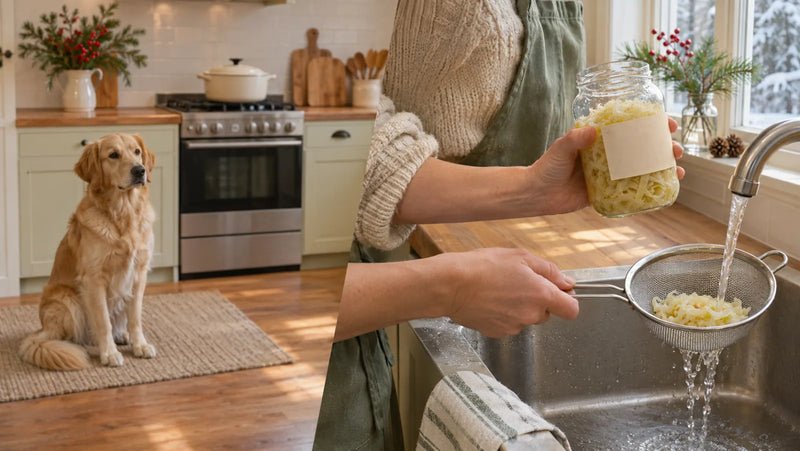

Can dogs eat scallops? Some healthy adult dogs can try one small diced bite of plain, fully cooked, shell-free scallop. Cook it without butter, oil, garlic, onion, salt, bacon, cream, sauce, or wine. Do not offer raw or undercooked scallops, shells, restaurant scallops with unknown ingredients, or a large portion.
The U.S. Food and Drug Administration recommends cooking most seafood to 145°F and describes done scallops as firm, pearly, and opaque. Let the meat cool, cut one small piece, and make that the entire first exposure. A dog on an elimination diet, a veterinary diet, or a diet that excludes seafood should not get an improvised taste.
Can Dogs Eat Scallops? Use a Five-Gate Check
A narrow yes requires all five gates to stay open:
- Eligible dog: a healthy adult with no known seafood reaction, no veterinary diet restriction, and no current digestive problem.
- Identified edible meat: the shucked scallop muscle, not shell, shell fragments, roe, viscera, or an unidentified mixed seafood piece.
- Fully cooked: 145°F as the food-safety endpoint, or firm, pearly, and opaque throughout when a thermometer is not practical.
- Completely plain: no butter, oil, garlic, onion, salt, bacon, cream, breading, sauce, wine, or pan drippings.
- One first bite: cool and dice a single small piece, then stop. There is no evidence-based universal scallop serving for dogs.
If any gate fails, skip the taste. The answer is also no when the owner cannot identify the preparation. Rinsing a restaurant scallop does not reliably remove absorbed sauce, salt, fat, garlic, onion, alcohol, or cross-contact.
How to Cook a Plain Scallop for a Dog
Buy refrigerated or frozen scallops from a source that maintains proper temperature control. The FDA's seafood selection and preparation guidance says scallop flesh should be clear with a pearl-like color and little or no odor before cooking. Discard seafood with a sour, rancid, strongly fishy, or ammonia-like odor rather than trying to cook the smell away.
- Thaw frozen scallops in the refrigerator, not on the counter.
- Keep the raw tray, juices, tongs, cutting surface, and hands away from cooked food and ready-to-eat items.
- Reserve one scallop before seasoning the family meal.
- Bake, poach, or dry-sear it in a clean pan with no fat or seasoning.
- Cook to 145°F; the center should be firm, pearly, and opaque rather than translucent.
- Move it with clean utensils to a clean plate, cool it completely, and cut one small bite.
Do not use the browned piece from a pan that already contains garlic butter or wine sauce. A plain surface does not prove the inside or underside is free of the seasoned cooking fat.
Why Raw Scallops Stay Off the Dog Menu
Raw shellfish is an avoidable exposure to microbes and handling errors. CDC guidance on preventing Vibrio infection explains that Vibrio bacteria naturally live in coastal waters and that raw or undercooked shellfish and other seafood can carry Vibrio and other germs. That page describes human public health; it is not evidence of a specific dog infection rate. It does show why raw shellfish is not a necessary pet treat.
Scallops are bivalve mollusks. The FDA's molluscan-shellfish overview explains that bivalves filter the water they inhabit and can bioaccumulate bacteria, toxins, or other contaminants present in that water. Harvest source, refrigeration, handling, and cooking all matter. Smell and appearance cannot rule out every hazard.
Parasites need a precise explanation. The 2022 FDA Food Code says parasites are not considered a significant hazard in molluscan shellfish or scallop products consisting only of the shucked adductor muscle. That is why this guide does not exaggerate common shucked scallop meat as a high-parasite product. It also does not make raw feeding sensible: bacterial pathogens, harvest controls, temperature abuse, mixed whole-scallop parts, and cross-contamination remain separate concerns.
“Sushi grade,” ceviche acid, a surface sear, or “previously frozen” is not the same as cooking a scallop fully. Freezing standards for one hazard do not erase every other hazard, and a quick sear can leave a translucent center. For a dog treat, the simplest preventable-risk choice is fully cooked, plain meat.

Remove Every Shell and Identify the Scallop Part
Never give a dog the shell. Hard, sharp fragments can cut the mouth, lodge in the throat, damage the digestive tract, or create an obstruction. Do not rely on chewing to make shell safe, and do not crush shell into food.
The round white sea scallop commonly sold in U.S. seafood cases is usually the shucked adductor muscle—the muscle that opens and closes the shell. Whole scallops, roe-on scallops, mixed seafood, and restaurant dishes may include different tissues or hidden fragments. If the part is not identified, do not feed it.
Check frozen bags and fresh trays for shell chips before and after cooking. Cut the cooled piece on a clean surface and inspect every side. A tiny shell shard is not a source of useful calcium; it is a physical hazard.
Butter, Garlic, Bacon and Wine Change the Dish
Restaurant and holiday scallops are often prepared for human flavor rather than canine simplicity. The actual recipe may include butter or oil, garlic, shallot or onion, salt, bacon, cream, cheese, wine, stock, breading, hot pepper, or a reduced sauce. Not every dish contains all of these, which is why the menu description and recipe matter.
- Butter, oil, cream, bacon, and rich sauce add fat and can cause digestive upset; dogs with a pancreatitis history or fat restriction need veterinary guidance, not a scraped-off sample.
- Garlic, onion, shallot, and chives are Alliums and do not belong in the dog portion.
- Salt and stock can make a small-looking restaurant piece much saltier than plain scallop meat.
- Wine or spirits add an alcohol question; cooking method and time cannot be guessed from the finished plate.
- Breading, skewers, toothpicks, foil, and packaging add ingredients or foreign-body hazards beyond the seafood.
If a dog already ate prepared scallops, do not wash another piece and use it as evidence that the dish was plain. Save the menu, recipe, receipt, package, or a photo and identify the amount, time, missing objects, and current symptoms for the veterinarian.
Shellfish Allergy and Food Reactions in Dogs
A dog can react to a food it has not eaten before, and prior tolerance does not guarantee lifetime tolerance. Merck Veterinary Manual explains that dogs and cats can develop an allergy to any dietary protein. Food reactions can involve vomiting, diarrhea, or itchy skin, including the ears, rear, and feet.
That does not make shellfish a common or predictable dog allergy, and an internet list cannot diagnose it. Introduce no other new food with the first scallop bite. If vomiting, diarrhea, itching, hives, facial swelling, unusual drooling, weakness, or another change follows, stop feeding and contact the veterinarian.
Facial or throat swelling, breathing difficulty, repeated vomiting, collapse, pale gums, or a seizure is an emergency. Merck's dog-owner guidance identifies anaphylaxis as a rare life-threatening immediate reaction and directs owners to emergency veterinary care. Do not give an antihistamine or another medication unless the veterinary professional managing the case provides the product and dose.
A dog in a veterinary elimination trial should receive only the approved diet, treats, flavored medicines, and toothpaste. A “tiny test” of scallop can invalidate the trial or trigger a reaction; ask the supervising veterinarian.
How Much Scallop Can a Dog Try?
There is no validated universal scallop serving for dogs. For a healthy eligible adult trying it for the first time, use one small diced bite—smaller than the dog's normal treat—and stop. A large dog does not need a whole large sea scallop to answer whether it tolerates the food.
Do not turn scallops into a meal replacement, regular topper, or training handful. The World Small Animal Veterinary Association's nutrition guidance says treats should remain at no more than about 10% of daily calories. The guide to building a daily dog-treat calorie budget shows why every table taste, chew, and training reward uses the same allowance.
Scallop size, added water, sodium, recipe, and calories vary by product and preparation, so this article publishes no nutrient or calorie number. Complete and balanced dog food stays primary. Scallop is optional.
Scallops Are Not Shrimp, Crab or Lobster
Shellfish do not share one preparation rule. Shrimp has legs, shell, and tail that must be removed; the guide to plain cooked peeled shrimp for dogs covers that form. Crab adds hard shell and imitation-crab questions, handled in the guide to plain cooked crab meat versus shell and imitation crab.
Lobster adds a large hard shell, tomalley questions, and the familiar butter service; the guide to plain cooked lobster meat for dogs keeps those risks separate. A dog tolerating one shellfish does not prove it will tolerate another.
Fish and Seafood Need Species-Specific Rules
The broader fish safety guide for dogs compares cooked boneless fish, raw-fish infection, bones, species, and portions. It is the species-level starting point, while this article stays with scallop form and shellfish preparation.
Raw Pacific salmon has a dog-specific salmon-poisoning-disease concern that does not belong to scallops; the guide to cooked versus raw salmon for dogs handles it. Growing dogs have less room for optional foods, and the guide to whether puppies can have tuna explains why mercury and complete growth nutrition keep tuna off the routine reward list.
A commercial fish-skin chew is another product entirely. The guide to pollock-skin chews for dogs focuses on product identity, texture, fat, freshness, size, and storage rather than borrowing a fresh-scallop serving rule.
What to Do If a Dog Ate Scallops
- Remove access to the pan, shell, skewer, package, sauce, trash, and leftovers.
- Identify the form: raw, quick-seared, fully cooked, muscle-only, roe-on, whole, shell-on, breaded, or mixed seafood.
- Identify every ingredient: butter, oil, garlic, onion, salt, bacon, cream, wine, stock, pepper, breading, and sauce.
- Estimate amount and time: what was present, what remains, what is definitely missing, and what is uncertain.
- Report dog details and signs: current weight, medical conditions, diet restrictions, known reactions, vomiting, diarrhea, itching, swelling, weakness, breathing change, or collapse.
Call the veterinarian for raw or unknown seafood, shell or foreign-object ingestion, garlic or onion, alcohol, a rich large meal, an elimination-diet breach, a known food allergy, or any symptoms. Do not induce vomiting or give an antihistamine without professional instruction.
Frequently Asked Questions
Can dogs eat cooked scallops?
Some healthy adult dogs may try one small bite of fully cooked, shell-free scallop. It must be plain, cooled, and diced, with no butter, garlic, onion, salt, bacon, sauce, or wine.
Can dogs eat raw scallops or scallop sushi?
No. Raw and undercooked shellfish add preventable pathogen, sourcing, temperature-control, and cross-contamination questions. Sushi-grade language, freezing, acid, or a surface sear does not equal a fully cooked dog treat.
Can dogs eat scallop shells?
No. Shell and fragments can cut, choke, or obstruct. Serve only identified shucked meat and inspect it before and after cooking.
Can dogs eat scallops cooked in butter?
Skip them. Butter and rich sauce add fat, while the same pan may contain garlic, onion, salt, bacon, cream, or wine. Reserve a plain scallop in a clean pan before seasoning instead of rinsing the finished dish.
Can dogs be allergic to scallops?
Yes, a dog can react to any dietary protein, although an online list cannot predict or diagnose a scallop allergy. Stop for gastrointestinal or skin signs and seek emergency care for swelling, breathing difficulty, collapse, or other severe signs.
How much scallop can a dog try?
There is no universal serving. For an eligible healthy adult's first exposure, use one small diced bite, smaller than the usual treat, and stop. Count it within the dog's total daily extras.
Can puppies eat scallops?
Skip the experiment unless the puppy's veterinarian says it fits. Puppies need complete and balanced growth nutrition, and optional seafood does not improve that foundation. Use the puppy's approved food or training rewards.
Choose a Non-Seafood Reward When Simplicity Matters
American Paws does not make seafood treats. If a dog tolerates chicken and is not on a chicken-free or elimination diet, Chicken Breast Jerky is a non-seafood reward option. That is not a claim that chicken is hypoallergenic or right for every dog.
You can also browse the current American Paws dog-treat collection and choose a measured reward whose ingredients and format you can verify. Keep complete food primary, introduce one new treat at a time, and ask the veterinarian before changing food for a dog with a medical or dietary restriction.