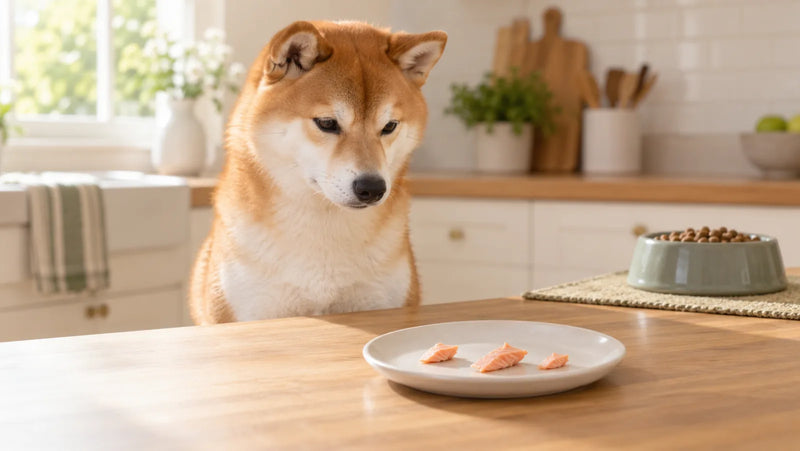

Can puppies eat rice? Yes—some fully weaned puppies that eat complete puppy food reliably can have a tiny amount of plain, fully cooked rice as an occasional extra. White or brown rice must be soft, unseasoned, and counted with every other snack. It should not replace a growth meal.
If the puppy has diarrhea, vomiting, poor appetite, lethargy, or blood in the stool, do not use rice as a home treatment. Contact the veterinarian and follow the diet chosen for that puppy. Young dogs can become dehydrated or weak quickly, and rice cannot identify parasites, infection, a foreign body, a dietary reaction, or another cause.
Can Puppies Eat Rice? The Five-Gate Answer
| Gate | What must be true | Why it matters |
|---|---|---|
| Readiness | The puppy is fully weaned and already eats complete growth food reliably | Rice must not displace the food designed for growth |
| Health | The puppy is feeling normal, with no vomiting, diarrhea, appetite loss, or unusual tiredness | Illness needs a veterinary decision, not a food experiment |
| Preparation | The rice is fully cooked in water until soft, then cooled and served plain | Seasoning, fat, sauces, and undercooked grains add avoidable problems |
| Amount | The first taste is measured in fractions of a teaspoon or teaspoons—not a bowl | A puppy has little room for nutritionally incomplete extras |
| Context | The rice fits the puppy's veterinarian-confirmed calorie plan and all other extras | Rice shares one limit with dog treats, chews, toppers, and table tastes |
Passing all five gates means a healthy puppy may try a small plain taste. It does not mean every puppy needs rice, that rice is appropriate every day, or that age alone grants permission. The puppy first-treat readiness guide explains why weaning, chewing, swallowing, routine, and health matter more than a birthday on the calendar.
Fully Weaned and Eating Complete Puppy Food Comes First
Growth is a demanding nutritional stage. The VCA growing-puppy nutrition guide advises choosing a food whose nutritional adequacy statement covers growth. It explains that a purpose-formulated puppy food should supply the puppy's essential nutrients and that additional calories can interfere with an appropriate growth rate.
Rice supplies energy but is not complete growth nutrition. It does not provide all essential amino acids, fats, vitamins, minerals, and carefully balanced calcium needed in the right proportions. Do not replace kibble, canned puppy food, or a veterinary growth diet with rice. Do not add rice because a healthy puppy appears hungry; feeding amount, meal frequency, body condition, and growth curve belong in a veterinary feeding plan.
Training does not create a second calorie budget. Use part of the puppy's regular food or a measured reward plan from the puppy training treat guide. Any rice taste shares that same budget.
Puppy Diarrhea Needs a Veterinarian Before Chicken and Rice
Warning signs that should bypass a home food trial
The VCA puppy-diarrhea guidance directs owners to seek veterinary help when a puppy is lethargic, refuses food, vomits, or has blood in the stool. Even a lively puppy with diarrhea may need a fresh stool sample checked for worms or other parasites. Contact the clinic when you are uncertain rather than using appetite as the only safety test.
The Merck Veterinary Manual digestive-disorder overview explains that vomiting or diarrhea can cause dehydration and electrolyte imbalance and that major fluid loss can progress to shock. Severe diarrhea, repeated vomiting, blood, weakness, collapse, a swollen or painful abdomen, pale or discolored gums, suspected toxin or foreign-object access, or difficulty keeping water down needs prompt care.
Do not fast a young puppy, give a human anti-diarrheal, start a probiotic, or improvise a fluid or electrolyte recipe unless the veterinary team gives case-specific instructions. Keep fresh water available unless a veterinarian directs otherwise, preserve packaging or exposure evidence, and bring the stool sample requested by the clinic.
Why old-style chicken and rice is not a default puppy treatment
VCA's puppy-specific page says the traditional chicken-and-rice option is no longer recommended in most cases and tells owners to ask the veterinarian about a temporary diet change. The broader VCA gastrointestinal nutrition review explains why a home chicken-and-rice mix can be a poor default: it is incomplete and unbalanced, varies with the chicken part and ratio, is difficult to measure consistently, requires careful cooking and storage, and can complicate the return to regular food.
A purpose-formulated veterinary gastrointestinal diet may be complete, designed for a specific digestive need, and in some cases appropriate for growth. The veterinarian can choose one based on the suspected cause and the puppy's age, hydration, vaccination status, parasite risk, body condition, and other findings. Rice cannot make that diagnosis.
If the veterinarian specifically prescribes a temporary plan
Ask for the exact food, amount by weight or household measure, meals per day, duration, water instructions, medication or supplement instructions, and transition back to complete puppy food. Record what was offered and what the puppy actually ate. Update the clinic if appetite or symptoms change.
If the plan specifically includes home-cooked chicken, prepare only the cut and method the veterinarian approves. The separate plain chicken cooking guide owns the food-safety method, complete cooking, skin and bone removal, cooling, and storage steps. Do not add broth, bouillon, onion, garlic, oil, butter, salt, or seasoning, and do not assume the same recipe or ratio fits another puppy.
White Rice vs Brown Rice for Puppies
| Question | Plain white rice | Plain brown rice |
|---|---|---|
| Structure | Bran and germ have been removed | Retains the bran and germ layers |
| Cooked texture | Usually softer and less fibrous when fully cooked | Usually firmer and more fibrous; needs thorough cooking |
| Healthy first taste | May fit in a tiny plain amount | May fit in a tiny plain amount if the puppy handles the texture |
| Diarrhea | Not a home treatment; use only if the veterinarian selects it | Not a home treatment; do not choose it because “whole grain” sounds healthier |
| Main limit | Neither type is complete puppy food, and neither earns a separate calorie allowance | |
Jasmine and basmati are varieties, not permission to ignore preparation. If used for a healthy first taste, they still need to be plain, fully cooked, soft, cooled, and measured. Wild rice is botanically different and has its own firmer texture; it offers no advantage for a puppy's first taste. A mixed grain packet may contain salt, oil, onion, garlic, flavoring, or other ingredients, so do not judge it by the word “rice” on the front.
How to Prepare Plain Rice for a Healthy Puppy
- Choose one plain rice. Use no instant flavor packet, premixed seasoning, sauce, or restaurant leftovers.
- Cook it in water only. Follow the plain package method and use enough water to soften the grain fully.
- Skip every add-in. Do not use salt, broth, stock, butter, oil, milk, onion, garlic, or herbs.
- Check the texture. The rice should be tender throughout, without a hard or chalky center.
- Cool it separately. Do not let an eager puppy reach a hot pot or swallow a hot clump.
- Measure the first taste. Use the cooked amount in the table below; do not fill a dog bowl.
- Refrigerate or discard promptly. Keep the clean batch separate from the puppy's saliva and discard any served remainder.
Fried rice, rice cooked in broth, risotto, rice pudding, seasoned microwave cups, takeout rice, sushi rolls, casseroles, and leftovers are different foods. Their fat, sodium, dairy, sweeteners, sauces, alliums, fish, avocado, or other components require their own review. Plain preparation is the reason the decision stays simple.
How Much Rice Can a Puppy Have by Current Weight?
Use a tiny first taste, not a daily rice allowance
For a healthy, fully weaned puppy that already eats its normal growth food reliably, the table provides a deliberately small first exposure. Measure rice after cooking and cooling. These amounts are not a diarrhea treatment, daily allowance, medical dose, maximum, or target to increase toward.
| Current puppy weight | Conservative cooked first taste | Serving note |
|---|---|---|
| Under 5 lb | 1/4 teaspoon | Spread the grains so they do not form a sticky clump |
| 5–10 lb | 1/2 teaspoon | Offer only after the normal meal is established |
| 11–25 lb | 1 teaspoon | Introduce no other new food at the same time |
| 26–50 lb | 2 teaspoons | Count the full amount with every other extra |
| Over 50 lb | 1 tablespoon | Large current weight does not override growth or medical restrictions |
A gram scale is more repeatable than a rounded spoon, especially for a tiny puppy. Flatten the spoon and separate sticky clumps before serving. For a repeat amount, use the puppy's veterinarian-confirmed calorie target, current growth rate and body condition, the calorie estimate for the exact cooked batch, and the calories from every other extra.

Count rice inside one shared extras ceiling
The WSAVA treat guide says treats should provide no more than 10% of daily calories, and the individual calorie target belongs with the veterinary team. VCA gives the same 10% ceiling for growing puppies. This is a limit for all extras together, not permission to fill 10% with rice.
The daily puppy treat-calorie guide shows how current weight, age, growth, the exact label, and training rewards enter one plan. Rice shares that ceiling with packaged dog treats, chews, toppers, table tastes, and food used for medication. The other 90% or more should remain the complete diet unless the veterinarian prescribes a different plan.
Introduce Rice Alone and Watch the Puppy
Offer one first taste on a day when the puppy feels normal and the usual stool, appetite, and energy are easy to observe. Do not introduce rice beside a new protein, new chew, new topper, vaccine-day treat spree, diet change, boarding stay, or deworming change if you want to understand the response.
- Normal response: ordinary appetite, energy, drinking, and stool after the tiny taste.
- Stop and call for advice: repeated loose stool, vomiting, appetite loss, abdominal discomfort, unusual tiredness, persistent itching, or a recurring ear or skin change.
- Seek urgent care: trouble breathing, facial swelling, collapse, repeated vomiting, blood or black stool, marked weakness, a painful or swollen abdomen, or inability to keep water down.
A food reaction cannot be diagnosed from one symptom at home. If the puppy is in an elimination trial, has a known food reaction, or develops a repeated problem, stop the experiment and follow the veterinary plan.
Which Puppies Should Skip Rice or Ask First?
- Not fully weaned or not eating solids reliably: use the veterinary feeding plan for that developmental stage.
- Diarrhea, vomiting, poor appetite, lethargy, blood, pain, or dehydration concern: contact the veterinarian before changing food.
- Prescription or elimination diet: even plain rice can disrupt the diagnostic or therapeutic purpose.
- Diabetes, weight-control plan, or abnormal growth: the veterinary team should decide whether a starch extra fits.
- Known or suspected rice or grain reaction: do not perform an unsupervised challenge.
- Large- or giant-breed growth plan: protect the carefully controlled growth diet from unmeasured extras.
- Chewing or swallowing difficulty: sticky clumps can be a poor texture even though individual grains are soft.
- Recent surgery or current medication: follow the discharge and medication instructions rather than adding a new food.
“Plain” describes preparation; it does not prove suitability for an individual puppy. The same caution applies when a rice-based commercial food, treat, or supplement has several other ingredients.
Adult Rice, Chicken Cooking, and Pasta Have Separate Owners
The broad question—including adult-dog rice portions, jasmine and basmati context, rice dishes, and diabetes cautions—belongs to the complete rice safety guide for dogs. The puppy decision adds readiness, growth nutrition, smaller first tastes, and a stricter illness branch.
If a veterinarian has approved plain chicken, use the separate chicken cooking method rather than copying rice timing or assuming a mixed ratio. Rice and chicken have different preparation, storage, allergy, calorie, and portion decisions.
The plain pasta safety guide owns wheat pasta, sauces, raw dough, and pasta-specific portions. Rice and pasta are both starchy extras, but one does not substitute for the other in a medical or growth plan.
Where a Chicken Topper Fits—and Does Not Fit
The current American Paws chicken meal topper page lists 100% USA chicken breast, finely ground and freeze-dried, with approximately 25 kcal per teaspoon. It is labeled for all life stages and for intermittent or supplemental feeding only. Those are useful facts for measuring a healthy puppy's optional chicken extra when the veterinarian agrees that chicken fits.
The topper is not rice, a veterinary gastrointestinal diet, a complete puppy meal, or a diarrhea treatment. Do not add it during illness merely to increase appetite, and do not combine it with a first rice taste if the goal is to observe one new food. A puppy avoiding chicken or following an elimination or prescription diet should not receive it without explicit approval.
For a healthy puppy cleared for ordinary treats, compare each item in the current American Paws dog-treat collection by species, life-stage statement, ingredient list, calories, texture, and feeding directions. “Made for dogs” does not remove the need to measure.
A Seven-Step Puppy Rice Check
- Confirm the puppy is fully weaned, healthy, and eating complete growth food reliably.
- Stop and call the veterinarian first if diarrhea, vomiting, appetite loss, lethargy, blood, pain, or another concern is present.
- Choose one plain rice and cook it completely soft in water only.
- Cool it and measure the current-weight first taste instead of filling a bowl.
- Count the rice with every other treat, chew, topper, and table taste.
- Introduce no other new food and watch appetite, stool, skin, energy, and comfort.
- Keep complete puppy food in charge and ask before repeating rice in a medical or restricted diet.
Frequently Asked Questions
Can an 8-week-old puppy eat rice?
Age alone is not clearance. A fully weaned puppy around that stage who eats complete puppy food reliably, feels well, and has no veterinary restriction may try a tiny plain cooked taste. Ask first if the puppy is newly adopted, underweight, ill, on medication, or having digestive signs.
Can puppies eat white rice?
Some healthy, fully weaned puppies can have a tiny amount of plain fully cooked white rice. It should be soft, cooled, unseasoned, and counted with all other extras. It is not complete growth nutrition or a home treatment for diarrhea.
Can puppies eat brown rice?
A healthy puppy may tolerate a tiny amount of plain brown rice cooked fully soft. Brown rice retains the bran and is firmer and more fibrous than white rice. That does not make it automatically better for a puppy or appropriate during gastrointestinal illness.
Can puppies eat chicken and rice for diarrhea?
Only when the veterinarian selects that temporary plan for the individual puppy. VCA's current puppy guidance says traditional chicken and rice is no longer recommended in most cases. Diarrhea may require a stool test, veterinary GI diet, hydration support, medication, or other care based on the cause.
How much rice can a puppy eat?
For a healthy first exposure, use the tiny current-weight amounts in the table—from 1/4 teaspoon under 5 lb to 1 tablespoon over 50 lb. These are first tastes, not daily servings. Repeat amounts must fit the veterinarian-confirmed calorie target, growth plan, and every other extra.
Can puppies eat rice every day?
Rice is not needed daily and should never crowd out complete puppy food. If a veterinarian prescribes a diet containing rice, follow that specific product or recipe. Otherwise keep rice occasional, measured, and inside the shared extras ceiling.
Can I add broth, butter, or salt to puppy rice?
No. Use water only. Broth or stock can contain onion, garlic, excess sodium, fat, or flavor systems; butter and oil add calories and may upset the stomach; salt is unnecessary. A mixed dish also makes a reaction harder to interpret.
Keep Rice Tiny and Let Growth Food Lead
For an ordinary healthy-puppy taste, the reliable plan is simple: wait until the puppy is fully weaned and stable on complete food, cook one rice in water until soft, cool it, measure a tiny portion, count it with all other extras, and observe one new food at a time. Rice stays secondary to the growth diet.
If the puppy has digestive signs, skip the experiment and call the veterinarian. If a healthy puppy is cleared for chicken and you want a measured packaged option rather than another human-food extra, review the live label for the American Paws chicken meal topper and count its calories inside the same puppy treat plan.