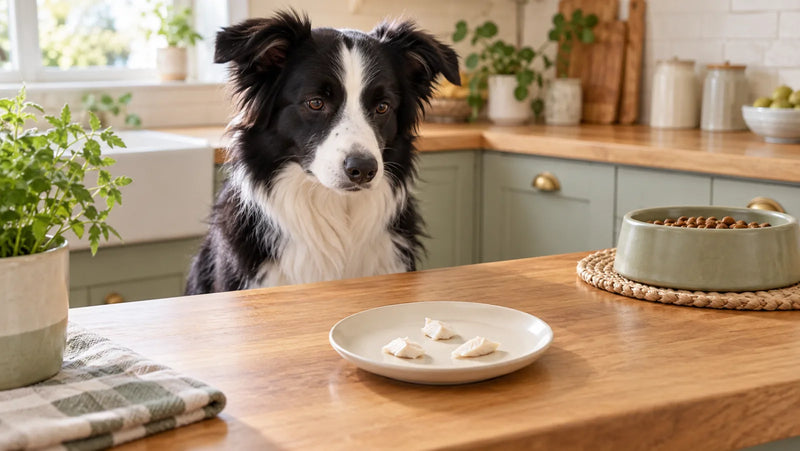

Yes—plain, properly processed cod skins can be an occasional treat for many dogs. When comparing cod skins for dogs, choose a product made specifically for pets with a short, transparent ingredient list, no unnecessary salt or seasoning, and a size and texture your dog will chew rather than gulp. Supervise every chew and count it within the day's treat calories.
Fish-skin chews can offer animal protein, naturally occurring marine fats, a motivating aroma, and satisfying chewing time. Those qualities do not make every package equally safe or turn a treat into a supplement, dental treatment, or complete meal. The label, the physical piece, and your dog's individual needs matter more than the picture on the front of the bag.
Cod skins for dogs: the quick answer
A dog that tolerates fish may be able to enjoy a dried cod-skin chew in moderation. The safest choice is a reputable, properly processed pet treat—not raw skin trimmed from a fish dinner and not a smoked, salted, buttered, or seasoned human snack.
Use this five-point check before offering one:
- Read the ingredients. Cod skin alone is simple to evaluate; added salt, flavor, oil, smoke flavor, or preservatives require a closer look.
- Inspect the piece. Skip chews with a sharp point, suspicious hard fragment, mold, unusual discoloration, or rancid odor.
- Choose a sensible size. The dog should have to chew it. A strip that can disappear in one gulp is the wrong format.
- Start small and supervise. Remove the last nub before it becomes a swallowable chunk.
- Count the calories. A natural-looking chew is still an extra, and drying removes water while concentrating nutrients and calories by weight.
Dogs with a known fish allergy, a history of pancreatitis, a prescription diet, swallowing trouble, serious dental disease, or veterinarian-directed fat or sodium restriction need individual advice before trying a cod-skin treat.
Potential benefits of cod skin dog treats
Fish skin supplies animal protein and marine fats
Cod skin is animal tissue, so a plain chew can contribute protein as well as naturally occurring fish fats. The American Kennel Club's fish-feeding guidance notes that fish can provide protein and omega-3 fatty acids. Fish-skin chews are also recognized as a source of omega-3 fats in the AKC's guide to choosing edible dog chews.
Keep that benefit in proportion. A chew does not disclose its EPA or DHA amount merely by saying “cod,” and it should not be used as a therapeutic fish-oil dose. If a veterinarian recommends omega-3 fatty acids for a medical reason, use the product and dose the veterinary team specifies rather than trying to calculate treatment from an unstandardized chew.
A strong aroma can make a small portion rewarding
Many dogs find the smell of fish highly motivating. That can make a modest piece useful as an occasional high-interest reward or quiet enrichment activity. A dog may stay engaged with a small, aromatic chew instead of needing a large volume of lower-aroma snacks.
Palatability is not proof of nutritional need. Dogs also differ: one may love the marine aroma, another may walk away, and a third may develop soft stool after a new rich treat. Offer a small test on an otherwise normal day so the response is easy to interpret.
Chewing can provide enrichment—but this is not a dental treatment
Holding and working on an edible strip can give a dog a focused activity. The benefit is behavioral enrichment and chewing satisfaction. It is not a license to leave the dog alone, and it is not evidence that the chew removes enough plaque or tartar to replace tooth brushing and veterinary dental care.
Hardness also varies. A thin, crisp strip may fracture quickly; a rolled piece may last longer; a thick, over-dried piece may be too hard for a dog with worn, fractured, or diseased teeth. Press and flex the chew before serving it, then watch how the dog actually handles it.
“Low fat” depends on the product label
Cod is often described as a lean fish, which can make a cod-skin chew sound automatically low-fat. That shortcut is unreliable. The skin contains fat, and dehydration removes water, so a small dry piece can be more calorie-dense than its weight suggests. Added oil or a thick, tightly rolled format changes the comparison again.
Some cod-skin products may compare favorably with richer animal chews, but verify the guaranteed analysis and calories instead of repeating a category-wide claim. For a dog on a fat-restricted plan or with a history of pancreatitis, the veterinarian should decide whether the actual product fits.
Are cod skins safe for dogs?
Choose processed dog treats, not raw or seasoned scraps
Raw fish can carry harmful bacteria, and preparation surfaces can spread contamination through the household. The FDA's pet-food handling guidance explains that raw pet food is more likely than processed food to contain bacteria such as Salmonella or Listeria monocytogenes. The FDA recommends clean hands, clean bowls and utensils, proper storage, and safe disposal of spoiled products.
For this purpose, choose a commercial treat produced for dogs with identifiable processing and storage directions. Drying is not a magic word that guarantees sterility, so manufacturer transparency still matters. Do not substitute raw trimmings, smoked fish skin, salted cod, fried skin, or a restaurant leftover. Onion, garlic, heavy seasoning, butter, and excess salt add risks without adding anything a dog needs. For how cod compares with other options, see our overview of dried fish skins for dogs.
Check for bones, hard points, and breakaway pieces
Fish bones can be small, brittle, and sharp. The AKC warns that bones can lodge in a dog's mouth, throat, stomach, or intestines. A responsible manufacturer should control for bones during production, but no owner should assume every piece in every package is physically identical.
Look over both sides of the chew in good light. Run your fingers carefully along the surface and edges. Discard a piece with a sharp spike, a suspicious rigid fragment, or damage that creates a hard point. During chewing, pick up brittle shards and remove the final end before it is small enough to swallow whole.
Match the chew to the dog's size and chewing style
There is no universally safe shape. A wide strip may slow one dog down and prompt another to fold and gulp it. A tight roll may be manageable for a measured chewer but too hard for an older dog with dental wear. A small braid may be appropriate as a brief reward for one dog and become a choking hazard for a large dog that inhales food.
Supervision means staying close enough to see and hear the dog, not watching through a camera from another room. Offer the chew in a calm place, do not encourage competition between pets, and trade it for another reward if it starts breaking dangerously. Dogs that routinely swallow treats without chewing need a different format rather than a larger gamble.

How to choose dried cod skins for dogs
Read the complete ingredient list
Start on the back of the package. “Cod skin” as the only ingredient is easy to understand, but the front phrase “natural fish chew” does not prove a product is single-ingredient. Flavoring, salt, oil, smoke ingredients, preservatives, or a second fish species may appear in the ingredient statement.
Our guide to reading a dog-treat label explains how to compare the ingredient list, guaranteed analysis, calorie statement, and feeding directions as one system. Do not choose by the shortest list alone if the maker provides no useful calorie, handling, or traceability information.
If a dog has a confirmed food allergy or is in an elimination-diet trial, even a seemingly simple fish treat can disrupt the plan. Ask the veterinary team before adding it, and check for shared-facility or cross-contact information when that matters.
Look for transparent sourcing and processing information
A useful package or manufacturer website should make it possible to identify who made or distributed the treat, where to ask questions, what species is used, where the fish was sourced when claimed, and how the product should be stored. A lot or batch code and clear best-by information make it easier to respond to a quality concern or recall.
Do not treat words such as “wild,” “sustainable,” “human grade,” or “premium” as substitutes for specifics. If sourcing is important to you, look for a named standard or certification and verify it with the certifying organization. If pathogen control, bone removal, or testing is not explained, ask the manufacturer rather than filling the gap with assumptions.
Compare guaranteed analysis, calories, and feeding directions
The guaranteed analysis gives minimum protein and fat information and maximum fiber and moisture information for the product as sold. It does not tell the whole nutritional story, but it helps compare one dried chew with another. The calorie statement is essential because two pieces that look similar can differ in weight, density, and energy.
Use calories per piece, per ounce, or per kilogram to estimate the portion actually offered. If the package provides only a large piece and the feeding direction says to adjust by dog size, weigh the piece before and after or ask the company for practical calorie information. For a dog with a sodium restriction, ask for sodium data rather than assuming “fish” means salty or salt-free.
Inspect packaging, freshness, and storage instructions
Choose a sealed, undamaged package with legible lot and date information. After opening, follow the manufacturer's directions. In general, keep dry treats cool and dry, press excess air from a resealable bag, close it fully, and prevent moisture from entering. Do not mix a new bag into crumbs from an old container because that hides the original lot and can carry old oils or moisture forward.
Fish fats can oxidize. Discard a chew that develops an unusually rancid, paint-like, sour, or otherwise “off” odor; shows mold or damp spots; feels unexpectedly greasy or tacky; or has changed color or texture. A naturally fishy smell is expected, but a sudden change is a reason not to serve it.
How much cod skin can a dog have?
Start with a small supervised portion
The first serving is a tolerance test, not a challenge to finish the biggest chew in the bag. Choose a small portion that still requires chewing, offer it after the dog has eaten familiar food, and watch for vomiting, loose stool, itching, facial swelling, ear irritation, unusual gas, or discomfort over the next day.
Introduce only one new treat at a time. If you also change the main food, add a supplement, and offer a new chew, a reaction becomes much harder to trace. Stop feeding the cod skin and contact the veterinary team if signs recur or if any reaction is more than mild.
Keep all treats under 10% of daily calories
The World Small Animal Veterinary Association's treat guide recommends keeping treats below 10% of a dog's daily calories and not using them to replace a complete and balanced meal. That is an upper boundary for all extras combined, not a target that must be filled.
The cod skin shares that budget with training rewards, table bites, toppers, dental products, and every other chew. Use the package calories with your dog's established daily energy target. Our daily dog-treat calorie guide shows why the amount changes with body size, body condition, activity, and the main diet.
One whole chew is not automatically one serving
Manufacturers choose package shapes for handling and sale, not because every whole piece fits every dog. A long roll may need to be a supervised activity that is removed after a set period, while a crisp strip may be broken before serving. Only divide a product if it breaks cleanly without creating sharp edges, and calculate the fraction from its weight or calorie information.
Do not cut an extremely hard roll with a tool that makes it splinter, and do not microwave or soak a chew unless the manufacturer says that method is safe. Changing moisture and texture can change how the piece breaks and spoils.
Which dogs need extra caution or a different treat?
Cod skin is optional. A different reward is usually the better choice when the format creates avoidable risk. Ask a veterinarian before serving it to a dog that:
- has a diagnosed fish allergy or is completing an elimination-diet trial;
- has had pancreatitis or follows a medically directed low-fat plan;
- has kidney or heart disease or another reason to restrict sodium;
- has broken teeth, painful gums, advanced dental disease, or recent oral surgery;
- has a swallowing disorder, prior intestinal obstruction, or a habit of gulping chews;
- eats a prescription diet whose nutrient balance must stay tightly controlled;
- is a very young puppy with a small calorie allowance and developing teeth; or
- develops vomiting, diarrhea, itching, swelling, or discomfort after fish.
For puppies and senior dogs, age alone is not the decision. Tooth condition, chewing skill, digestive history, and the calorie budget are more useful. A puppy may do better with tiny training rewards, while a senior may need a softer, easily portioned treat.
What to do if a dog gulps a piece or becomes unwell
If a dog is coughing but moving air, keep the environment calm and call a veterinarian for immediate guidance. Repeated gagging, forceful retching, pawing at the mouth, heavy drooling, trouble breathing, blue or pale gums, weakness, or collapse can indicate a choking emergency. Go to the nearest emergency veterinary hospital and follow its instructions; do not blindly push fingers into the mouth or force food or water.
A swallowed piece can also cause trouble later. Seek prompt care for repeated vomiting, a painful or swollen abdomen, refusal of food or water, marked lethargy, straining, inability to pass stool, or bloody or black stool. Save the package and lot code, note the approximate amount and time, and bring that information to the clinic.
For a mild one-time soft stool in an otherwise bright dog, stop the new treat and monitor according to the veterinary team's advice. Do not keep testing another piece to see whether the reaction repeats.
Frequently asked questions
Can puppies have cod skin treats?
Some puppies that already tolerate fish may be able to have a very small, age-appropriate portion, but cod skin is not necessary for growth. Ask the veterinarian, protect the puppy's small calorie budget, avoid very hard pieces around developing teeth, and supervise closely. A soft, tiny training reward may be a better fit.
Can dogs eat cod skin every day?
Daily use is not automatically unsafe, but it is rarely necessary. The product must fit the dog's calories, health, and complete diet, and repeated exposure still requires tolerance and freshness checks. Rotate enrichment thoughtfully and ask the veterinarian before making cod skin routine for a medical purpose.
Are cod skin chews low in fat?
Not as a universal rule. Cod may be a lean fish, but skin contains fat, drying concentrates the product, and recipes or roll thickness vary. Compare the guaranteed analysis and calorie statement on the exact package. A dog on a fat-restricted plan needs veterinary approval.
Do cod skins clean dogs' teeth?
Chewing may provide mechanical activity and enrichment, but a cod-skin chew is not automatically a validated dental product. It should not replace tooth brushing, oral examinations, professional care, or a veterinarian-recommended dental product.
Can dogs eat raw cod skin?
Raw cod skin is not the recommended treat format. Raw animal products can carry bacteria, and fish may contain bones or parasites. Choose a properly processed product made for dogs, handle it hygienically, and follow its storage directions.
Choose the label and chew—not the marketing promise
A good cod-skin treat is plain, traceable, physically appropriate, fresh, and easy to fit into the dog's calorie plan. Read the full label, inspect each piece, begin with a small portion, supervise from start to finish, and remove the final nub. Treat omega-3 language as nutritional context—not a medical guarantee. For fish as food rather than chews, see our guide on whether dogs can eat fish.
If fish skin is not a safe or practical match for your dog, choose another reward instead. You can browse American Paws natural dog treats and chews and compare each option by ingredient list, texture, size, and feeding guidance. The best treat is the one that fits the dog in front of you, not the trendiest ingredient.