
High protein dog treats are simplest when they are made from lean meat with the water removed. A whole-cut chicken jerky treat, for example, can be around 70% crude protein because it is dried chicken breast with nothing added. The key is knowing how to read the label, not just chasing the biggest number.
This guide explains what high protein really means, why moisture changes the math, and how to choose a genuinely protein-rich treat without turning snacks into a meal replacement.
What counts as high protein dog treats?
A high-protein treat should get most of its nutrition from a named animal protein, not from fillers or vague meals. Lean single-ingredient meat is the clearest example because the protein source is obvious. Our guide on how to read a dog treat label walks through the panel step by step. Dried and freeze-dried treats often look especially high in protein because moisture has been removed.
How to read protein on a treat label
The percentage on the bag vs the real story
Pet treat labels usually show crude protein on an as-fed basis. That means the moisture level in the treat affects the percentage. A moist treat and a dry treat can look different even if the ingredient quality is similar, because water changes the calculation.
Why dried and jerky treats concentrate protein
When chicken breast is dried, much of the water leaves and the protein becomes more concentrated by weight. That is why whole-cut chicken jerky can have a high crude protein percentage. The number is not magic; it reflects a lean ingredient with moisture removed.
Named whole-meat first ingredient
Look for a named ingredient like chicken breast. Be cautious with labels that lean on plant protein fillers or vague meat terms. A simple named meat source is easier to evaluate and easier to match to your dog's needs.

Why protein matters for dogs
Protein is part of a dog's normal diet and helps maintain body tissues as part of balanced nutrition. Active dogs, working dogs, and athletic dogs may especially enjoy lean meat rewards. But treats are not a protein supplement, and high protein is not the right choice for every dog.
If your dog has kidney disease, liver disease, pancreatitis, diabetes, senior nutrition concerns, or any medical condition, ask your veterinarian before choosing high-protein treats.
The highest-protein treats are usually the simplest
When a treat is just lean meat, there is less room for starches, sugars, and fillers. That is why single-ingredient chicken breast, freeze-dried chicken, and beef liver can be strong options. The ingredient list tells you whether the protein comes from meat or from a formula built to sound impressive.
For a broader label primer, see our guide to single-ingredient dog treats.
How to use high-protein treats well
Use high-protein treats as rewards, not meals. Keep treats around 10% or less of daily calories, break pieces smaller for training, and always supervise. If your dog tends to gulp, choose smaller pieces or a softer option.
A genuinely high-protein pick
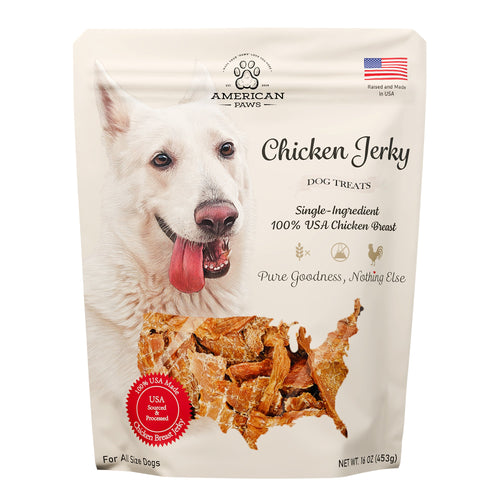
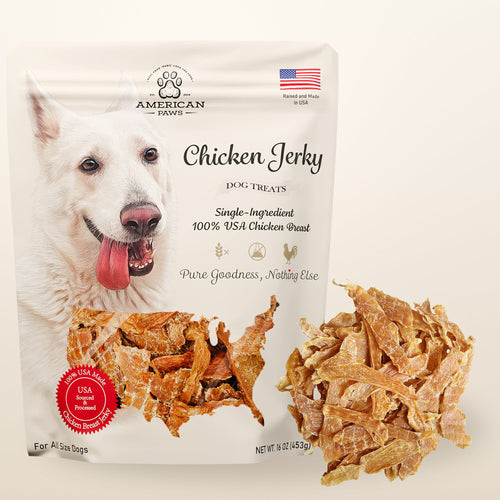
American Paws chicken jerky is made from 100% whole-cut USA chicken breast with nothing added. It is slow-dried, grain-free, and about 70% crude protein by guaranteed analysis. That number comes from the ingredient and the drying process, not from protein powder or filler tricks.
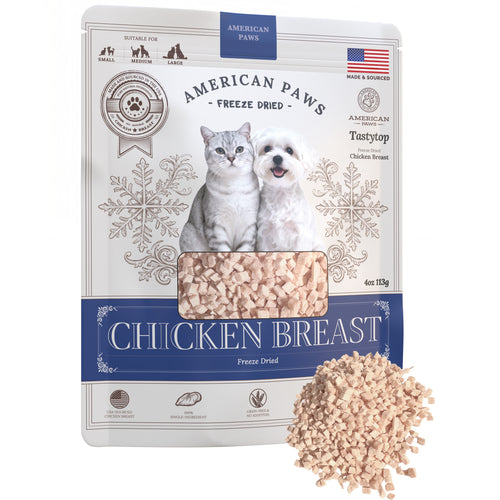
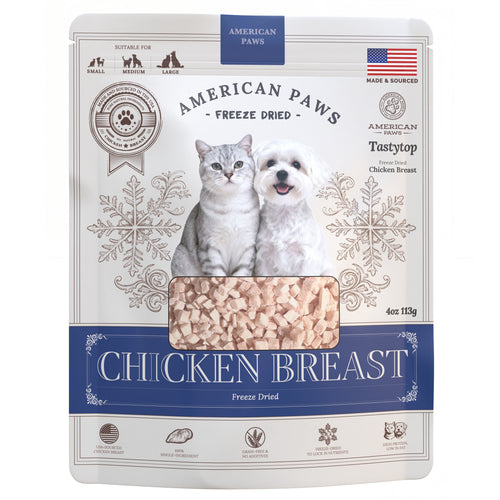
Other lean options include our freeze-dried chicken breast, which is also about 70% protein, and freeze-dried beef liver for high-value rewards. For frequent training with a softer texture, compare our soft chicken training treats. You can also browse the chicken collection.
Dry matter: a simple way to compare treats
If you want to compare two treats fairly, remember that moisture changes the protein percentage. A moist treat contains more water, so the crude protein percentage can look lower even if the ingredient is good. A dried treat contains less water, so protein looks more concentrated. That is why comparing a soft moist snack to jerky by the front-label number alone can be misleading.
You do not need to do math every time you shop, but the concept helps. Ask two questions: what is the ingredient, and how much moisture does the format contain? A lean meat jerky with a short label is usually a more transparent high-protein choice than a treat with protein boosted by a complicated formula.
When high protein is useful as a reward
High-protein treats are useful when you want a small reward that feels valuable without relying on sugar, colors, or heavy coatings. They can work well for active dogs, outdoor practice, hiking breaks, scent games, and dogs that are motivated by real meat aroma. Because the flavor is concentrated, you can often use smaller pieces.
That does not mean more is always better. A treat should complement the complete diet your dog already eats. If you are using a high-protein treat frequently, break it smaller and think about total daily calories.
What to avoid in a high-protein claim
Be cautious when a treat advertises protein but the first ingredients are vague meals, starches, or plant protein fillers. Those products may still have a protein number, but they are not the same as a simple piece of lean meat. Also be careful with claims that imply a treat will build muscle, fix energy, or solve a health issue. Treats are rewards; they are not medical products.
The clearest high-protein treat is usually the most obvious one: named lean meat, water removed, no confusing extras.
High protein vs high value
High protein and high value often overlap, but they are not identical. High protein describes the nutrition profile. High value describes how much your dog wants the reward in that moment. A lean chicken jerky can be both: protein-rich on the label and exciting because it smells like real meat.
For everyday rewarding, choose the smallest piece that still motivates your dog. That gives you the benefit of a meat-based reward without overfeeding.
Best formats for high-protein treats
Jerky strips are useful when you want to break or tear pieces to size. Freeze-dried cubes are useful when you want a light, crunchy reward that stores easily. Both formats can be strong high-protein choices when the ingredient is named meat and the label stays short.
Frequently asked questions
What is the highest-protein dog treat?
Lean dried meat treats are often among the highest because moisture is removed. Whole-cut chicken jerky can be around 70% crude protein.
Is high protein good for all dogs?
No. Many healthy dogs can enjoy high-protein treats, but dogs with certain health conditions need veterinary guidance.
How much protein do dogs need?
Protein needs depend on age, diet, activity, and health. Treats should not be used to balance the diet; ask your veterinarian about nutrition needs.
Are jerky treats high in protein?
They can be, especially when they are made from lean whole meat. Check the guaranteed analysis and ingredient list.
Can puppies have high-protein treats?
Ask your veterinarian, and keep pieces tiny. Puppies need complete balanced food first, with treats used sparingly.
Choose protein you can understand
The best high-protein treat is not complicated. Look for named lean meat, clear sourcing, and a short label. For many dogs, whole-cut chicken jerky is a clean, practical place to start.