
Lung for dogs is commonly sold as dried or freeze-dried beef or lamb lung. Many finished pieces are light, porous, crisp, and easy to break into tiny rewards, which can be convenient during training. Those physical qualities do not prove that every lung treat is low fat, low calorie, easy to digest, or right for every dog.
The useful buying test is specific: identify the animal species and every ingredient, find the calories for the finished product, read the guaranteed analysis, and decide how many measured pieces fit the dog’s daily plan. Lung is also organ tissue. It still counts—as a treat for a dog eating complete food, or wherever a veterinary-formulated home recipe assigns it.
Lung for Dogs: The Quick Answer
Dried lung can be a practical training format when its label is complete and the individual dog can eat small pieces safely. It is not a free-food loophole for weight loss, a universal low-fat product, or a replacement for liver in a homemade diet.
| A lung treat may fit | Verify or choose another reward |
|---|---|
| The exact bag lists the species, full ingredients, and calories. | Calories are missing, or “lung” is the only useful information provided. |
| The pieces can be pre-portioned into tiny, dog-sized training rewards. | The dog gulps large pieces or is expected to use a brittle piece as an unsupervised chew. |
| The measured amount fits the dog’s normal treat allowance. | The dog has pancreatitis, a prescribed fat limit, a food trial, or another medically managed diet. |
| A complete and balanced food remains the nutritional foundation. | Lung is being added freely to an already complete diet or substituted into a home recipe without formulation. |
The front of a package may emphasize lean tissue, air-dried texture, or training convenience. Turn it over. The back-label numbers and the dog’s actual calorie plan should make the decision.
What Are Lung Treats?
Beef, lamb, and processing labels
Lung treats are made from the respiratory organ of an animal, most often cattle or sheep. Products may be labeled beef lung, lamb lung, dehydrated lung, air-dried lung, freeze-dried lung, or freeze-dried raw lung. These terms are not interchangeable guarantees. Species matters for dogs on an exclusion diet, and process matters for moisture, texture, storage, and microbial control.
Read the full ingredient panel rather than assuming that every lung treat contains one ingredient. A manufacturer may use smoke flavor, preservatives, another animal ingredient, or a mixed-organ recipe. The exact label should also answer whether the product is intended as a treat, how it should be stored, and how the company handles food safety.
Why dried lung can feel airy and crisp
Fresh lung contains a great deal of water and has a naturally porous structure. When water is removed, many finished pieces become light for their visual size, with small air spaces and a crisp or crumbly break. Cut thickness, trimming, species, residual moisture, and drying method all change the result, so inspect the pieces in the actual bag.
Easy to break is a portioning advantage, not a safety certificate. A dog can still gulp a large brittle piece, choke, or swallow more than intended. Break training portions before the session, size them for the dog, and supervise eating rather than handing over a large sheet as an unattended chew.
Is Lung Really Low Fat?
Raw beef lung begins as relatively lean, water-rich tissue. The USDA FoodData Central record for raw beef lung reports 92 calories, 2.5 grams of total fat, and 79.4 grams of water per 100 grams. That is useful context about raw tissue. It is not the guaranteed analysis of a dried bag.
Drying removes water. The remaining protein, fat, minerals, and calories therefore become more concentrated per gram of finished food. Trimming, species, added ingredients, process, and final moisture create further differences. A number copied from raw beef lung cannot establish the calories or fat in dehydrated beef lung for dogs, and it says nothing about a lamb product.
The guaranteed analysis needs careful reading too. As the FDA explains in its pet-food label guidance, crude protein and crude fat are stated as minimums, while crude fiber and moisture are maximums. A crude-fat minimum is not an upper ceiling. If a dog has a strict fat limit, a small-looking percentage on the front or back of the bag is not enough information to approve the product.
For a healthy dog, the fair conclusion is narrower: lung can start as a lean tissue, and some finished products may fit a lower-fat shopping goal. Confirm that with the exact maker’s calorie and nutrient information instead of treating the whole category as “extremely low fat.” Our low-fat dog-treat guide explains how to compare products without confusing a minimum guarantee with a maximum.
Why Airy Pieces Can Work for Training
Training usually rewards many small moments rather than one large snack. A porous lung piece can often be divided into tiny bites without a knife, so the handler can prepare a known number before class, a walk, or a recall session. Small rewards also shorten chewing time between repetitions.
Use the texture deliberately:
- Find the finished-product calories. Prefer kcal per piece or per gram. If the label lists only kcal/kg, divide by 1,000 to get kcal per gram.
- Weigh a representative amount. Visual volume is misleading because a large-looking airy sheet may weigh less than a compact cube.
- Break the daily portion in advance. Put only that amount in the training pouch and return the bag to storage.
- Make each reward tiny. The dog needs a clear consequence, not a mouthful. Adjust piece size to the individual dog’s safe swallowing ability.
- Count crumbs and bonuses. Every edible reward contributes calories even when each fragment looks insignificant.
For long or high-frequency sessions, part of the dog’s measured complete meal can also become training rewards. That preserves the calorie plan and leaves a smaller allowance for richer extras.

Low Fat Is Not the Same as Low Calorie
Fat is energy-dense, but fat percentage alone does not reveal a serving’s calories. Protein, carbohydrate, moisture, serving weight, and processing matter as well. “Airy” describes structure; it does not mean zero energy.
The World Small Animal Veterinary Association’s treat guide recommends that all treats and extras together supply no more than 10% of a dog’s daily calories, leaving at least 90% for complete and balanced food. Ten percent is a ceiling, not a target, and it is shared by lung pieces, chews, toppers, table food, medication foods, and rewards from every family member.
For a dog in a weight-loss program, use the daily calorie target set by the veterinary team rather than a generic chart or the dog’s current intake. Merck’s veterinary nutrition guidance for weight management emphasizes calorie restriction, appropriate foods, exercise, and monitoring. A breakable treat can make a plan easier to execute; it cannot cause weight loss on its own.
Our daily dog-treat calorie guide shows how to translate a daily allowance into an actual treat portion. If the maker will not provide calorie information, choose a better-documented product.
Lung vs Liver and Heart: Compare Portions, Not Piece Count
Lung, liver, and heart can all be sold in the pet aisle as animal-based treats, but equal-looking pieces are not nutritionally equal. Raw USDA reference values illustrate why. They do not predict a dried product and should never be used as its feeding directions.
| Raw beef tissue, per 100 g | Calories | Fat | Water | Useful context |
|---|---|---|---|---|
| Lung | 92 kcal | 2.5 g | 79.4 g | Lean, highly water-rich starting tissue |
| Heart | 112 kcal | 3.94 g | 77.1 g | Physically denser muscle tissue; commonly counted as muscle meat in feeding frameworks |
| Liver | 135 kcal | 3.63 g | 70.8 g | Far more concentrated in vitamin A and vitamin B12 than lung |
The comparison makes two points. First, liver is not simply a darker version of lung; it has a different micronutrient role. Our chicken-liver guide covers that ingredient’s specific portion concerns. Second, water removal changes every dried treat. The correct finished serving comes from that product’s grams and calories, not from the raw table.
Do not portion by piece count across categories. One wide lung sheet, one compact liver cube, and one dense heart strip can differ greatly in weight. Weigh the amount or use a trustworthy per-piece value, then compare how it fits the same daily calorie budget.
Lung Is Still Organ Tissue—Count It
Anatomically, lung is an organ, and food systems may group lung with organ meats or offal. That does not create one universal feeding percentage. Homemade and raw-feeding frameworks use terms such as organ, offal, secreting organ, and muscle meat differently, and a social-media ratio is not proof that a diet is complete.
Use the rule that matches the dog’s actual diet:
- Complete-food household: Lung is a supplemental treat. Count its calories with every other extra and keep the complete and balanced diet as the foundation.
- Veterinary-formulated home-prepared diet: Count lung exactly where the recipe assigns it, in the specified grams. Do not add it on top because it looks light.
- Recipe that calls for liver: Do not substitute lung. The USDA comparison shows that the tissues have very different nutrient profiles.
- Unformulated raw ratio: Do not assume that lung fills a fixed “10% secreting organ” slot or that an 80/10/10 pattern is complete for every dog. Ask a board-certified veterinary nutritionist to formulate the whole diet.
For the broader distinction among liver, kidney, heart, gizzard, lung, and other tissues, use our organ-meat guide for dogs. This page stays focused on lung as a treat format and on how to count it honestly.
How to Read a Lung-Treat Label
A useful package or manufacturer page should let you answer these questions:
- Which species? Beef lung and lamb lung are not interchangeable during an elimination trial or for a dog with a known restriction.
- Which ingredients? Confirm every animal protein, flavor, coating, preservative, and processing aid disclosed on the label.
- How many calories? Look for kcal per piece, ounce, gram, or kilogram. Ask the manufacturer if the information is absent.
- What does the guaranteed analysis say? Remember that crude fat is a minimum, not a maximum. Moisture helps explain why two products with similar-looking pieces can differ.
- How was it processed? Determine whether the product is cooked, dehydrated, freeze-dried, or marketed as raw, and ask about a validated pathogen-reduction step and finished-product testing.
- Can the product be traced? Look for a lot code, best-by date, maker contact, sourcing information, storage instructions, and a sealed, undamaged package.
Marketing terms such as natural, premium, human grade, guilt-free, or high protein do not replace those answers. Neither does a photo of a lean animal or a handful of feather-light pieces.
Safe Serving and Handling
- Start with the healthy dog’s label-based portion. Introduce only a small amount on the first day so a new ingredient does not collide with a full training session.
- Prepare dog-sized bites. Break an airy sheet before use. Do not let a gulper turn a large brittle piece into a chew-and-swallow contest.
- Supervise every reward. Watch the dog chew and swallow normally. Separate pets if competition makes them rush.
- Keep food hygiene ordinary and strict. Store the bag as directed, wash hands after handling, clean bowls and preparation surfaces, and keep treats away from small children.
- Stop when the dog is not well. Repeated vomiting or diarrhea, abdominal pain, marked lethargy, trouble swallowing, coughing, choking, facial swelling, or breathing difficulty needs veterinary attention; breathing distress is an emergency.
Processing language matters. The CDC’s pet-food safety guidance includes freeze-dried and dehydrated products among possible raw formats and explains that those processes do not kill every germ. The AVMA policy on raw animal-source protein likewise centers pathogen reduction and human-and-animal health risk. Do not assume that dry-looking means sterile.
Households with young children, pregnant people, older adults, immunocompromised people, or medically vulnerable pets should discuss raw-format products with their veterinary and human health teams. A manufacturer that can describe its kill step, testing, recall communication, and handling directions is more useful than one that relies on vague purity language.
When to Ask the Veterinary Team First
Bring the exact package or a clear label photo to the veterinary team before using lung when the dog has pancreatitis, hyperlipidemia, a prescribed fat ceiling, recurrent gastrointestinal disease, kidney or liver disease, a weight-loss prescription, a therapeutic diet, or an elimination trial. Also ask first for a puppy, a dog with swallowing trouble, or a dog that repeatedly gulps food.
Dogs with pancreatitis require individualized veterinary management. Merck’s pancreatitis guidance discusses dietary fat on a calorie basis, not merely the crude-fat minimum printed as-fed on a treat bag. Therefore, “low-fat” marketing cannot establish that a lung treat is pancreatitis-safe.
For a food trial, even the right named species may be wrong if the product shares equipment or contains an undisclosed flavor source. Follow the veterinarian’s permitted-ingredient list and ask the manufacturer about cross-contact; do not use a novel-protein treat casually during a diagnostic trial.
American Paws Does Not Sell Lung Treats
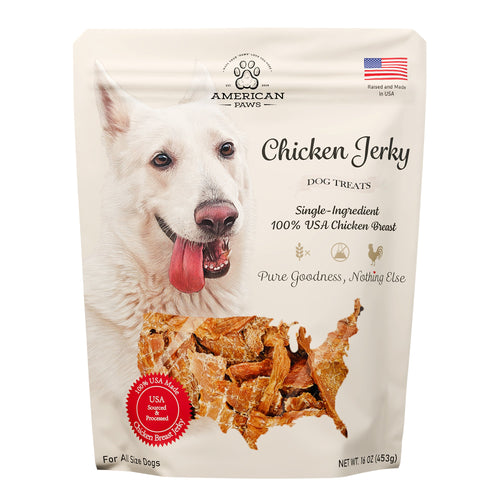
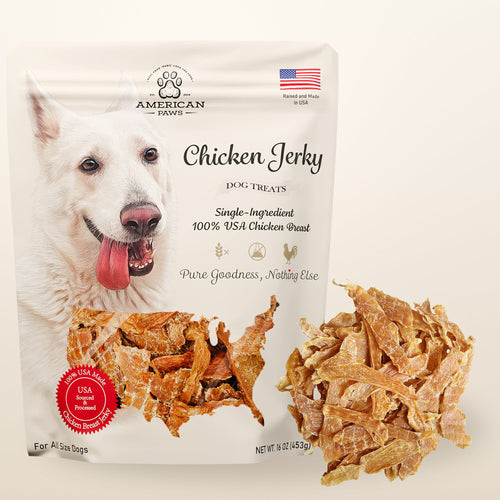
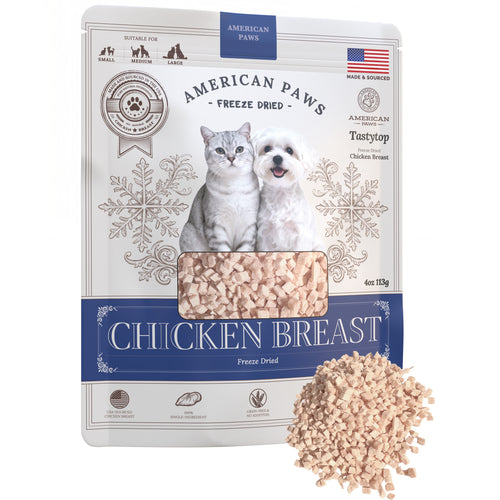
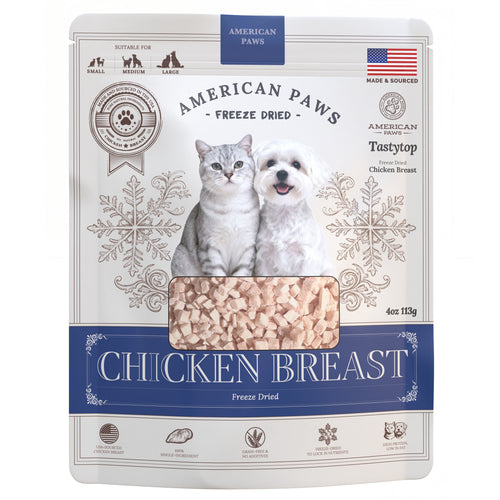
American Paws does not currently sell beef lung, lamb lung, or another lung-treat product. We would rather make that clear than imply that a different organ or a similarly crisp texture is equivalent.
If the goal is a small freeze-dried training reward rather than lung specifically, compare the label for our freeze-dried beef-liver training treats or our freeze-dried chicken-breast training treats. Beef liver is a different organ with a different nutrient profile; chicken breast is muscle meat, not an organ-ratio substitute. Neither link is a promise of low fat, weight-loss suitability, or compatibility with pancreatitis or a prescription diet.
Frequently Asked Questions
Are beef lung treats good for dogs?
They can be useful supplemental rewards for a healthy dog when the complete ingredient list, calories, handling process, and portion all fit. They are not complete food and are not automatically appropriate for a dog with dietary disease, a beef restriction, or a gulping habit.
Are lung treats low fat?
Raw beef lung is a relatively lean starting tissue, but finished products vary after trimming, drying, and any added ingredients. Check the exact product. A guaranteed-analysis crude-fat number is a minimum, so it cannot prove compliance with a medical upper limit.
Are lung treats good for training?
Many dried lung pieces are crisp and easy to break, which can make tiny, fast-to-eat rewards practical. Determine the daily amount from labeled calories, pre-portion it, and make each bite safe for the individual dog. Texture does not erase calories.
Does lung count as organ meat for dogs?
Lung is anatomically organ/offal tissue. A dog eating complete food should have it counted as a treat. A veterinary-formulated home diet should count it wherever that specific recipe assigns it; lung should not be added freely or assumed to replace liver.
Can dogs with pancreatitis eat lung treats?
Do not decide from the word lung, an airy appearance, or a crude-fat minimum. Dogs with pancreatitis or another prescribed fat ceiling need the veterinary team to approve the exact product and amount using suitable nutrient and calorie information.
Choose by the Label, Then Portion by the Plan
Lung’s light, porous texture can solve a real training problem: one measured amount may divide into many tiny rewards. Its appearance cannot solve a nutrition problem. The finished label, calories per measured serving, the dog’s health, and the complete daily diet determine whether it fits.
If lung passes those checks, prepare the portion before training and handle it like any other animal-based treat. If the label is vague or the dog needs a medical diet, choose a documented alternative with the veterinary team. Browse all current American Paws dog treats to compare clearly identified options—and keep every extra inside the plan that protects the dog’s complete nutrition.