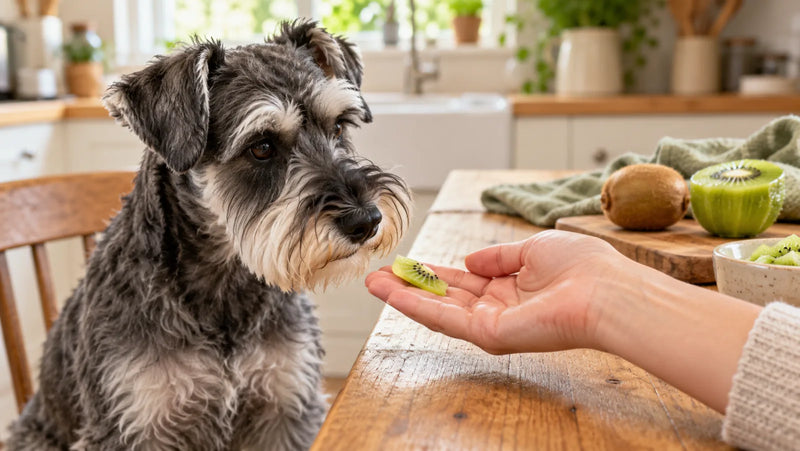

Can dogs eat cinnamon? A tiny culinary trace already mixed into an otherwise dog-safe food is unlikely to poison most healthy adult dogs, but dogs do not need cinnamon and more is not better. Do not let a dog inhale or lick a pile of powder, chew a cinnamon stick, swallow a supplement, or contact cinnamon essential oil. Skip cinnamon rolls and seasonal desserts because their other ingredients often matter more than the spice.
Can Dogs Eat Cinnamon? The Short Answer
The ASPCA plant database lists cinnamon as non-toxic to dogs. That narrow classification helps answer whether a trace of ordinary spice is automatically a poison. It does not mean unlimited powder is harmless, cinnamon oil is equivalent to ground spice, or cinnamon has a proven health benefit and dog dose.
Form, route, amount, and the complete recipe control the practical decision. A nearly invisible trace dispersed through a dog-safe baked item is different from a nose in a powder cloud. A spice jar is different from a concentrated essential-oil bottle. A plain cinnamon trace is different from a frosted roll containing sugar, fat, raisins, chocolate, xylitol, nutmeg, or unbaked yeast dough.
Cinnamon Form and Amount Change the Decision
| Exposure | Practical assessment | Action |
|---|---|---|
| Tiny trace already dispersed in an otherwise dog-safe food | Usually low concern for many healthy adult dogs, but unnecessary | Do not add more; count the food in the treat budget and observe |
| Visible dusting, lick from a spill, or uncertain powder amount | Can irritate the mouth, throat, and stomach; dog size and amount matter | Remove access and call if more than a trace, the amount is unknown, or signs occur |
| Powder cloud or direct inhalation | Respiratory irritation and aspiration concern | Move away from airborne powder and seek urgent veterinary guidance, especially for cough or breathing change |
| Whole cinnamon stick | Hard, irritating, and not meant to be chewed or swallowed by a dog | Take it away; call about a swallowed piece, choking, pain, or vomiting |
| Cinnamon essential oil, fragrance oil, or concentrated extract | Concentrated exposure through mouth, skin, or lungs | Call immediately; do not induce vomiting or improvise skin treatment |
| Cinnamon supplement | Concentrated and may contain other active or inactive ingredients | Save the bottle and contact a veterinarian or poison service |
| Roll, gum, candy, dessert, drink, or spice blend | The whole recipe may introduce xylitol, nutmeg, chocolate, raisins, alcohol, fat, or packaging | Audit the exact label and call for any toxic or unknown ingredient |
Do not use a teaspoon figure from the internet as a universal dog boundary. Powder density, cinnamon type, dog size, health, exposure route, and product ingredients vary. The safer household rule is no direct serving of powder, stick, oil, extract, or supplement.
Why Cinnamon Can Irritate Even Though It Is Listed as Non-Toxic
“Non-toxic” does not mean “non-irritating.” Cinnamon's aromatic compounds can irritate tissues on contact. The ASPCA Animal Poison Control Center's seasonal spice guidance says a small exposure may cause mild stomach upset, while larger exposures can produce significant throat and stomach irritation, hyperactivity, and a fast heart rate.
Dry powder can cling to the tongue and mouth. A dog may drool, paw at the face, cough, gag, vomit, or refuse food. Repeated skin or mouth exposure may also lead to irritation or sensitization. Do not deliberately rub cinnamon on gums, skin, paws, bedding, toys, or a lick mat.
The dog matters too. A trace that causes no visible problem in one healthy adult dog is not a serving instruction for a puppy, a tiny dog, or a dog with respiratory, liver, blood-sugar, gastrointestinal, or other medical concerns. A prescription or elimination diet also leaves no room for an unapproved spice experiment.
Cinnamon Powder Clouds Are a Breathing Hazard
A dog investigates with the nose inches from a surface. If a shaker falls or a bag bursts, the dog can inhale fine particles before licking anything. ASPCA warns that accidentally inhaled cinnamon can cause coughing, trouble breathing, and pneumonia. Powder exposure is therefore not just an upset-stomach question.
If cinnamon becomes airborne, stop shaking or sweeping it. Move the dog to clean air without chasing it through the cloud, and contact a veterinarian if direct inhalation is possible. Coughing, gagging, wheezing, rapid or labored breathing, blue or pale gums, weakness, or collapse requires emergency care. Do not pour liquid into a coughing dog's mouth or trigger vomiting; either action can worsen aspiration risk.
Clean the spill only after the dog is secured elsewhere. A damp method can reduce dust compared with dry brushing. Keep the dog away until all powder and cleaning residue are removed.

Cinnamon Essential Oil Is Not Culinary Powder
Essential oil is a concentrated mixture of volatile plant compounds, not “liquid cinnamon” for a dog recipe. It can reach the body through swallowing, skin contact, or inhalation. Oil placed on fur can later be swallowed during grooming; an active diffuser can put tiny droplets into the air and onto surfaces.
The Merck Veterinary Manual's essential-oil toxicology review lists cinnamon oil among oils with potential liver toxicity and explains that concentrated oils can be rapidly absorbed through the gastrointestinal tract, skin, lungs, and mucous membranes. Signs may develop within minutes to hours and can include drooling, vomiting, lethargy, wobbliness, skin or respiratory irritation, tremors, seizures, and organ injury.
Do not feed cinnamon oil, add it to drinking water, apply it to a dog's skin or collar, use it as a flea product, or diffuse it as a health treatment. If oil spills on a dog or is swallowed, secure the bottle and call before bathing, feeding, or applying another substance. Merck specifically cautions against inducing vomiting after essential-oil exposure because of aspiration risk.
Cinnamon Roll, Toast, Applesauce, and Oatmeal Decisions
When cinnamon appears in human food, read the entire recipe:
- Cinnamon rolls and buns: high sugar and fat, butter, frosting, raisins, nuts, chocolate, sugar-free sweetener, and packaging can matter. Unbaked yeast dough adds a separate emergency risk.
- Cinnamon toast or cereal: sugar, butter, salt, raisins, chocolate pieces, and serving size make it a poor dog treat.
- Applesauce: use the actual label. Sweetened, spiced, or sugar-free products can contain unnecessary sugar, other spices, or xylitol; plain apple has its own portion and seed/core rules.
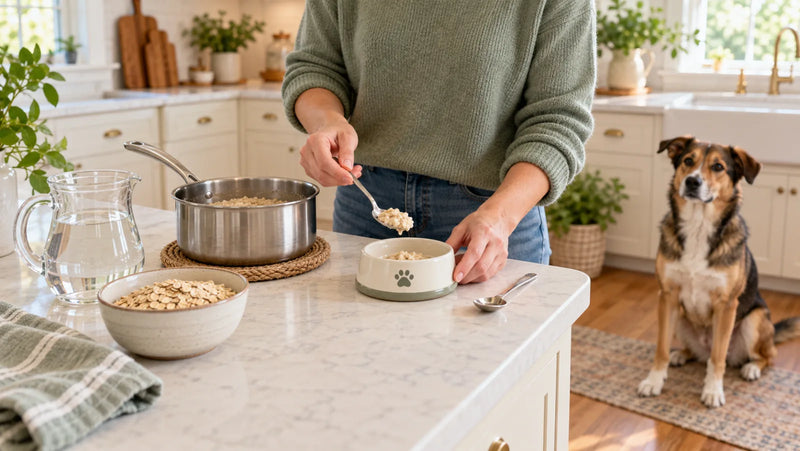
- Oatmeal: the question is not just cinnamon. Hot temperature, milk, sugar, raisins, chocolate, sweetener, and a large starchy portion can change the answer.
- Candy, gum, mints, and supplements: xylitol, concentrated cinnamon flavoring, caffeine, medicines, or swallowed packaging may dominate the risk.
- Cider or cocktails: a cinnamon stick does not make alcohol, sweetener, or other ingredients safe.
There is no reason to salvage a complex human dessert as a dog reward. If a dog already ate it, save the package or recipe and identify every ingredient before calling. Do not focus on cinnamon so narrowly that you miss xylitol, raisins, chocolate, alcohol, macadamia nuts, or raw dough.
Pumpkin Spice and Nutmeg Are Separate Risks
Pumpkin spice is a variable blend, not another name for cinnamon. It commonly includes cinnamon with ginger, nutmeg, cloves, or allspice. The cinnamon may be the largest ingredient by volume, but a smaller ingredient can set the safety decision.
Nutmeg contains myristicin. ASPCA notes that a large exposure can cause vomiting, dry mouth, agitation, pupil changes, fast heart rate, difficulty walking, and hallucination-like behavior. The Pet Poison Helpline's cinnamon and nutmeg review similarly distinguishes a small amount of nutmeg used in a recipe from the much greater concern created by a large ingestion. That does not make a pumpkin-spice dessert dog-safe; it means the actual amount and full ingredient list should guide professional triage.
Our pumpkin-spice guide for dogs owns the blend, latte, syrup, and seasonal drink decision. The dog gingerbread safety guide covers molasses, nutmeg, cloves, sweeteners, and decorative ingredients, while the pumpkin-pie guide covers filling, crust, dairy, sugar, and spice. This cinnamon page does not recreate those recipes.
How Much Cinnamon Can a Dog Have?
Dogs do not need a cinnamon portion. The most defensible planned-use rule is:
- No direct powder: do not shake cinnamon onto a bowl, treat, lick mat, or toy.
- No stick, oil, extract, or supplement: these forms offer no safe do-it-yourself upgrade.
- At most a trace in a vetted recipe: if a veterinarian has cleared an otherwise dog-safe recipe that contains cinnamon, use only the recipe's small amount dispersed through the entire batch. The dog's piece should not carry a visible layer or pocket of spice.
- No daily health dose: do not turn a tolerated trace into routine supplementation.
For an accidental exposure, use form-based triage rather than a household-spoon cutoff. A nearly invisible residue already swallowed by an asymptomatic healthy adult dog is different from a visible pile, an unknown amount, a cinnamon stick, a capsule, or any oil. When the amount cannot be reconstructed, call instead of assuming.
Any cinnamon-containing food also counts as a treat. The World Small Animal Veterinary Association treat guide recommends keeping all treats at no more than 10% of daily calories, with the dog's veterinary team determining the individual allowance. Our daily dog-treat calorie guide explains that shared ceiling. The 10% rule does not make an unsafe ingredient safe.
What to Do After a Cinnamon Exposure
- Remove access and secure the dog. Keep the dog away from loose powder, sticks, oil, supplements, baked goods, broken glass, and packaging.
- Identify the form. Ground culinary spice, a powder blend, essential oil, extract, stick, capsule, roll, pie, gum, or drink are different cases.
- Preserve the facts. Save the container and ingredient panel. Estimate the amount and time, note the dog's weight and medical history, and record coughing, vomiting, drooling, breathing change, wobbliness, weakness, tremors, or unusual behavior.
- Call for more than a trace or any high-risk form. Contact the veterinarian or ASPCA Animal Poison Control at 888-426-4435 for inhalation, oil, supplement, stick ingestion, a visible pile, an unknown amount, a toxic co-ingredient, or symptoms.
- Follow case-specific directions. Do not induce vomiting. Do not give milk, oil, food, salt, hydrogen peroxide, charcoal, or another home remedy unless the professional directs it.
- Use emergency care for respiratory or neurologic signs. Coughing with breathing difficulty, severe weakness, tremors, seizures, or collapse should not wait for a routine appointment.
Prevent Cinnamon and Holiday-Baking Exposures
- Close spice jars immediately and keep bulk bags off low shelves and counter edges.
- Measure powder before the dog enters the kitchen, and clean it with a method that does not throw dust into the air.
- Keep cinnamon sticks out of drinks, simmer pots, decorations, and trash a dog can reach.
- Store essential oils, diffuser refills, extracts, and supplements in a closed high cabinet.
- Keep dogs away from active baking zones, especially raw dough, cooling racks, frosting, candy, and wrappers.
- Tell guests that “non-toxic spice” does not mean a cinnamon roll, latte, or pumpkin-spice bite is approved.
- Save the veterinarian and emergency clinic numbers before the holiday rush.
Frequently Asked Questions
Is cinnamon toxic to dogs?
ASPCA lists cinnamon as non-toxic to dogs, so a tiny culinary trace is not the same as a classic poison exposure. Larger amounts can still irritate, powder can be inhaled, and concentrated cinnamon oil can be toxic. Non-toxic does not mean unlimited or beneficial.
What if my dog licked a little cinnamon powder?
Remove access and identify how much was spilled. A trace may cause no sign or mild irritation, but a visible amount, an unknown amount, coughing, choking, vomiting, or any abnormal behavior warrants a veterinary or poison-control call. Do not make the dog vomit.
Can dogs have cinnamon oil?
No intentional exposure. Cinnamon essential oil is concentrated and can be absorbed through the mouth, skin, and lungs. Call immediately after swallowing, skin contact, a spill, or a reaction to a diffuser, and follow professional decontamination directions.
Can dogs chew cinnamon sticks?
No. A stick is hard, irritating, and unnecessary; pieces can create choking or gastrointestinal concerns. Take it away and call if a piece was swallowed or the dog coughs, gags, vomits, seems painful, or acts abnormally.
Can dogs eat cinnamon rolls?
Do not offer them. Sugar, fat, frosting, raisins, chocolate, nuts, xylitol, other spices, and portion size can matter more than the cinnamon. Unbaked yeast dough is a separate emergency. Use the actual recipe for an exposure call.
Can dogs have pumpkin spice?
Do not judge the blend by cinnamon alone. Pumpkin spice may include nutmeg, cloves, ginger, and other ingredients, while lattes and baked goods add caffeine, sugar, fat, dairy, sweeteners, or packaging. Use the dedicated pumpkin-spice guide linked above.
Is Ceylon cinnamon safer than cassia for dogs?
A variety label does not establish a dog dose or make direct feeding useful. Both can irritate as powder, and neither turns cinnamon essential oil or a multi-ingredient dessert into a dog-safe product. The form, amount, recipe, and dog remain decisive.
Does cinnamon help dogs with blood sugar or inflammation?
Do not use cinnamon to treat diabetes, inflammation, arthritis, infection, obesity, or another condition. Human supplement marketing does not establish canine effectiveness or a safe dose. Ask the veterinarian managing the condition before changing food or supplements.
Use Predictable Dog Treats, Not Spice Experiments
A trace of ordinary cinnamon is not the same as a pile of powder or a bottle of oil. Keep the answer narrow: no direct spice serving, no supplement experiment, and no holiday dessert. If an exposure is more than a trace or involves breathing, oil, a stick, a supplement, an unknown amount, or another risky ingredient, call.
For future rewards, choose a product with a complete label and an intentional portion. Browse the American Paws dog treat collection instead of adapting cinnamon rolls or seasonal sweets. A dog treat is still part of the shared daily extras budget, and it never replaces veterinary advice for an exposure or medical condition.