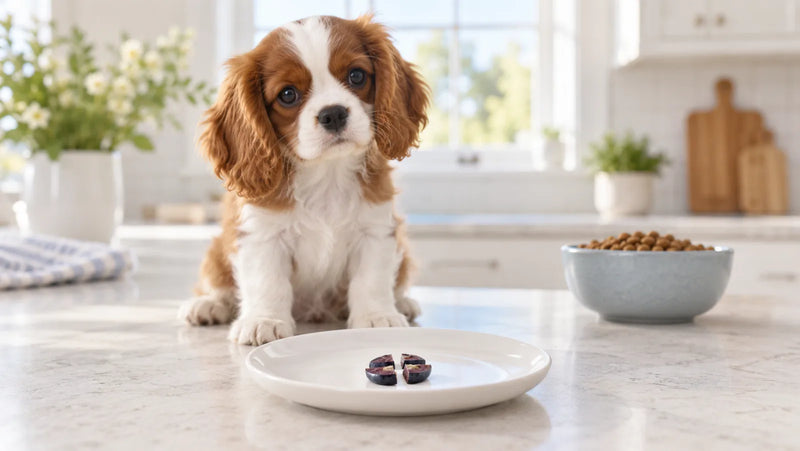

Can dogs eat tomatoes? Yes, but only the right part: most healthy dogs can have a small bite of plain, fully ripe red tomato flesh. Do not offer green tomatoes or let a dog chew tomato stems, leaves, or vines because those green parts contain higher concentrations of toxic nightshade compounds.
Tomato sauce is a separate decision. Pasta sauce, pizza sauce, ketchup, salsa, and soup often contain onion, garlic, salt, sugar, fat, or other ingredients that make them unsuitable for dogs. “Tomato” on the label does not make the whole recipe safe.
Can Dogs Eat Tomatoes? Ripe Red Flesh Only
The American Kennel Club’s tomato guidance says ripe red tomatoes are considered non-toxic and may be offered in small amounts as an occasional snack. The permission applies to plain, fully ripe flesh—not an unripe tomato, the plant, a seasoned dish, or an unlimited serving.
The ASPCA makes the same essential distinction from two angles. Its tomato-plant safety entry lists the plant as toxic to dogs while stating that ripe fruit is non-toxic. Its vegetable-garden safety guidance says the plant and small green tomatoes contain tomatine, whose concentration drops dramatically as the fruit ripens.
Use a simple household rule: red, ripe, plain, small, and separated from every green part. If any one of those conditions is missing, do not intentionally feed it. Our complete vegetable-safety guide covers the broader produce list; this page owns the tomato-specific questions about ripeness, plant material, sauces, gardens, and accidental exposure.
Tomato Parts at a Glance
| Tomato part or form | Default decision | Why |
|---|---|---|
| Fully ripe red flesh | A small plain bite may be offered | ASPCA identifies ripe fruit as non-toxic; too much can still upset the stomach |
| Ripe cherry or grape tomato | Same rule, but cut it | Round, slippery whole fruit can be gulped; remove every stem and green cap |
| Green or unripe tomato | Do not feed | Green fruit contains more tomatine and related nightshade glycoalkaloids |
| Stem, leaf, vine, or flower | Keep inaccessible | These are tomato-plant material, not edible dog-treat parts |
| Plain cooked ripe flesh | Only if truly plain and small | Cooking does not excuse oil, salt, seasoning, or an unripe starting ingredient |
| Sauce, ketchup, salsa, soup, or pizza | Do not intentionally share | Onion, garlic, salt, sugar, fat, chiles, dairy, and other co-ingredients may change the risk |
Cherry and grape tomatoes are not a special dog-safe category. They follow the same ripeness rule as a large tomato, and their small round shape makes cutting especially useful. Remove the green cap and stem, inspect the fruit, and offer only a dog-size piece.
Some tomato varieties are yellow or orange when fully ripe. If you grew or bought one and know its cultivar and ripeness, ask your veterinarian whether a taste fits your dog. When ripeness is uncertain, the low-risk choice is simply not to share it; a dog gains nothing essential from a tomato sample.
Why Green Tomatoes and the Plant Are Different
Glycoalkaloids are concentrated in green material
Tomatoes belong to the nightshade family. Their plant material and unripe fruit contain glycoalkaloids, including tomatine and related compounds, at higher concentrations than fully ripe fruit. ASPCA’s garden guidance specifically names tomatine in the plant and small green tomatoes. AKC likewise warns against young green tomatoes, leaves, and stems.
ASPCA’s plant database uses the broader tomato-plant entry, lists solanine as the toxic principle, and identifies the ripe fruit as non-toxic. Those source descriptions are not a reason to choose one chemical name and dismiss the other. The practical safety boundary is the same: do not intentionally feed green fruit or any part of the plant.
There is no reliable universal “safe number” of green tomatoes or leaves for home use. The exact plant part, maturity, amount, dog size, medical history, time since exposure, and any current signs all matter. A rough guess from an online serving chart cannot replace case-specific veterinary or poison-control assessment.
Ripening changes the risk, not every other ingredient
As a tomato ripens, tomatine levels fall substantially; that is why a little fully ripe fruit receives a different answer from a green tomato or vine. Ripeness does not erase the ordinary risks of a large portion, a slippery shape, mold, spoilage, or digestive intolerance.
It also does not make every tomato recipe suitable. A red sauce can begin with ripe fruit and still contain onion or garlic. A fried green tomato remains an unripe tomato under breading and oil. Cooking is not a dependable way to reclassify excluded plant material as a dog treat.
Signs After Eating Green Tomato or Tomato Plant Material
ASPCA lists hypersalivation, loss of appetite, severe gastrointestinal upset, depression, weakness, dilated pupils, and a slow heart rate among possible tomato-plant poisoning signs. AKC also describes vomiting or diarrhea, abdominal pain, lethargy, coordination problems, tremors or seizures, and abnormal heart rhythms.
A dog does not need to show every sign, and those signs are not unique to tomato exposure. Their absence immediately after an incident does not prove that the exposure is harmless. If you know or suspect the dog ate green fruit, stems, leaves, or vines, make the call while you can still provide useful timing and product details.
Go to an emergency veterinary clinic now for difficulty breathing, collapse, seizure, severe weakness, inability to stand normally, repeated vomiting, extreme drooling with trouble swallowing, or a major change in heart rate or rhythm. Call ahead when possible so the clinic can prepare, but do not delay transport for online research.
What to Do If Your Dog Ate a Green Tomato, Stem, Leaf, or Vine
- Stop further access. Move the dog away from the plant, fallen fruit, pruning pile, compost, or cooking scraps. Do not put your hands into the mouth of an actively biting or panicked dog.
- Call promptly. Contact your veterinarian, an emergency animal hospital, or ASPCA Poison Control at (888) 426-4435. Do not wait for visible illness before asking what this specific exposure requires.
- Identify the material. Report whether it was ripe fruit, green fruit, leaves, stems, vines, flowers, roots, or an uncertain mixture. Estimate the amount without delaying the call.
- Preserve useful evidence. Photograph the plant, fruit, bite marks, and any vomit. Safely bag a sample or pruning scrap if the professional requests it.
- List other exposures. Mention fertilizer, pesticide, herbicide, slug bait, mulch, compost, stakes, ties, clips, and any ingredients in a prepared dish. Save labels or the recipe.
- Follow the case-specific plan. A professional may recommend home observation, an examination, or emergency treatment based on details that a general article cannot evaluate.
Do not induce vomiting or give hydrogen peroxide, salt, milk, oil, bread, pumpkin, fiber, activated charcoal, antacids, or a forced meal unless the veterinarian or poison professional directs that exact step. An improvised remedy can create a second problem, obscure symptoms, or delay appropriate treatment.
Our toxic-food emergency guide gives the reusable call-first framework for other food exposures. It cannot identify a backyard plant from a description, so a clear photo and an actual sample can be more useful than a guess.

A Tomato-Garden Safety Plan for Dog Households
Use a physical barrier
The most useful tomato advice for a gardening household is not a serving size. It is access control. ASPCA recommends a low fence to keep pets out of vegetable gardens, and AKC likewise advises fencing outdoor tomato plants or placing indoor plants where dogs cannot reach or knock them down.
Choose a barrier suited to the dog, not merely a decorative border. A low wire edge may stop a calm senior but not a young jumper, digger, or determined retriever. Check the base, gate latch, and gaps, and do not count on a verbal “leave it” when the dog is outside alone.
Control fallen fruit and pruning waste
Inspect the bed after wind, watering, harvest, and pruning. Green tomatoes can drop under foliage, while clipped stems and leaves may land outside the barrier. Collect them immediately and place them in a closed container rather than an open bucket a dog can tip.
Secure compost and garbage as carefully as the live plant. A compost pile can combine tomato vines with moldy food, coffee grounds, onion scraps, corn cobs, fruit pits, and other hazards. “Natural” and “biodegradable” do not mean safe for unsupervised eating.
Treat garden chemicals as a separate exposure
Fertilizer, pesticide, herbicide, slug bait, and treated mulch create their own toxicology questions. If a dog chewed a tomato plant shortly after a product was applied, tell the veterinarian or poison-control specialist both facts. Do not assume the plant explains every symptom.
Keep the original package and take a readable photo of the ingredient panel, concentration, and application time. Never transfer garden products into unlabeled containers. Store tools, plant ties, clips, cages, and stakes where a chewing dog cannot swallow or injure itself on them.
How to Serve a Ripe Tomato Safely
- Choose a fresh, fully ripe red tomato with no mold, fermentation, leaking, or spoiled area.
- Wash the whole fruit under running water before cutting it.
- Remove the stem, green cap, leaves, vine, and any visibly green area.
- Cut the ripe flesh into a small piece appropriate for the dog’s mouth and chewing style.
- Serve it raw or cooked only when it is plain—no oil, butter, salt, seasoning, sauce, or garnish.
- Offer one tiny bite on a day when no other new food is being tested, then watch tolerance.
A whole cherry tomato can be round and slippery enough for a fast eater to gulp. Cut it into smaller pieces and supervise. A toy-breed puppy, a flat-faced dog, a senior with dental disease, and a calm large adult do not need the same shape or size.
Even approved ripe flesh is acidic and contains fiber. Too much can contribute to drooling from nausea, gas, soft stool, diarrhea, vomiting, appetite change, or abdominal discomfort without plant poisoning. Stop serving it and contact the veterinarian when signs are repeated, severe, worsening, or accompanied by pain, blood, weakness, or inability to keep water down.
How Much Ripe Tomato Can a Dog Have?
There is no universal cherry-tomato count or slice size. Tomatoes vary in size, a “bite” is not a unit, and dogs differ in body weight, daily calories, health, tolerance, and swallowing behavior. For a first trial, use one taste-sized piece; there is no benefit to working toward a bowlful.
All extras share one calorie budget. Training rewards, dental chews, table food, toppers, supplements with calories, and tomato pieces count together. Our daily dog-treat calorie guide explains how to work from the dog’s actual food plan rather than a generic produce chart.
Tomato is optional and should not replace complete and balanced dog food. Lycopene, vitamin C, potassium, fiber, and other nutrients in a tomato do not turn it into a cancer treatment, immune booster, anti-inflammatory drug, or required supplement. Ingredient composition is not a medical outcome.
Ask the veterinarian before sharing with a dog that has chronic gastrointestinal disease, a history of food reactions, diabetes, obesity, a kidney or heart condition with a prescribed sodium plan, a therapeutic or elimination diet, swallowing difficulty, or recurrent aspiration. Puppies should receive complete growth nutrition first; a ripe tomato is not needed for development.
Tomato Sauce, Pasta Sauce, Ketchup, Salsa, Soup, and Pizza
Do not intentionally share mixed tomato products. AKC notes that tomato sauce on pizza or spaghetti may contain garlic and onions. Both belong to the Allium family, and onion or garlic powder can be easy to miss in a long ingredient list. Our onion safety guide explains why fresh, cooked, dried, and powdered forms are not dog seasonings.
| Prepared food | Why the answer changes |
|---|---|
| Pasta or pizza sauce | Often contains onion, garlic, salt, sugar, oil, herbs, cheese, meat, or alcohol; the complete recipe matters |
| Ketchup | Concentrated, salty, and sweetened; sugar-free products require a complete sweetener check, including xylitol |
| Salsa | Commonly combines onion, garlic, chiles, salt, lime, and other ingredients that are unsuitable or irritating |
| Tomato soup | May contain onion or garlic stock, sodium, cream, butter, sugar, and seasonings |
| Pizza | Adds dough, fat, cheese, processed meat, seasoning, and sometimes onion or garlic to the sauce question |
| Sun-dried tomatoes | Easy to over-serve and often packed with oil, salt, garlic, herbs, or other seasonings |
A tiny lick of one conventional sauce is not automatically the same exposure as eating a bowl of sauce containing onion powder. Conversely, a dog that seems normal is not proof that an unknown recipe is safe. Save the jar, package, restaurant ingredient list, or homemade recipe; note the amount and time; then call a veterinarian or poison-control professional based on the most concerning co-ingredient.
“Organic,” “homemade,” “all natural,” “no added sugar,” and “made with real tomatoes” are marketing or recipe descriptions, not dog-safety conclusions. Read every ingredient. If the recipe is unknown, do not use the red color of the sauce as reassurance.
Tomatoes Compared with Potatoes
Tomatoes and potatoes are both nightshades, so the plant part and preparation matter in each case. That family resemblance does not make their serving rules interchangeable. Our potato safety guide owns the questions about raw potato, green skin, sprouts, cooking, starch, and potato dishes.
For tomatoes, the intentional serving considered here is a little plain, fully ripe red flesh. Do not transfer a potato cooking instruction to a green tomato and assume heat makes it equivalent to ripe fruit. Likewise, do not use a tomato article to calculate a potato glycoalkaloid dose. Identify the exact food, part, ripeness, preparation, and amount before seeking advice.
Frequently Asked Questions
Can dogs eat raw tomatoes?
Most healthy dogs can have a small piece of plain, fully ripe red tomato flesh. Wash it, remove every stem and green part, cut it for the dog, and start with one tiny bite. Do not feed unripe green tomato.
Can dogs eat cherry or grape tomatoes?
Yes, if the tomato is fully ripe, red, plain, and served in a small amount. Remove the stem and green cap and cut the round fruit into dog-appropriate pieces rather than offering it whole to a fast eater.
Can dogs eat green tomatoes?
No. Unripe green tomatoes contain higher levels of tomatine and related nightshade compounds. If your dog ate one, report the dog’s weight, estimated amount, timing, ripeness, and symptoms to a veterinarian or ASPCA Poison Control rather than testing a home dose threshold.
Can dogs eat tomato leaves or stems?
No. Leaves, stems, and vines are tomato-plant material and should remain inaccessible. Call a veterinarian or ASPCA Poison Control after known or suspected ingestion, even if the dog currently looks normal.
Can dogs eat cooked tomatoes?
A little cooked flesh from a fully ripe tomato may be considered only when it is completely plain. Do not use cooking to make green fruit or plant material “safe,” and skip recipes containing onion, garlic, salt, oil, butter, or other seasonings.
Can dogs eat tomato sauce or pasta sauce?
Do not intentionally share it. Many sauces contain onion, garlic, salt, sugar, fat, or other unsuitable ingredients. Check the entire label or recipe; if your dog ate some, preserve that information and contact a professional when a toxic ingredient or meaningful amount may be involved.
Can dogs eat ketchup?
Ketchup is unnecessary and should be skipped. It is concentrated, salty, and commonly sweetened. Sugar-free does not automatically mean safer: check every sweetener, and treat any possible xylitol exposure as an urgent poison call.
Can puppies eat tomatoes?
Puppies do not need tomatoes. Complete growth food and measured training rewards should come first. If the puppy’s veterinarian approves a taste, use one tiny soft piece of fully ripe red flesh with no stem or green material.
What if my dog ate one red tomato?
If it was fully ripe, plain, and separated from the plant, poisoning is not expected from the ripe fruit itself, according to ASPCA. A whole tomato or large amount can still cause digestive upset or a swallowing problem. Call the veterinarian for repeated vomiting, pain, marked lethargy, choking signs, or uncertainty about ripeness or attached plant material.
What if my dog ate a tomato plant?
Remove access and call your veterinarian, an emergency clinic, or ASPCA Poison Control at (888) 426-4435 promptly. Report the exact parts, likely amount, time, dog’s weight, symptoms, and any garden chemicals. Do not induce vomiting unless the case professional directs it.
Keep the Red Flesh Small and the Green Plant Out of Reach
The safest tomato routine is easy to remember: offer, at most, one small taste of washed, plain, fully ripe red flesh; remove every green part; and keep the plant, fallen fruit, and pruning waste behind a dog-proof barrier. Mixed sauces are not the same food and need a complete ingredient check.
If a tomato’s ripeness, acidity, shape, garden context, or recipe makes it a poor fit, skip it. Browse current American Paws dog treats for clearly labeled rewards that can be matched to your dog’s size, chewing style, daily calorie plan, and veterinary guidance.