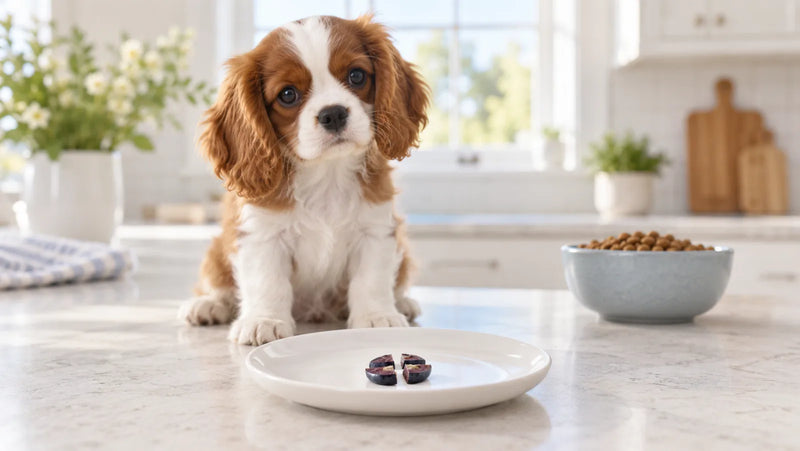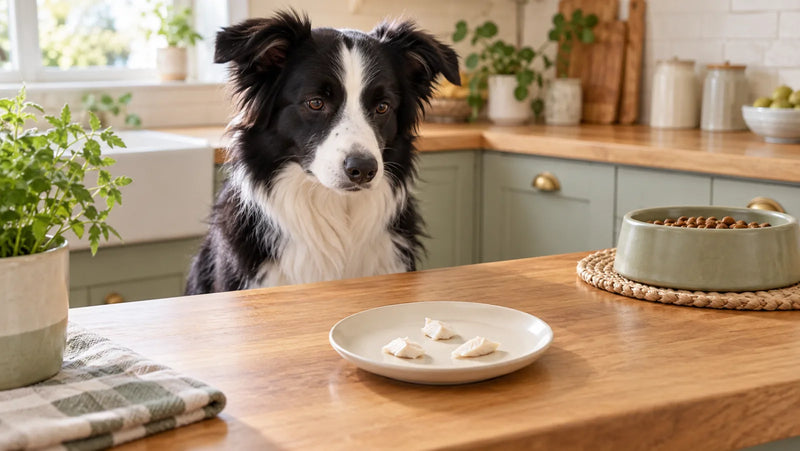

“Can German Shepherd eat banana?” is common search shorthand. Yes—many healthy adult German Shepherds can have a small amount of ripe, peeled banana. Large body size creates more calorie room than a toy dog has, but it does not make a half or whole banana an appropriate default serving. Begin with about 1/16 of a medium banana, cut into smaller irregular pieces, and count it with every other extra.
Breed context matters in two other ways. German Shepherds are large, deep-chested dogs for whom gastric dilatation-volvulus, or GDV, is a serious concern, so a banana snack should never become a reason for intense activity around a large meal. The breed is also predisposed to exocrine pancreatic insufficiency, or EPI. Banana does not cause, prevent, diagnose, or treat either condition.
“Can German Shepherd Eat Banana?” The Direct Answer
- Healthy adult German Shepherd: a small amount of ripe, plain banana flesh may be an occasional extra.
- Portion: start with one equal 1/16 share of a medium banana—about 7.4 g and 6.6 kcal using the USDA reference—then cut that allocation into smaller irregular bites.
- Peel: remove it completely. Banana peel is not considered chemically toxic, but it is fibrous, difficult to digest, and can become an obstruction concern.
- Large meal and exercise: do not add hard running, fetch, jumping, or rough play around a large meal because the dog ate a fruit snack. Follow the veterinarian's GDV-aware meal and activity plan.
- EPI, chronic diarrhea, weight loss, or a diagnosed gastrointestinal condition: use only foods approved for that dog's treatment plan.
- Whole banana: not a suitable routine serving. It can use most—or for a smaller adult, potentially all—of the daily extras allowance.
This page owns the German-Shepherd-specific decision. The complete banana safety and preparation guide retains the broad answer for all dogs, while the banana-benefits and sugar guide handles nutrient claims. Large-breed details here should not replace either general guide.
Why Large-Breed Size Changes—but Does Not Remove—the Limit
The AKC German Shepherd Dog profile describes a large breed, with representative adult weights of 65–90 pounds for males and 50–70 pounds for females. Those ranges provide context, not a portion prescription. An individual's measured weight, ideal body condition, age, neuter status, activity, food calories, health, and veterinarian-set plan matter more than the breed label.
A larger dog usually has a larger daily calorie budget than a toy dog, so one small banana piece consumes a smaller percentage. That is the real breed difference. The mistake is jumping from more room to unlimited room. Training treats, chews, dental products, toppers, table scraps, and food used for medication already draw from the same small extras budget.
German Shepherds are also highly trainable working dogs, which can mean frequent food rewards. One large fruit serving may quietly compete with dozens of small training reinforcers. Portion the fruit before the session and decide which rewards it replaces; do not simply add banana on top.
German Shepherd Banana Calorie Math
The USDA SNAP-Ed banana reference lists one medium banana as 118 g and 105 kcal. A real banana can be smaller or larger, so this is transparent example math—not a guarantee about the fruit on your counter.
WSAVA's healthy adult dog calorie chart gives broad starting ranges and warns that individual needs vary. Combined with the under-10% extras ceiling, the numbers show why whole fruit is still too much for a large dog.
| Illustrative healthy adult | WSAVA daily range | Under-10% extras range | Share used by a 105-kcal banana |
|---|---|---|---|
| 30 kg / 66 lb | 1080–1346 kcal | About 108–135 kcal | About 78–97% |
| 40 kg / 88 lb | 1340–1670 kcal | About 134–167 kcal | About 63–78% |
Those percentages are not a feeding recommendation. They show that even near the upper end of the breed, a whole medium banana can consume most of the day's extras before a single training reward, chew, topper, or table bite is counted. A smaller female, inactive adult, senior, or dog on weight reduction may have less room.
For a repeatable cut, divide the peeled reference banana lengthwise into four strips, then divide each strip crosswise into four similar pieces. That creates 16 equal-weight shares. By arithmetic, each averages about 7.4 g and 6.6 kcal. Actual pieces differ with the banana and knife, so use a kitchen scale when calories must be precise.
How Much Banana Can a German Shepherd Eat?
For a suitable healthy adult, use the 16-share method as a conservative starting framework:
| Stage | Banana allocation | Illustrative calories | Use |
|---|---|---|---|
| First taste | One 1/16 share, cut smaller | About 6.6 kcal | Offer on a day with no other new food and watch tolerance |
| Possible occasional ceiling | Two 1/16 shares, or 1/8 banana total | About 13.1 kcal | Only if it fits the dog's actual plan and the first taste was tolerated |
| Whole medium banana | 16 shares | About 105 kcal | Not a routine German Shepherd serving |
The possible ceiling is not a daily maximum, target, or veterinary dose. Diabetes, obesity, a prescription diet, gastrointestinal disease, EPI, dental problems, or a history of poor tolerance may make the right amount zero. An extremely active working dog may need more total calories, but that does not prove that extra banana is the best way to supply them.
The WSAVA treat guide recommends that all extras together stay below 10% of daily calories so complete and balanced food supplies at least 90%. Our daily dog-treat calorie guide explains the shared-budget calculation. Do not assign banana its own 10% and then give every other reward another 10%.
How to Prepare Banana for a German Shepherd
- Choose ripe plain fruit. Use ordinary banana flesh with no syrup, chocolate, yogurt, peanut butter, sweetener, or coating.
- Remove the entire peel. Keep peel and stem out of reach rather than treating them as a chew.
- Allocate before cutting bites. Separate one 1/16 share for the first taste; put the rest away.
- Cut the allocation smaller. Make several soft irregular pieces rather than one slippery round coin or a large chunk.
- Offer one piece at a time. Supervise swallowing and do not toss pieces across the room for a fast-catching game.
- Count every piece. Banana used in training still counts as food; stop when the measured allocation is gone.
- Watch the next day or two. Note appetite, energy, stool, vomiting, gas, abdominal comfort, itching, and any unusual sign.
A small measured mash can work when the dog needs a softer texture, but smear volume is hard to estimate. Measure the banana before mashing it. A food toy can release a large plug or encourage frantic gulping, so do not pack one with an unmeasured half banana.

German Shepherds, Meals, Exercise, and GDV
Gastric dilatation-volvulus begins when the stomach dilates and may twist, blocking its entrance and exit and compromising blood flow. It is a rapidly life-threatening emergency. VCA's GDV guidance says the condition is seen most often in large, deep-chested dogs, although any dog can be affected. It also notes that exercise after a large meal or large water intake may increase risk.
Banana does not cause, prevent, or treat GDV. A one-piece fruit taste is not the same as a large meal, and the exact cause of GDV is not known. The practical guardrail is to keep the dog's established meal and activity routine stable: do not turn post-meal banana into an invitation for hard fetch, sprinting, jumping, or rough play, and do not invent a universal one-, two-, or three-hour rule. Ask the veterinarian what timing fits this dog's meals, water habits, work, age, and risk factors.
Signs can include repeated attempts to vomit with little or nothing produced, a rapidly enlarging or painful abdomen, restlessness or inability to settle, drooling, panting, pale gums, weakness, collapse, or breathing trouble. Go to an emergency veterinary hospital immediately. Do not walk the dog to release gas, massage the belly, offer banana or water, give gas medicine, or wait for the abdomen to become obviously large.
Owners of at-risk dogs can also ask their veterinarian about meal management and preventive gastropexy. That conversation is separate from whether a small banana piece fits the calorie plan.
EPI and the “Sensitive Stomach” Label
German Shepherds have a documented breed predisposition to exocrine pancreatic insufficiency. The Merck Veterinary Manual's EPI review explains that pancreatic acinar atrophy is the most common cause in German Shepherd Dogs and that the condition is especially frequent in young adult members of the breed.
EPI means the pancreas does not produce enough digestive enzymes. Common patterns include weight loss, large amounts of loose stool, and increased appetite; stool may be pale, bulky, greasy, or unusually foul. Vomiting or appetite loss can occur but may point to another concurrent problem. Diagnosis requires veterinary testing, including serum trypsin-like immunoreactivity—not a home banana trial.
Banana is not an enzyme replacement, cobalamin supplement, stool test, or treatment for EPI. A dog already diagnosed with EPI needs its prescribed enzyme, diet, cobalamin, monitoring, and follow-up plan. Adding unapproved fruit can change stool and calorie intake, making it harder to evaluate control.
The phrase sensitive stomach is not a diagnosis. Merck's chronic enteropathy review says inflammatory bowel disease may be more common in German Shepherds, but not every German Shepherd has chronic gut disease. Parasites, EPI, food reactions, infection, medication effects, obstruction, and other problems can produce overlapping signs.
Introduce banana one food at a time. Stop after vomiting, repeat diarrhea, pain, appetite change, marked gas, abnormal stool, itching, or another reaction. Persistent loose bulky stool, chronic diarrhea, or weight loss—especially despite a strong appetite—deserves a veterinary workup rather than more banana for fiber.
Banana Sugar, Weight, Teeth, and Digestive Tolerance
The AKC banana guide supports a qualified yes and emphasizes moderation because bananas contain natural sugar. Natural does not mean calorie-free. A German Shepherd who is overweight, inactive, senior, diabetic, or on weight reduction may need the same training experience with a lower-calorie reward—or part of the measured regular meal.
Banana contains fiber, potassium, vitamin B6, vitamin C, magnesium, and other nutrients, but the small serving used here is not a medical dose. Do not claim it prevents muscle cramps, supports the heart, boosts immunity, strengthens bone, cures constipation or diarrhea, improves the coat, fuels work, or treats EPI. A complete diet remains responsible for nutrition.
Soft banana avoids the hardness of some treats, but sticky carbohydrate does not clean teeth. It is not dental care. Follow the dog's home-brushing and veterinary dental plan, and do not use banana on a painful mouth or after a dental procedure without approval.
Peel, Frozen Banana, and Mixed Banana Products
Banana peel
AKC says the peel is not toxic but is difficult to digest and may contribute to intestinal blockage. A large German Shepherd can still swallow a long peel or stem quickly; body size does not make the material dissolvable. Keep peels in a secured trash or compost container.
Frozen banana
Freezing does not remove sugar or calories and makes the fruit harder. If a veterinarian has approved banana, portion and peel it before freezing, then allow a small piece to soften. Skip frozen pieces for dental disease, swallowing difficulty, gulping, seniors with oral discomfort, or a dog whose treatment plan requires another texture. Never offer a whole frozen banana as a chew.
Banana bread, chips, smoothies, and mixtures
These are separate foods. Banana bread, chips, yogurt mixes, smoothies, peanut-butter fillings, chocolate coatings, and commercial snacks can add sugar, fat, salt, raisins, macadamia nuts, chocolate, or sweeteners. Read the complete ingredient list; the amount of banana does not make the rest safe.
If a product contains or may contain xylitol, chocolate, raisins, macadamia nuts, medication, cannabis, or another toxin, contact a veterinarian, emergency clinic, or ASPCA Animal Poison Control at (888) 426-4435 promptly. A consultation fee may apply. Do not wait for symptoms or induce vomiting unless the professional handling the case directs it.
German Shepherd vs Yorkie Portions: Same Rule, Different Scale
A German Shepherd and Yorkshire Terrier should not receive the same banana piece. Our Yorkie banana calorie and portion guide shows how one thick human-size coin can consume most or all of a 2–3 kg toy dog's daily extras ceiling. A 30–40 kg German Shepherd has much more room, so a 1/16-banana allocation is a smaller fraction of daily needs.
The underlying rule is identical: use actual calories, keep all extras below 10%, cut for the individual mouth and eating style, and leave complete food primary. Large breed does not mean whole fruit; toy breed does not mean fruit is forbidden. Each dog needs its own measured portion.
Banana also belongs inside a wider fruit decision. The broader fruit-for-dogs overview owns the safe-versus-toxic parent question. Do not transfer a banana yes to grapes, raisins, pits, cores, or every mixed fruit product.
Which German Shepherds Should Skip Banana or Ask a Veterinarian?
- Puppies whose complete large-breed growth diet and controlled mineral balance should not be displaced by extras.
- Dogs with diagnosed EPI, chronic enteropathy, pancreatitis, diabetes, obesity, kidney disease, or another nutrition-sensitive condition.
- Dogs on prescription, elimination, hydrolyzed, weight-loss, gastrointestinal, or recovery diets.
- Dogs with active vomiting, diarrhea, abdominal pain, distension, appetite loss, dehydration, weakness, or unexplained weight loss.
- Dogs with swallowing trouble, dental pain, recent oral procedures, or a pattern of gulping food whole.
- Dogs being evaluated for recurrent loose bulky stool, strong appetite with weight loss, or another possible EPI sign.
- Any dog showing possible GDV signs. That is an emergency, not a feeding decision.
How to Introduce Banana Slowly
- Confirm that banana does not conflict with the dog's medical or diet plan.
- Choose a day with no hard exercise around a large meal and no other new foods.
- Peel a ripe banana and separate one 1/16 share; return the rest to human use or safe storage.
- Cut that share into smaller irregular pieces and offer one piece at a time under supervision.
- Do not add peanut butter, yogurt, honey, syrup, or another ingredient during the test.
- Over the next day or two, monitor appetite, energy, stool, gas, vomiting, itching, and abdominal comfort.
- Stop after any adverse sign. Contact the veterinarian for persistent, recurring, painful, or systemic symptoms.
Tolerating one test does not prove a health benefit or establish a daily serving. If banana is ever offered again, keep it occasional and re-count the rest of that day's rewards.
What If a German Shepherd Eats Too Much Banana or the Peel?
Separate flesh from peel and plain fruit from a mixed product. Several pieces of plain banana may cause no more than gastrointestinal upset, while a swallowed peel creates a foreign-body question and a mixed dessert may contain a toxin.
- Remove access. Secure the banana, peel, stem, package, wrappers, trash, and any mixed product.
- Record details. Note flesh versus peel, estimated amount, earliest time, dog's weight, medical history, and current signs.
- Call for peel or symptoms. Contact the veterinarian for swallowed peel, repeat vomiting, a painful or swollen abdomen, marked lethargy, appetite loss, straining, failure to pass stool, or inability to keep water down.
- Treat GDV signs as an emergency. Unproductive retching, rapidly expanding abdomen, restlessness, drooling, weakness, collapse, pale gums, or breathing trouble requires immediate emergency transport.
- Do not improvise. Do not induce vomiting or give hydrogen peroxide, salt, oil, bread, milk, gas medicine, charcoal, food, or forced water unless the clinician handling this exact case directs it.
Frequently Asked Questions
Can a German Shepherd puppy eat banana?
A veterinarian may approve a tiny piece for an individual puppy, but banana is unnecessary. Large-breed puppies need a complete growth diet with controlled nutrients, and extras can displace it. Do not use banana to treat diarrhea, low energy, poor growth, or training problems; ask the puppy's veterinarian first.
Can German Shepherds eat banana every day?
There is no reason to make it daily. Banana contains sugar and competes with training rewards and other extras. If an adult tolerates it and the veterinarian has no concern, an occasional measured 1/16-to-1/8 portion is easier to justify than a daily habit.
Can German Shepherds eat banana peels?
No. Peel is not considered chemically toxic, but it is fibrous, difficult to digest, and may obstruct. Do not offer it as a chew. If a peel is swallowed, save the details and call the veterinarian rather than waiting or trying a home remedy.
Can German Shepherds eat frozen banana?
A small pre-portioned piece may be acceptable for a suitable dog after it softens, but freezing does not reduce sugar or calories. Do not offer a whole frozen banana or hard block, and skip it for dental disease, swallowing difficulty, gulping, seniors with oral pain, or dogs on controlled diets.
Is banana good for a German Shepherd's sensitive stomach?
Do not use that label as a diagnosis. Some German Shepherds develop EPI or chronic enteropathy, and many other problems can cause similar signs. Banana does not treat them and may change stool. Persistent diarrhea, bulky or pale stool, abdominal pain, vomiting, appetite change, or weight loss needs veterinary assessment.
Keep the Portion Small and the Main Diet Complete
A healthy adult German Shepherd may enjoy ripe, peeled banana, but large-breed size changes the scale—not the rule. Start with one 1/16 share of a medium banana, cut it smaller, count it with every other reward, and never let whole-fruit calories crowd out complete food. Keep meal and activity routines GDV-aware, and keep unapproved extras out of an EPI or gastrointestinal plan.
American Paws does not currently claim a banana product. If you prefer a purpose-made reward with a defined label, browse all current American Paws dog treats and choose ingredients, calories, size, and texture that fit your German Shepherd's actual needs. Measure the serving before training begins and keep the rest of the day's extras inside the veterinarian-guided calorie budget.