Can puppies eat pork? A fully weaned puppy eating a stable complete growth diet may be able to try one tiny piece of plain, lean, boneless pork that has been cooked to a safe temperature and cooled. That narrow permission still depends on the puppy's health, chewing ability and veterinary feeding plan. Pork is optional; it is not a puppy meal or a food every puppy needs to learn to eat.
Do not offer raw or undercooked pork, pork bones, fatty trimmings, crackling, bacon, ham, sausage or seasoned pork. If the puppy already stole some, identify the exact form before deciding what to do. A cooled cube of plain tenderloin and a bone-in barbecue rib are not the same exposure.
Can Puppies Eat Pork? The Short Answer by Form
| Pork form | Routine puppy choice? | Why |
|---|---|---|
| Plain, lean, fully cooked, boneless pork | Possibly one tiny taste for an eligible puppy | Preparation, portion and individual tolerance still matter |
| Raw or undercooked pork | No | Parasite, bacterial and household cross-contamination risk |
| Raw or cooked pork bone | No | Choking, tooth fracture, injury or obstruction |
| Fat trimmings, skin, crackling or pan drippings | No | Concentrated fat and digestive risk |
| Bacon, ham, sausage or pepperoni | No | Curing, sodium, fat and recipe-specific seasonings |
| Barbecue, glazed, marinated or seasoned pork | No | Salt, fat, onion, garlic, sweeteners or unknown ingredients |
The form check comes after the puppy check. A very young, not-fully-weaned puppy should not receive table food. Neither should a puppy with active vomiting or diarrhea, a suspected food reaction, a veterinary elimination trial, a prescription diet or a medical plan that limits fat or extras. When those issues are absent, the veterinary team can decide whether an optional first taste fits.
Check Puppy Readiness Before You Share Pork
Age by itself does not prove readiness. First, the puppy should be completely weaned and reliably eating a food labeled for growth or the appropriate life stage. The FDA's complete-and-balanced pet food guide explains the nutritional adequacy statement used to identify food intended as a sole diet. That complete puppy food—not pork—must keep doing the work of growth nutrition.
Second, the puppy should be healthy enough for an extra. Ask the veterinarian before sharing pork if the puppy has recurring soft stool, vomiting, abdominal pain, poor growth, obesity risk, a known food sensitivity, previous pancreatitis, a low-fat plan or a prescription diet. An elimination trial only works when unplanned proteins stay out.
Third, consider how the puppy eats. A gulping puppy needs a piece smaller than one that a careful chewer might manage, and a teething or small-breed puppy may need the cooked meat pulled into a soft fleck rather than cut into a cube. Supervise the first taste. Do not hand over a strip, chop, rib or chunk for the puppy to work on.
Prepare One Tiny Plain Pork Taste Safely
Choose Lean, Fresh, Boneless Pork
Start with an intact lean cut such as plain pork loin or tenderloin, or plain ground pork whose ingredient list is simply pork. Remove every bone before cooking or portioning, and trim visible fat and skin. Do not use sausage meat, pre-marinated pork, injected or brined meat, breaded cutlets, barbecue pork, restaurant leftovers or anything with an uncertain ingredient list.
Reserve the puppy's piece before the family recipe receives salt, oil, butter, broth, onion, garlic, spice rub, glaze, sauce or pan drippings. Use clean hands and utensils, keep raw meat away from the finished-food surface and the puppy's bowl, and wash contacted equipment and counters after preparation.
Use a Thermometer, Not Color
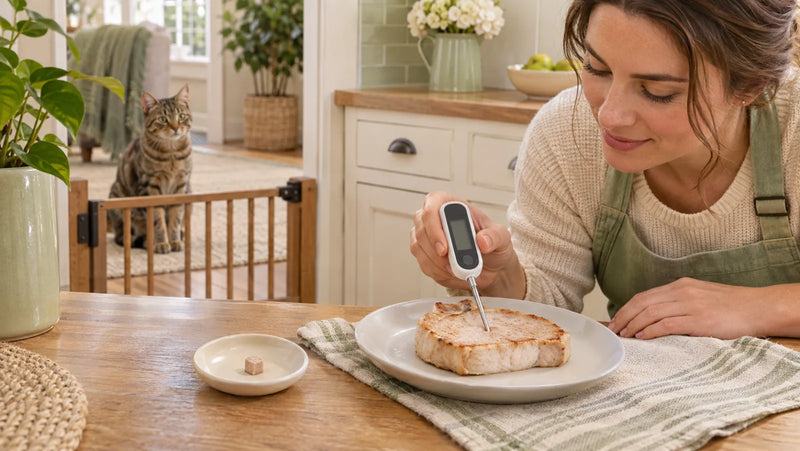
The USDA Food Safety and Inspection Service gives two different endpoints. Cook an intact pork steak, chop or roast to at least 145°F (63°C), measured in the thickest part, then let it rest for at least three minutes. Cook ground pork to 160°F (71°C). A digital food thermometer is the check; pinkness, browning and clear juices are not reliable substitutes.
Those temperatures apply to domestic pork. Wild boar and other wild game present a different risk profile and should not be improvised as puppy food. If a puppy ate raw or undercooked wild game, contact the veterinarian with the source, amount and timing.
Cool and Cut Below the Puppy’s Normal Food-Piece Size
After the temperature and required rest, move the plain puppy portion to a clean dish. Let it cool until it is no warmer than the puppy's usual food. Recheck for bone, gristle and visible fat, then cut or pull off one soft piece smaller than one normal piece of the puppy's food. Put the rest away before offering the taste so an enthusiastic puppy cannot take more.

Why Raw or Undercooked Pork Is Not a Puppy Treat
Trichinellosis is caused by Trichinella parasites carried in infected meat. The CDC's prevention guidance says cooking meat to safe internal temperatures is the best way to prevent infection, recommends checking with a food thermometer and specifically says not to feed uncooked meat or scraps to animals. It also notes that curing, drying, smoking or microwaving alone does not consistently kill the worms.
This is not a claim that every package of pork contains parasites. It is a reason not to gamble on raw or undercooked meat when a verified cooking step is available. Raw pork can also carry harmful bacteria, contaminate hands, counters, utensils and bowls, and expose people as well as the puppy. Freezing or a raw-food label does not turn kitchen hygiene off.
If the puppy ate raw or undercooked pork, save the package and note whether it was commercial domestic pork or wild boar, the amount, time, source and any symptoms. Call the veterinarian for case-specific advice. Do not wait for a parasite-specific sign, and do not try to disinfect the exposure inside the puppy with medication or a home remedy.
Pork Bones Are Unsafe Raw or Cooked
Do not give a puppy a pork bone in either form. The WSAVA Nutrition Committee's dog-treat guide warns that both cooked and raw bones can cause significant damage when chewed or swallowed. A bone can become a choking object, fracture a tooth, scrape or puncture tissue, or lodge in the digestive tract. Cooking can make a bone brittle, but leaving it raw does not make it puppy-safe.
Remove bones before the puppy's portion is set aside. After the family meal, count and secure discarded bones in a lidded trash container the puppy cannot reach. Foil, plastic wrap, absorbent pads, skewers and butcher string also matter; they can disappear with a stolen leftover.
Trouble breathing, blue or gray gums, collapse or severe distress requires an emergency clinic now. After a swallowed bone, call promptly even if the puppy initially looks normal. Repeated vomiting or retching, abdominal pain, a tense belly, appetite loss, marked lethargy, blood in vomit or stool, or difficulty passing stool also needs urgent veterinary attention. Do not induce vomiting or try to cushion or push a bone through with bread, pumpkin, oil or a bulky meal.
Bacon, Ham and Sausage Are Not Plain Pork
Bacon, ham, sausage, pepperoni and salami start with pork but become different foods through curing, smoking, grinding, added fat, sodium and seasonings. A recipe may also include onion or garlic. Pork rinds and crackling concentrate fat and commonly add salt or flavoring. None belongs in a puppy's planned treat rotation.
One stolen crumb does not automatically prove salt poisoning or pancreatitis. Risk depends on the exact product, ingredients, amount, puppy's size and health, timing and symptoms. Save the label and call the veterinarian when the amount is meaningful or uncertain, the product contains a hazardous ingredient, or the puppy develops signs. For the cured-meat decision in particular, use the puppy-specific ham guide.
Do not rinse or scrape seasoning off a prepared pork dish and call it plain. Marinades and brines move into the meat, while sauces and pan juices can leave salt, fat and other ingredients behind. A fresh unseasoned piece set aside before cooking is the controllable option.
Fatty Pork Is a Poor Fit for a Growing Puppy
Visible fat, skin, crackling and drippings add a large amount of fat to a small bite. Even without a diagnosed disease, a sudden rich food can cause vomiting or diarrhea. Puppies have little room for calorie-dense extras because their complete growth diet needs to supply the right nutrient balance.
The Merck Veterinary Manual describes dietary indiscretion as a recognized risk factor for pancreatitis in dogs while also noting that most cases do not have one apparent cause. That distinction matters: a fatty pork scrap is an avoidable risk, but no responsible guide can diagnose pancreatitis or promise that one bite will cause it.
A puppy with previous pancreatitis, chronic gastrointestinal disease, high blood lipids or a veterinary low-fat diet should not receive improvised pork. Ask the treating veterinarian about suitable rewards instead. For other puppies, choosing lean meat and removing visible fat does not make the treat calorie-free or medically appropriate by itself.
How Much Pork Can a Puppy Have?
The first taste is one piece smaller than one normal piece of the puppy's food. It is an observation step, not a serving and not a daily allowance. Offer it when the puppy is otherwise well, then stop. Watch for vomiting, diarrhea, itching, facial swelling, hives, unusual lethargy, pain or breathing changes and contact the veterinarian for concerning signs.
All extras share one budget: training rewards, chews, table tastes, food-stuffed toys and dog treats. WSAVA recommends that treats stay at no more than 10% of daily calories, but that is an upper planning boundary—not a target to fill with pork. A puppy's individual allowance may be lower, and the veterinary team can calculate it from body condition, expected growth, complete diet and medical needs.
The daily puppy treat guide shows how to budget rewards without displacing growth food. The puppy-treat selection guide adds texture, size, label and training considerations. Use those decisions before turning one tolerated taste into a repeat habit.
What to Do If Your Puppy Ate Pork
- Secure the leftovers and trash. Prevent more access and check whether bones, skewers, foil, plastic, absorbent pads or string are missing.
- Identify the form. Was the pork raw or cooked, domestic or wild, fresh or cured, lean or fatty, plain or seasoned, and boneless or bone-in?
- Record the exposure. Note the puppy's weight and age, the estimated amount, time, product or recipe, cooking method and current behavior. Save the label or menu.
- Use the highest-risk detail. A swallowed bone, missing skewer or wrapper, raw wild boar, onion or garlic seasoning, a large fatty meal, an unknown restaurant recipe or significant symptoms deserves prompt professional advice.
Breathing trouble, choking, collapse, severe weakness or blue-gray gums is an emergency. Call the veterinarian or emergency clinic for repeated vomiting or diarrhea, retching, abdominal swelling or pain, blood, tremors, marked lethargy, appetite loss or trouble passing stool. A young puppy can dehydrate quickly, so do not wait through persistent gastrointestinal signs.
Do not give peroxide, salt, oil, milk, bread, charcoal, a forced meal or human medicine unless the professional managing the case directs it. Inducing vomiting can be especially dangerous after a bone or sharp object. Different exposures require different decisions; the details you collected are more useful than a generic pork remedy.
Pork, Adult-Dog Guidance and Purpose-Made Treats Are Separate Decisions
For an adult dog, the adult-dog pork safety guide compares raw, cooked, cured, seasoned and bone-in forms. If the question is the kitchen workflow rather than puppy readiness, the plain pork cooking guide for dogs covers cut selection, thermometer use, cooling and storage. This puppy guide stays focused on growth-food priority, tiny first tastes and the smaller margin for extras.
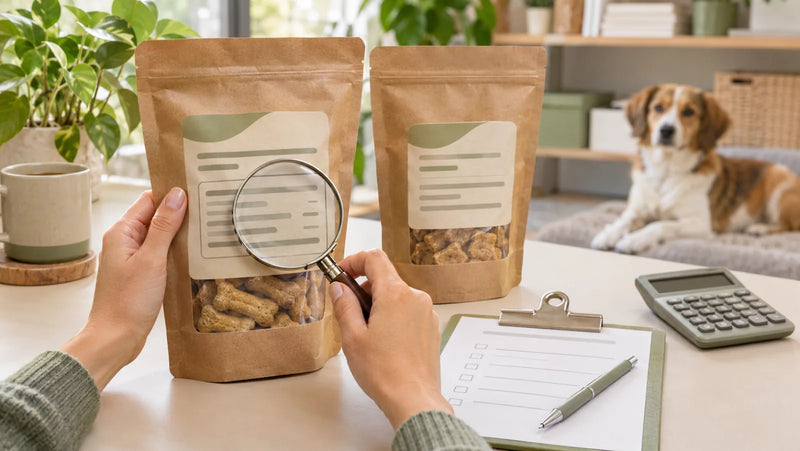
A commercial treat is also a separate label decision. American Paws' current freeze-dried chicken treats for cats and dogs list 100% USA chicken breast, an All Life Stages designation and intermittent or supplemental feeding. They are chicken, not pork, and the label does not prove that either protein fits every puppy. When chicken is already tolerated and the veterinary plan permits the product, break a piece to the puppy's safe reward size and count it with all other extras.
Frequently Asked Questions
Can an 8-Week-Old Puppy Eat Pork?
Do not use the birthday alone as permission. An 8-week-old puppy may be newly weaned and adapting to a complete growth diet, vaccination schedule and new home. Keep that diet stable and ask the veterinarian before adding table food. There is no nutritional need to introduce pork at eight weeks.
Can Puppies Eat Cooked Pork Chops?
Only one tiny piece of the plain, lean, fully cooked, boneless meat may fit an eligible puppy. The chop bone, fatty rim, seasoning, glaze, gravy and pan drippings do not. Verify 145°F in the intact chop, rest it three minutes, then cool and cut the separate plain piece.
Can Puppies Eat Ground Pork?
Plain ground pork must reach 160°F and should be drained of rendered fat, cooled and reduced to one tiny first-taste crumble. Sausage, meatballs, dumpling filling and seasoned ground-pork mixtures are different recipes and may contain salt, onion, garlic or added fat.
Can Puppies Eat Pork Bones?
No. Raw and cooked pork bones can cause choking, broken teeth, tissue injury or digestive obstruction. Call the veterinarian after a swallowed bone and do not induce vomiting unless the treating professional specifically directs it.
Can Puppies Eat Bacon or Ham?
Do not plan bacon or ham as puppy treats. They are cured products rather than plain fresh pork and commonly bring concentrated sodium and fat, with seasonings varying by recipe. If a puppy steals some, use the exact product, amount, puppy details and symptoms when calling for advice.
Can Puppies Eat Pork Fat or Crackling?
Skip both. Fat trimmings, skin, crackling and drippings are rich, calorie-dense and prone to causing digestive upset; they are particularly unsuitable for a puppy with a pancreatitis history or prescribed low-fat diet.
What Temperature Should Pork Reach for a Puppy?
Cook intact domestic pork cuts to at least 145°F and rest them for three minutes. Cook ground pork to 160°F. Measure with a food thermometer in the thickest part or in several gathered ground-meat portions; do not judge safety by color alone.
Keep the Puppy Diet Complete and the Pork Optional
The safe answer is deliberately narrow: a fully weaned, healthy puppy on a stable complete growth diet may be able to try one tiny cooled piece of plain, lean, boneless pork cooked to the correct endpoint. Raw pork, bones, fat, bacon, ham, sausage, seasoning and family sauces stay out. The puppy does not miss a required nutrient if pork is never offered.
Confirm new extras and the daily reward budget with the veterinary team, then use the puppy guides to choose a safe size and role. You can also browse current American Paws dog treats and compare the exact species, life-stage, ingredient and feeding labels. Whether the reward is meat from the kitchen or a labeled treat, complete puppy food remains in charge.