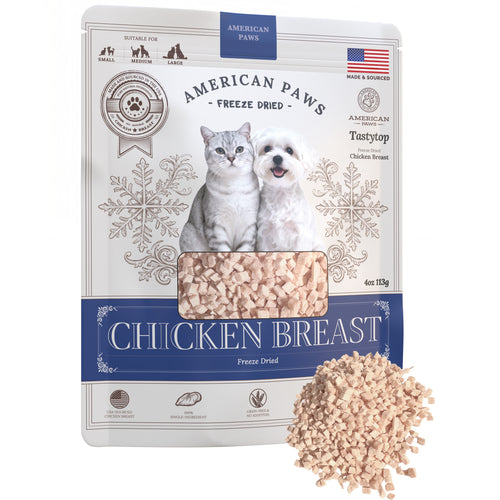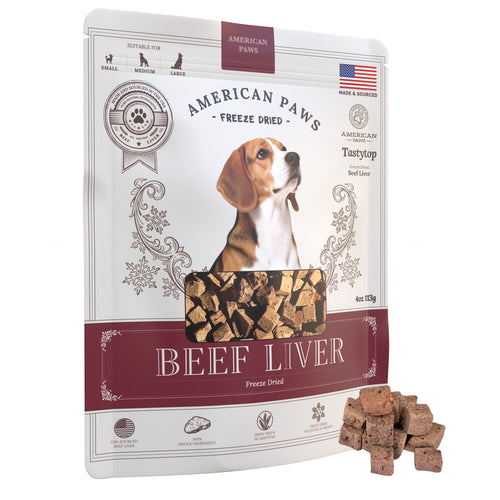

Dehydrated vs freeze dried dog chews usually differ most in structure: dehydrated pieces tend to be denser and firmer, while freeze-dried pieces tend to be lighter, more porous, and easier to crumble. That makes a dehydrated chew more likely to occupy a deliberate gnawer for longer, but the process name cannot promise hardness, safety, or a set number of minutes. The animal tissue, cut, thickness, fat, final moisture, batch, and the dog's chewing style can change the result.
Choose the actual piece, not the format halo. Check its size, give, edges, break pattern, label, and storage instructions before the first session. Supervise every edible chew, remove it before it becomes a swallowable nub, and treat “freeze-dried” or “dehydrated” as one useful clue—not proof of dental benefit, digestibility, pathogen elimination, or shelf life.
Dehydrated vs freeze dried dog chews: the quick answer
- For a moderate dog that gnaws slowly: a suitably sized dehydrated chew may provide a denser, more resistant activity, provided the piece passes a hardness and fracture check.
- For quick rewards or crumbling: a freeze-dried piece is often easier to divide and faster to eat. Many such pieces function as treats rather than durable chews.
- For a gulper or chunk-shearer: neither format earns an automatic yes. A dog that bites off and swallows large pieces may need a different enrichment tool.
- For dental disease, painful teeth, or a recent oral procedure: ask the veterinary team before offering an edible chew of either type.
- For storage: protect both from heat and humidity. Also watch fatty animal chews for oxidation and rancid odor even when they still feel dry.
Our broad freeze-dried versus dehydrated treat comparison owns the general processing, training, and everyday-reward decision. This guide stays with chew-sized objects: structural give, working time, fragments, supervision, and storage.
How each process shapes a chew
Dehydration usually makes a denser, firmer structure
Dehydration removes water through controlled heat and airflow. As animal tissue loses moisture, its fibers commonly contract and the piece becomes smaller, denser, and more resistant to bending. A broad strip of skin may become crisp and layered; a collagen-rich tendon may become tough and fibrous; a thin slice may snap even though a thicker cut from the same ingredient bends.
“Dehydrated” does not reveal the whole process. Manufacturers can use different temperatures, airflow, times, pretreatments, cuts, and final moisture targets. The word alone does not tell you whether a piece received a validated pathogen-control step, how hard it will be, how much fat remains, or whether your dog will grind it slowly or shear it in seconds.
Freeze-drying usually leaves a light, porous structure
Freeze-drying first freezes the food, then reduces pressure so frozen water can leave the material as vapor through sublimation. Because much of the frozen structure remains in place as water exits, the finished piece often has an airy network of pores. It may feel surprisingly light for its size and may snap, crush, or crumble under less force than a dense dehydrated piece.
That pore network is useful when an owner wants small training rewards, a crumbly meal topper, or a lightweight travel treat. It is less useful if the goal is a prolonged chewing session. A large freeze-dried chunk can look like a chew, yet disappear like a snack once a dog closes its jaws.
Ingredient and geometry can outweigh the process name
Method sets a tendency, not a guarantee. Connective tissue, muscle, skin, cartilage, fat, thickness, width, folds, braids, scoring, and final water activity all influence the bite. A thick freeze-dried piece may last longer than a paper-thin dehydrated strip. A glassy over-dried chew may be harder than expected. A fatty fish-skin roll and a lean tendon do not behave alike merely because both were dehydrated.
Batch variation matters too. Before each session, flex and inspect the piece in your hand. A safe experience last month does not approve every piece in the next bag.
Texture, chew time, and storage at a glance
| Feature | Dehydrated chew tendency | Freeze-dried chew tendency | What still decides |
|---|---|---|---|
| Density | Compact and relatively heavy | Light and porous | Ingredient, cut, thickness, endpoint moisture |
| Give | May bend, pull, or resist | Often snaps, crushes, or crumbles | Tissue structure and batch |
| Break pattern | Fibers, strips, flakes, or hard shards | Chunks, powder, and brittle crumbs | Piece geometry and jaw force |
| Working time | Often longer for a deliberate gnawer | Often brief; many pieces act as rewards | Dog's strategy, size, and starting piece |
| Mess | Can soften, smear fat, or shed fibers | Can scatter dry crumbs and powder | Ingredient and serving surface |
| Humidity response | Can soften, become tacky, or lose snap | Porous pieces can lose crispness quickly | Package barrier, seal, climate, handling |
| Oxidation concern | Important for fatty chews such as fish skin | Still possible when fat remains | Fat content, oxygen, heat, light, time |
| Best candidate use | Observed edible-chew session | Quick reward, crumbling, or puzzle use | Label and individual dog |
These are tendencies, not product guarantees. “Long lasting” has no standard dog-specific minute value. A package claim cannot account for jaw strength, chewing technique, dental condition, excitement, or whether a dog swallows instead of gnaws.

Does dehydrated mean longer-lasting?
Measure the dog, not the marketing phrase
A dehydrated chew often lasts longer than a freeze-dried piece of similar starting size, but there is no reliable conversion such as “dehydrated equals 20 minutes.” Watch what the dog does. A deliberate gnawer repeatedly scrapes and softens an edge. A shearer places the piece on the back teeth and breaks off chunks. A gulper searches for the first size it can swallow.
Use a first-session observation rather than assuming. Start with one piece larger than the dog can fit wholly in the mouth, note the time, and stay close enough to trade. Stop if the dog turns the chew into swallowable sections faster than you can safely manage. The result is information about this dog-piece pairing, not permission to leave the next session unattended.
Know when the session is over
End the session before the chew becomes a nub that can fit behind the canine teeth or be swallowed whole. Remove it sooner if it develops a sharp point, a rigid shard, a long stringy mass, or a chunk the dog repeatedly tries to gulp. Blood on the chew, sudden pawing at the mouth, yelping, repeated gagging, coughing, distress, vomiting, or abdominal pain are stop signs—not evidence of a productive chew.
For a collagen-rich example, our beef-tendon selection and serving guide covers size, chew style, retirement, and ingredient-specific cautions. It does not make every dehydrated tendon appropriate for every dog.
When a dehydrated chew may fit
A dehydrated chew may fit a healthy adult dog that works an edible item gradually, tolerates the ingredient, has sound teeth, and accepts a calm trade. The owner should be available for the full session and willing to remove the piece while it still has usable size.
Possible jobs include:
- a short, observed enrichment session after a walk;
- a denser edible texture for a moderate, deliberate gnawer;
- a chew that softens gradually rather than disappearing as a quick reward; and
- a larger item whose ingredient, calories, and feeding directions fit the dog's full diet.
Do not choose by process alone. Dehydrated tendons, skin rolls, fish skins, and jerky-like strips can have very different hardness, fat, edges, and break behavior. If fish skin is under consideration, use our cod-skin label and safety guide to evaluate bones, source, salt, calories, freshness, and the individual chewing style. American Paws does not currently offer a tendon or fish-skin chew, so those pages are selection guides rather than product claims.
When a freeze-dried format may fit
A freeze-dried piece more often fits a quick-reward job: reinforcing a cue, loading a puzzle, crumbling over food, or carrying a lightweight treat. A large piece may give a gentle dog a brief hold-and-crunch experience, but its size does not turn the porous structure into a durable chew.
This format can be practical when:
- the owner wants to divide one piece into tiny rewards before training;
- the dog benefits from a quick bite that does not pause the next repetition;
- a compatible treat needs to be crumbled rather than gnawed; or
- low bag weight matters for travel, while the product can still be kept sealed and dry.
It may be a poor fit when the goal is ten quiet minutes, the dog inhales brittle chunks, crumbs trigger frantic floor-scavenging, or the dog has a medical diet that excludes the ingredient. Freeze-dried is a process description—not a dental claim, a complete-and-balanced nutrition claim, or proof that a product labeled raw is pathogen-free.
Screen every chew before the dog gets it
Size and shape
The American Animal Hospital Association's chew-safety guidance says chews generally should be larger than the dog's snout and slightly wider than the mouth. That is a useful screen, not a guarantee. A long narrow strip can still slide backward; a large brittle piece can still become small chunks.
Avoid pieces the dog can immediately hide behind the back teeth or swallow. Watch changing size throughout the session. Starting large does not keep a chew large.
Hardness, bend, and fracture behavior
AAHA also recommends a thumbnail test and a bending test for chew items. If you cannot make any indentation with a thumbnail and the piece has no slight give, it may be too hard for teeth. Edible chews are variable, so combine that screen with a controlled break test away from the dog. Look for sharp spears, needle-like points, and glassy shards.
A porous piece has a different failure mode. Crush a corner over a clean surface. Fine crumbs may be expected; large rigid chunks or edges that become sharp deserve caution. Never assume “easy for my hand to break” means “impossible for my dog to choke on.”
The individual dog
Power chewing is behavior, not merely breed or body weight. A small dog can shear forcefully, and a large dog can mouth gently. Dogs that swallow chunks, guard resources, or destroy edible items rapidly may need a non-edible enrichment option selected with a veterinarian or qualified trainer.
Puppies with changing teeth, seniors, dogs with worn or fractured teeth, and dogs recovering from dental work need special care. A history of gastrointestinal obstruction, pancreatitis, fat intolerance, chronic digestive disease, food allergy, or a prescription diet can also make the ingredient or edible-chew format inappropriate. When the mouth or medical history is uncertain, pause and ask the veterinary team.
Neither drying method is a pathogen guarantee
Removing water can limit microbial growth, but a dry appearance does not prove that pathogens were killed. The USDA Food Safety and Inspection Service's jerky guidance explains that pathogenic bacteria can survive low-temperature drying and that a validated heating step matters. That human-food guidance is not a recipe for dog chews; it illustrates why “dried” and “sterile” are different claims.
The FDA lists freeze-dried raw pet food among products that can be contaminated with Salmonella. Evaluate whether the label says raw, ask what pathogen-control and testing steps the manufacturer uses, keep the lot code, and check current recalls. Freezing or freeze-drying should not be treated as a home substitute for a validated kill step.
Wash hands with soap and water after handling pet food or treats, keep serving surfaces and utensils clean, and prevent children or medically vulnerable household members from handling raw-labeled products. If a dog or person becomes ill after exposure, preserve the label and lot information and contact the appropriate medical or veterinary professional.
Storage, moisture, and rancidity
Protect both formats from humidity
The FDA recommends storing dry pet food in a cool, dry place below 80°F and keeping it in the original bag with the top tightly folded. Follow the exact chew label when it is more restrictive. Keep the original package even when using an airtight outer container so the ingredient list, best-by date, lot, and recall trail remain available.
Reseal immediately with clean, dry hands. Do not pour a new lot on top of old crumbs, leave a chew in a humid training pouch, or return a slobbery piece to the main bag. Freeze-dried pores can absorb moisture readily, so lost crispness may be an early quality signal. A dehydrated chew can also soften, become tacky, or grow mold after humidity exposure.
Fat can oxidize even when a chew feels dry
Moisture damage and fat oxidation are separate problems. Animal chews can retain fat, and oxygen, heat, light, and time can change it. Fish skin deserves particular attention because its oils are part of the ingredient; a dry surface does not prevent rancidity forever.
There is no responsible universal “good for six months after opening” rule for every dog chew. Use the manufacturer-provided best-by date and after-opening directions, then let a compromised seal, bad storage history, or abnormal condition overrule the date. Our freeze-dried treat storage guide goes deeper on original packaging, outer containers, refrigeration questions, travel, and after-opening decisions.
Discard signs
Do not feed a chew with a torn or swollen package, condensation, visible mold, insects, an unexplained wet or tacky surface, unusual darkening, or a sour, rancid, paint-like, or otherwise wrong odor. Also discard a piece with an unknown storage history, a missing label when identity matters, or a lot under recall. Do not taste a suspect dog chew or try to rescue it by baking, rinsing, freezing, or cutting off the visibly affected area.
A freeze-dried piece becoming soft does not identify the exact hazard, and a dehydrated piece retaining its snap does not prove freshness. When the condition is meaningfully different from a newly opened bag, the safer choice is replacement.
A scenario-by-scenario decision table
| Situation | Possible starting direction | Reason and limit |
|---|---|---|
| Healthy adult that gnaws slowly | Evaluate a suitably sized dehydrated chew | Dense texture may offer more working time; supervision and hardness test still apply |
| Dog that shears or gulps chunks | Neither by default | Changing the drying method does not correct the swallowing strategy |
| Fast training repetitions | Freeze-dried treat-sized pieces | Porous pieces are often easy to divide and quick to eat; count calories |
| Quiet edible enrichment | Dehydrated may fit after a first-session test | No duration promise; end before unsafe fragments or nubs form |
| Puppy, senior, dental disease, or oral recovery | Ask the veterinary team | Neither process name establishes tooth comfort or safety |
| Fat-sensitive dog or pancreatitis history | Use only a veterinarian-approved option | Method does not reveal fat content or medical suitability |
| Humid climate or open travel bag | Either only with strong resealing discipline | Both lose quality with moisture; porous pieces may change texture quickly |
| Ingredient or process label is unclear | Choose neither until clarified | A marketing front panel cannot replace ingredients, feeding directions, and manufacturer controls |
A five-step first-session test
- Read the exact label. Confirm ingredient compatibility, calories, processing language, feeding directions, storage, best-by date, lot, and any raw-food handling statement.
- Inspect the piece. Check size, surface, odor, edges, hardness, slight give, and how a corner breaks away from the dog.
- Prepare a calm trade. Have a compatible higher-value reward ready so removal does not become a chase or resource conflict.
- Observe one short session. Stay close, time what actually happens, and watch whether the dog gnaws, shears, crushes, or gulps. Do not multitask or leave the room.
- Remove and record. Trade before a swallowable nub forms. Note the product, lot, starting size, working time, break pattern, stool response, and whether the format deserves another supervised trial.
The record prevents a vague memory such as “these last a while” from becoming a household rule. Recheck each new batch because natural products and chewing behavior vary.
Frequently asked questions
Are freeze-dried dog chews long lasting?
Usually not compared with a similarly sized dense dehydrated chew. Freeze-dried structure is often porous and brittle, so many pieces work better as quick rewards or toppers. A large piece can still last briefly for a gentle dog, but only a supervised trial can show its actual working time.
Are dehydrated dog chews safer than freeze-dried chews?
Not universally. A dehydrated chew may be too hard, form sharp fragments, or become a choking hazard. A freeze-dried piece may crumble safely for one dog but become gulpable chunks for another. Size, give, ingredient, processing controls, storage, and chewing style decide more than the method name.
Which format is better for a power chewer?
Neither automatically. A power chewer may fracture a hard dehydrated piece or crush and swallow a freeze-dried one. Ask the veterinarian about tooth health and choose an appropriate non-edible or edible option based on observed behavior, not a “heavy duty” promise.
Can freeze-dried chews clean a dog's teeth?
Do not assume so. Texture alone is not evidence of plaque or tartar control, and a hard item can damage teeth. For an oral-health goal, ask the veterinary team and look for a product accepted by the Veterinary Oral Health Council for the specific claim.
How can I tell whether a dried chew is rancid?
Compare it with a freshly opened normal piece. A sour, stale-oil, paint-like, or otherwise abnormal odor, unexpected discoloration, oily change, heat exposure, or uncertain storage is reason to discard it. Appearance and smell cannot detect every hazard, so the seal, label, lot, date, and storage history still matter.
Choose the piece, the dog, and the session together
Dehydration tends to produce the denser, more chew-like structure; freeze-drying tends to produce the lighter, faster-breaking reward. That is a useful starting map, not the final decision. The actual ingredient and geometry, the dog's teeth and behavior, the manufacturer's controls, and your ability to supervise determine whether either format fits.
Browse the current American Paws dog-treat collection to compare available ingredients and formats. Read each live product label on its own: the catalog includes different kinds of dog treats, and no single process, ingredient, chew-time, or suitability claim applies to every item. The best choice is the compatible piece you can store correctly, supervise fully, and remove before it becomes unsafe.