
Can cats have chicken broth? Some healthy adult cats can have a small amount when the broth is truly unsalted, free of onion, garlic, chives, leeks, bouillon, and seasoning, and compatible with the cat's diet. Fresh water and complete-and-balanced cat food remain primary. Broth can add aroma or moisture; it does not treat dehydration or explain why a cat is drinking or eating less.
Check the complete ingredient list and sodium line rather than trusting “chicken,” “natural,” “bone broth,” or “low sodium” on the front. A cat with kidney, heart, urinary, blood-pressure, fluid, electrolyte, food-reaction, or prescription-diet concerns needs veterinary approval before broth becomes part of the routine.
Can Cats Have Chicken Broth? The Short Answer
| Broth type | Default answer | Why |
|---|---|---|
| Homemade chicken and water only | Possible small trial for an otherwise healthy adult cat | Ingredients and preparation are known; it still remains supplemental |
| Verified unsalted commercial broth | Read every ingredient and the sodium line | “Unsalted” does not clear hidden Alliums, seasoning, or diet conflicts |
| Low-sodium broth | Not automatic clearance | The term is relative; the actual sodium, serving size, and cat's plan matter |
| Bouillon, concentrate, soup base, or gravy | Skip unless a veterinarian reviews the exact product | Concentrated salt, Alliums, flavorings, fat, and dilution errors are common concerns |
| Restaurant soup or family stock | Do not deliberately offer it | The full recipe and cooked-with ingredients are usually uncertain |
| Chicken bone broth | Name alone proves nothing | It still needs a complete label audit and veterinary fit; no bones may reach the bowl |
The existing guide to chicken broth for dogs owns the canine question. Cats need a feline-specific answer because their complete diet, calorie space, medical risks, and Allium susceptibility are different.
Why Some Cats Like Broth
The Cornell Feline Health Center hydration guide recommends accessible fresh water, wet food, and water added to food as ways to support intake. It also says that, in some cases, flavoring water with a small amount of low-sodium chicken broth may encourage a cat to drink more.
That is a narrow palatability suggestion, not a prescription for every cat. Warm aroma can make a familiar bowl more interesting, and a teaspoon of liquid can moisten a meal. Neither effect proves that broth corrects dehydration, treats urinary disease, protects kidneys, or supplies complete nutrition.
Water intake also comes from food. Cats eating wet food may drink less from the bowl than cats eating dry food, so the visible drinking amount alone does not diagnose hydration status. If intake drops suddenly, the cat refuses food, or lethargy, vomiting, diarrhea, weakness, dry gums, or sunken eyes appear, contact a veterinarian promptly.
The Six-Point Chicken Broth Label Check
- Read the entire ingredient list. “Chicken broth” on the front does not identify everything in the carton or concentrate.
- Reject every Allium. Onion, garlic, chives, leeks, their powders, and soup-base blends do not belong in broth for a cat.
- Check sodium in the prepared amount. Use the Nutrition Facts serving size and concentrate directions; do not compare undiluted and ready-to-serve values as if they were equal.
- Screen seasonings and extras. Skip bouillon, gravy, dairy, butter, oil, yeast-heavy flavor blends, spicy ingredients, and artificial sweeteners.
- Keep bones and fragments out. Strain homemade liquid and never place cooked bones, cartilage shards, skin, or fatty drippings in the cat's bowl.
- Confirm the feeding role. Broth is an optional extra. It does not replace fresh water or complete-and-balanced cat food.
If the label uses a collective phrase such as “natural flavors” or “seasoning” and the manufacturer cannot confirm what it means, choose another product. A short label is useful only when every item is understood and suitable for the individual cat.
Cats Are Especially Sensitive to Alliums
The Merck Veterinary Manual's Allium toxicosis reference includes onion, garlic, chives, and leeks and describes cats as the most susceptible species, followed by dogs. Concentrated flakes, powders, and dry soup mixes are common exposure routes.
Allium oxidants can injure red blood cells and lead to Heinz body hemolytic anemia. Serious signs may be delayed for days, so a cat that looks normal after licking onion-containing broth is not automatically clear. Weakness, pale or yellow gums, fast or difficult breathing, collapse, and red-to-brown urine are emergency signs.
After known or suspected exposure, save the carton, recipe, or package and call the veterinarian, an emergency clinic, or ASPCA Animal Poison Control at 888-426-4435. A consultation fee may apply. Do not induce vomiting or give peroxide, charcoal, salt, milk, oil, food, or another home remedy unless a veterinary professional specifically directs it.
Sodium Matters Even When the Carton Says “Low Sodium”
“Low sodium” compares a product with a regulatory or category reference; it does not mean sodium-free or appropriate for a specific cat. “No salt added” can still leave naturally occurring sodium or sodium from another ingredient. A concentrate also changes after water is added, so use the prepared value and the amount actually offered.
Do not invent one universal milligram limit. A healthy adult cat offered a teaspoon-sized flavor trial is a different case from a cat with chronic kidney disease, heart disease, hypertension, urinary concerns, prescribed fluid management, or a therapeutic diet. The veterinary team and the complete diet set the boundary for those cats.
Unsalted chicken-and-water broth is the simpler default because it removes an unnecessary variable. It still needs the Allium, seasoning, fat, chicken-tolerance, calorie, and nutritional-role checks.
How Much Chicken Broth Can a Cat Have?
For an otherwise healthy adult cat whose veterinary plan has no conflict, begin with a teaspoon-sized taste or less mixed into the usual food or a separate small amount of water. This is a conservative palatability test, not a dose. Keep the regular fresh-water bowl unchanged and available.
Offer only one new food at a time. Watch acceptance, vomiting, stool, itching, facial swelling, coughing, and whether the cat eats less complete food. Stop and call the veterinarian for a reaction, a persistent appetite change, reduced drinking, or any broader illness sign.
Count broth, toppers, table tastes, and cat treats together inside the daily extras allowance. A liquid can still contribute calories and sodium. More is not better simply because the cat enjoys the smell.
Plain Homemade Chicken Broth for Cats
The simplest home version uses two ingredients: plain boneless, skinless chicken and water. Do not add salt, onion, garlic, chives, leeks, herbs, pepper, bouillon, butter, oil, dairy, skin, bones, drippings, or seasoning.
- Keep raw chicken separate. Wash hands, utensils, the cutting surface, and contacted areas; do not rinse raw poultry around the sink.
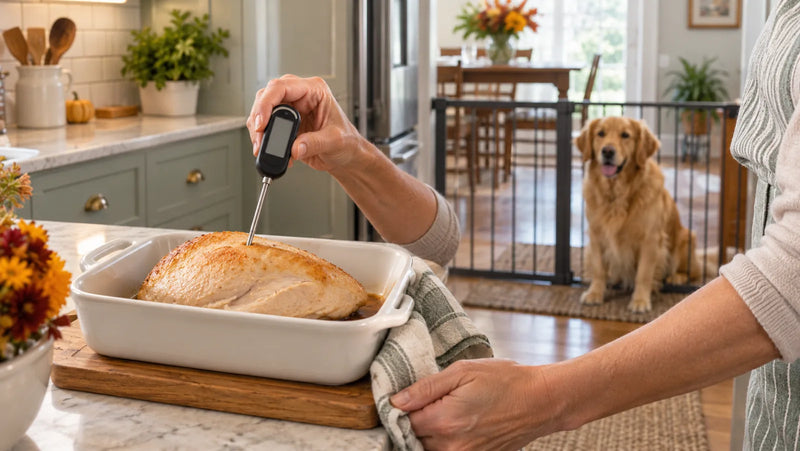
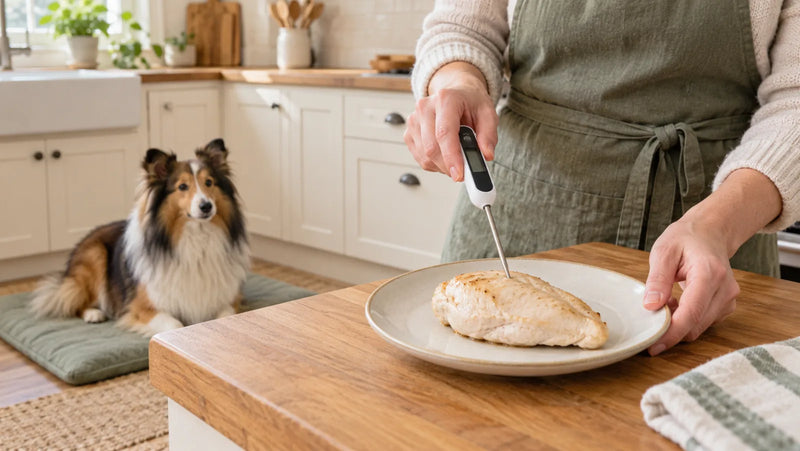
- Cook chicken and water together. Use a food thermometer to confirm the thickest part of the chicken reaches 165°F.
- Remove the meat and strain the liquid. Catch every fragment; reserve plain cooked chicken separately if it fits the cat's plan.
- Cool promptly. Transfer broth to a clean shallow container, refrigerate, and skim hardened fat before portioning.
- Store small portions. Date the container, use refrigerated broth within 3–4 days, or freeze tiny portions for later thawing in the refrigerator.
- Serve a small amount. Bring it to a comfortable temperature, check it before offering, and discard liquid left out or contaminated by the cat's mouth.
The cooked meat remains an extra too. The guide to plain chicken for cats covers portion, bone, seasoning, and complete-diet boundaries. For another holiday protein, the article on plain turkey for cats applies the same cooked, boneless, skinless, unseasoned test.

Broth vs Topper vs Complete Food
| Food role | What it can do | What it cannot do |
|---|---|---|
| Plain broth | Add a small amount of water and aroma | Replace fresh water, complete food, or veterinary fluid therapy |
| Dry protein topper | Add aroma and texture in a measured amount | Add meaningful water or become a complete diet automatically |
| Complete-and-balanced cat food | Supply the intended full nutrient profile when fed as directed | Guarantee that every extra or topper fits the individual cat |
A cat food topper for picky cats may help with ordinary preference, but sudden or persistent appetite loss needs a medical answer. The current American Paws dog-labeled Chicken Meal Topper page lists dry freeze-dried crumbles made from 100% USA chicken breast. The same page lists approximately 25 kcal per teaspoon and a dog feeding guide starting at 1 teaspoon per meal for dogs under 25 lb. Its title and feeding guide are for dogs; it is not broth or a cat hydration treatment, and cat use should be reviewed with the veterinarian.
The current American Paws assortment contains different formulas and intended uses. Read the exact live product page instead of extending one ingredient or species claim across the catalog.
When Broth Is the Wrong Tool
- Sudden appetite loss or reduced drinking: call the veterinarian rather than covering the change with aroma.
- Possible dehydration: lethargy, weakness, poor appetite, dry gums, or sunken eyes needs prompt professional assessment.
- Vomiting, diarrhea, urinary straining, pain, or breathing change: broth does not diagnose or treat the cause.
- Kidney, heart, urinary, blood-pressure, electrolyte, or fluid-management condition: use only what the veterinary plan approves.
- Prescription or elimination diet: an unapproved chicken extra can disrupt the controlled plan.
- Known chicken reaction: choose no chicken broth, even when every seasoning check passes.
- Kitten, frail senior, or currently ill cat: preserve the limited nutritional space for the age- and condition-appropriate plan.
Frequently Asked Questions
Can cats have store-bought chicken broth?
Only after the exact product passes a complete ingredient and sodium review and fits the cat's health and diet plan. Reject onion, garlic, chives, leeks, seasoning, bouillon, gravy ingredients, and an uncertain flavor blend. A front label alone is not enough.
Can cats have low-sodium chicken broth?
Possibly in a very small amount, but “low sodium” is not the same as unsalted or veterinarian-approved. Cornell notes that a small amount of low-sodium chicken broth may encourage water intake in some cases. The ingredient list, prepared sodium, portion, and individual cat still control.
Can kittens have chicken broth?
Ask the kitten's veterinarian first. Growth diets have little room for extras, and a new food can complicate evaluation of vomiting, diarrhea, poor appetite, or a food reaction. Broth never replaces kitten food or water.
Can cats have chicken bone broth?
The name does not make it safe. Check for Alliums, salt, seasoning, fat, dairy, sweeteners, and mineral or diet conflicts, and keep every bone fragment out. A cat with kidney, urinary, or prescribed-diet needs requires veterinary review.
Can cats drink chicken stock?
Commercial stock is often seasoned or salted and may contain onion or garlic. Treat it as a separate exact-label decision, not as a synonym for plain chicken-and-water broth. When the recipe is unknown, do not offer it.
How long can homemade chicken broth stay out?
Serve a small fresh portion and discard what remains after the feeding session, especially once the cat has licked it. Refrigerate the main batch promptly in a clean container, use it within 3–4 days, or freeze small portions and thaw them in the refrigerator.
Keep Water and Complete Cat Food in Charge
A small amount of plain, unsalted, Allium-free chicken broth may add aroma and moisture for some healthy adult cats. Like all other cat treats and extras, it should remain easy to identify, easy to measure, and easy to stop. Fresh water and complete-and-balanced cat food do the essential work.
Start with the cat's current needs. For reduced drinking or appetite, call the veterinarian promptly rather than treating the sign with broth. For a routine trial after the cat's needs are clear, use only a reviewed exact label or the plain chicken-and-water method above.