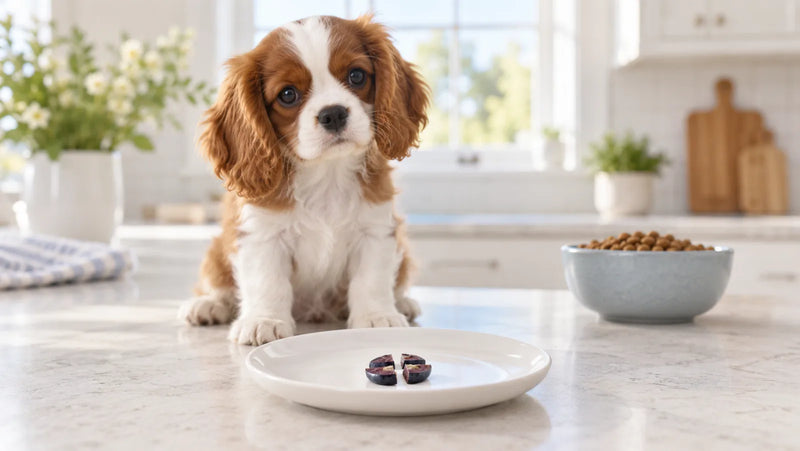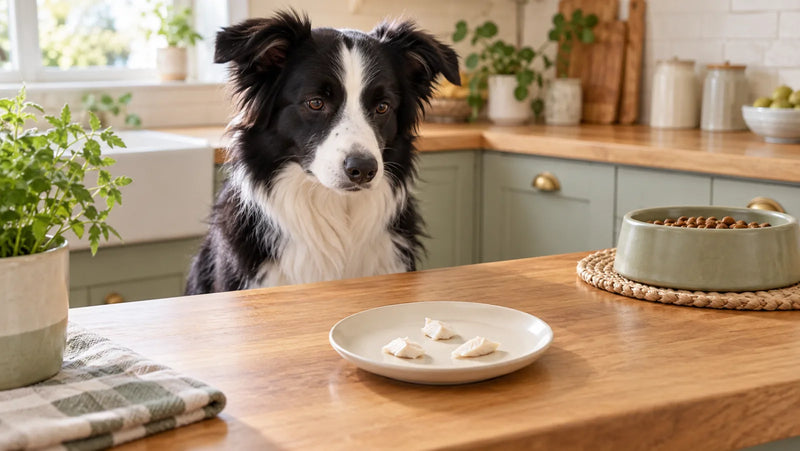

Can dogs eat purple sweet potato? Yes—many healthy dogs can eat a small amount when it is plain, peeled, and fully cooked. The purple color comes largely from natural plant pigments called anthocyanins. It is not a warning sign, but it is not permission to overfeed the tuber or market it as a canine “superfood” either.
Use the same practical rules that apply to orange sweet potato: confirm that the grocery item really is an edible sweet potato, cook the flesh until it is fork-soft, leave out every seasoning, start with one tiny piece, and count it with all other dog treats. A dog with diabetes, a prescription diet, weight-management needs, swallowing trouble, or recurring digestive problems needs an individual answer from the veterinary team.
Can Dogs Eat Purple Sweet Potato? The Short Answer
Purple sweet potato can be an occasional extra for a healthy dog when the flesh is prepared plainly and the portion stays modest. Color does not remove the basic safeguards. Raw chunks can be difficult to chew and digest, skin can be tougher than the flesh, and a large serving can add unnecessary starch, calories, or digestive upset.
The answer is about a known edible purple-fleshed sweet potato from the human-food supply—not an ornamental vine, an unidentified root, a supplement powder, or a purple dessert. The ingredient list still matters when the food comes in a package. “Purple sweet potato flavor” does not tell you what else was added.
This page owns the color-specific safety question. For general nutrition claims, use our guide to sweet potato’s broader benefits and limits for dogs. Keeping those jobs separate helps readers get a focused answer without pretending that flesh color creates an entirely new feeding rulebook.
Why Is Purple Sweet Potato Purple?
Anthocyanins are natural plant pigments
Much of the purple color comes from anthocyanins, a family of water-soluble plant pigments. An experimental composition study of purple-fleshed sweet potato identified derivatives of cyanidin, peonidin, and pelargonidin in the tuber. The same study also found that measured amounts varied with growing conditions, which is a useful reminder that “purple” is a visible trait—not a standardized nutrient dose.
You can read the purple-sweet-potato pigment study for the laboratory methods and cultivar-specific results. It explains what produced the color in the tested crop. It does not establish a therapeutic serving for dogs, compare canine outcomes with orange varieties, or prove that a purple cube prevents disease.
Purple does not automatically mean “better for dogs”
Anthocyanins are often discussed alongside antioxidant activity in food research. That does not justify saying a household portion will reduce inflammation, boost immunity, protect a dog’s heart, improve eyesight, control blood sugar, or treat cancer. A pigment can be scientifically interesting without being a medicine.
The honest benefit of the color is simpler: it adds variety to the appearance of an occasional food. The dog’s complete and balanced main diet still does the nutritional work. If a purple piece displaces that diet, exceeds the calorie plan, or conflicts with veterinary care, its marketing language cannot make it a good choice.
Purple vs Orange Sweet Potato for Dogs
The pigment profile changes more than the feeding rules
Purple- and orange-fleshed sweet potatoes are different cultivars with visibly different pigment profiles. Orange flesh is commonly associated with carotenoids such as beta-carotene, while purple flesh is notable for anthocyanins. Those distinctions matter to food scientists, but they do not change the home safety gate: serve only a small amount of peeled, fully cooked, unseasoned flesh.
Neither color earns an unlimited portion. Neither should replace complete dog food. A dog that tolerates orange sweet potato may still react differently to a new purple variety because individuals and recipes vary, so introduce the purple food as a new extra rather than assuming past tolerance is a guarantee.
Variety and cooking can change composition
Water content, starch behavior, pigments, growing conditions, storage, and cooking method can all affect the finished food. That is why it is misleading to copy one nutrition number from one cultivar and treat it as universal. It is also why color alone cannot tell you the calories in a spoonful.
For a household decision, the package label and the finished portion are more useful than a “purple versus orange” winner. If the food is plain, soft, correctly identified, and small enough for the dog’s plan, either color may be an optional treat. If it is candied, fried, heavily seasoned, oversized, or medically inappropriate, neither color rescues it.

How to Prepare Purple Sweet Potato for a Dog
Confirm the grocery item is a sweet potato
Names can be confusing. A purple-fleshed sweet potato belongs to Ipomoea batatas. Ube is commonly a true yam, and a purple potato belongs to a different plant group. Stores, recipes, and social posts sometimes use the words loosely, especially in desserts.
Do not transfer this article’s yes to an unidentified purple root. Check the produce label or ask the seller what it is. Our yam-versus-sweet-potato label guide explains the U.S. grocery-name problem and keeps true-yam questions in their own lane.
Peel, cook until soft, cool, and cut small
Wash the tuber, remove the skin, and cook the flesh without added ingredients until a fork moves through it easily. Let it cool completely. Mash a tiny amount or cut it into a piece suited to the dog’s mouth and chewing behavior. A soft bite is easier to portion than a dense raw chunk, but supervision still matters for a dog that gulps food.
The American Kennel Club’s veterinary-guided sweet-potato advice likewise recommends cooked, skin-off, soft preparation, moderation, and a small introduction. For detailed methods and doneness checks, follow our plain sweet-potato preparation guide instead of improvising from a dessert recipe.
Keep butter, oil, salt, sugar, and seasoning out
Plain means the cooked sweet-potato flesh and nothing else. Skip butter, oil, salt, sugar, syrup, honey, milk, cream, marshmallows, spice blends, onion, garlic, chives, and sweeteners. Do not scrape filling out of a pie or casserole and assume the remaining purple piece is plain; ingredients can soak through the whole dish.
Cool the portion before offering it, and refrigerate or freeze leftovers using ordinary food-safety practices. Discard food that smells fermented, looks moldy, has become slimy, or was left out long enough that you would not serve it to a person.
How Much Purple Sweet Potato Can a Dog Eat?
Begin with one tiny test piece
There is no evidence-based purple-specific spoonful that fits every dog. For a first taste, offer one tiny, soft piece after the food has cooled. Keep the rest of the diet familiar and watch for vomiting, diarrhea, marked gas, discomfort, itching, appetite change, or any other unexpected response. Stop offering it and contact the veterinary team if signs are repeated, severe, or concerning.
A first bite is not a daily target. If the dog tolerates it and you want to offer it again, use the repeat-frequency and size-aware sweet-potato guide. That page owns the detailed amount question and explains why body size alone cannot override health, activity, body condition, the main food, and all other extras.
Every extra shares the same treat-calorie ceiling
The World Small Animal Veterinary Association’s treat guide advises keeping all treats below 10% of a dog’s daily calories and not using them to replace a meal. That ceiling includes purple sweet potato plus training rewards, chews, toppers, table bites, and treats from everyone in the household.
Ten percent is a ceiling for a typical healthy dog, not a goal and not a separate allowance for each treat type. A small inactive dog, a puppy, a dog receiving many training rewards, or a dog on a calorie-controlled plan may have room for much less. Our daily dog-treat calorie guide shows how to count the entire reward budget.
Dogs That Need an Individual Veterinary Answer
Ask the veterinary team before deliberately adding purple sweet potato for a dog with:
- diabetes or another condition that depends on consistent food composition and timing;
- a weight-loss target or very limited daily calorie allowance;
- a prescription, hydrolyzed, novel-protein, or elimination diet;
- chronic vomiting, diarrhea, pancreatitis, or another gastrointestinal condition;
- swallowing difficulty, poor chewing, dental pain, or a history of obstruction;
- kidney, heart, or other disease managed partly through nutrition; or
- a puppy diet, because growing dogs have limited stomach space and need complete growth nutrition.
A veterinary “no” does not mean the pigment is poison. It means the individual feeding plan has a more important job than adding color or variety.
Do Not Let “Superfood” Marketing Set the Portion
“Superfood” has no standardized veterinary serving attached to it. A product can highlight purple color, antioxidants, phytonutrients, or ancient varieties while still containing concentrated calories, added sugar, fat, or ingredients that do not fit a dog. The front of a package is an advertisement; the full ingredient list and nutrition information are the evidence you can actually inspect.
Be especially cautious with powders, gummies, chews, and supplements. Concentrated purple sweet-potato extract is not the same exposure as one tiny cube of cooked flesh. Do not give a human supplement to a dog unless the veterinarian has reviewed the exact product, dose, and reason.
Purple Sweet Potato Formats to Skip
Do not treat these as equivalent to plain cooked flesh:
- purple sweet-potato fries or chips cooked with oil and salt;
- candied sweet potatoes, pie filling, bread, cake, cookies, or sweetened puree;
- mochi, ice cream, yogurt mixtures, lattes, or other dairy-rich desserts;
- ube desserts whose ingredient identity and recipe are different from plain sweet potato;
- mixed foods containing chocolate, raisins, macadamia nuts, onion, garlic, alcohol, or xylitol; and
- raw chunks, skin-on scraps, spoiled leftovers, or food with an unreadable ingredient list.
If a dog ate a mixed dessert, save the package or recipe and identify every ingredient. Call the veterinarian or an animal poison-control service promptly when a potentially toxic ingredient is present, the amount is substantial or unknown, or the dog develops concerning signs. Do not induce vomiting or try a home remedy unless a veterinary professional directs you.
Frequently Asked Questions
Can dogs eat purple sweet potato skin?
The conservative choice is to remove the skin. It is tougher and may be harder to digest than fully cooked flesh. This article does not treat the peel as a special purple toxin; it simply keeps the serving soft, identifiable, and easy to portion.
Can dogs eat raw purple sweet potato?
Do not deliberately offer a dense raw chunk. Cooking until fork-soft improves chewability and portion control. If a dog swallowed a large raw piece, call the veterinary team for advice based on the dog’s size, the piece, the timing, and any symptoms.
Can puppies eat purple sweet potato?
A veterinarian may approve one very small, soft, plain taste for a puppy that is eating its complete growth diet normally. Puppies do not need purple sweet potato, and extras should never displace food formulated for growth or create a choking risk.
Is purple sweet potato better than orange sweet potato for dogs?
There is no good basis for declaring a universal canine winner. The varieties have different pigments and can vary in composition, but both remain optional extras. Choose a correctly identified, plain, fully cooked form the individual dog tolerates, then keep the portion modest.
Can dogs eat ube desserts?
Skip them. Ube is generally a true yam rather than a purple sweet potato, and desserts may contain sugar, fat, dairy, chocolate, or other additions. This article’s conditional yes applies only to a tiny amount of plain cooked purple-sweet-potato flesh.
Keep the Color Interesting and the Portion Ordinary
Purple sweet potato does not need a special fear story or a superfood promise. For many healthy dogs, a tiny amount of peeled, fully cooked, unseasoned flesh can be an occasional treat. The anthocyanin pigments explain much of the color; they do not erase calories, replace balanced nutrition, or create a proven canine treatment.
American Paws does not currently sell a sweet-potato product, so we will not point you to an imaginary purple SKU. If you want a labeled, portionable alternative, browse all current American Paws dog treats, compare the complete ingredient lists, and choose a protein and texture that fit your dog. Whatever you offer, keep the main diet in charge and let the dog’s real health plan—not the color—set the limit.