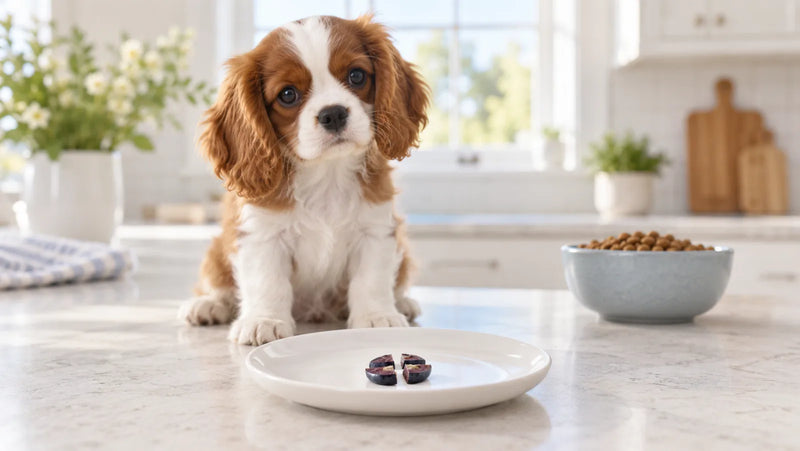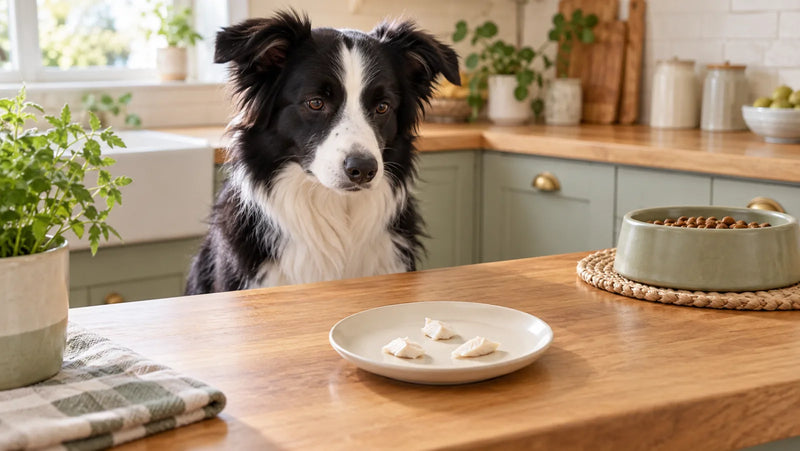

Chicken jerky training treats work best when you cut the day's training portion into tiny, quick-to-eat pieces before the session begins. Pea-size is a practical starting point for many dogs, but the right piece depends on the dog's mouth, age, chewing style, diet, and the jerky's texture. Mark the correct behavior first, deliver the reward immediately after, and count every piece inside the day's treat allowance.
Soft jerky strips are usually the better chicken-jerky format for rapid repetitions because they are easy to snip and quick to eat. Firmer whole-cut jerky can work for lower-frequency rewards, a release from a station, or a finish-line payoff, but a long chew can stop the rhythm of a training session. The goal is not to make the reward look generous. It is to make each repetition clear, motivating, and nutritionally accounted for.
Chicken Jerky Training Treats: The Fast Answer
Turn jerky into a training tool with five decisions:
- Choose the texture for the job. Use a soft, snippable strip for many fast repetitions; save firmer whole-cut jerky for less frequent moments when chewing will not interrupt the lesson.
- Prepare the session portion first. Cut only the amount allocated to this session, then put the main bag away.
- Start tiny. Aim around pea-size for many dogs and adjust for the individual rather than treating that size as a universal safety rule.
- Mark before you feed. The click or marker word identifies the correct instant; the food follows.
- Budget calories before counting pieces. Cutting one strip into ten rewards creates more training opportunities, not fewer calories.
This article is specifically about using chicken jerky in a training session. For a comparison of freeze-dried bites, soft treats, kibble, and other formats, use our guide to compare dog training treats. For ingredient, storage, serving, and buying questions outside the training context, start with the complete chicken jerky for dogs guide.
Why Chicken Jerky Can Be a High-Value Reward
Chicken jerky combines concentrated aroma, real-meat texture, portability, and easy portioning. Those features can make it useful when a dog needs more motivation than ordinary food provides. It can fit recall practice, a first repetition in a distracting room, a difficult grooming step, or another behavior that has genuinely earned a stronger reward.
“High value” is not a permanent label printed on a package. A reward is high value only if the individual dog's behavior shows that it matters in that setting. One dog may work eagerly for chicken indoors but ignore it near squirrels. Another may prefer a toy, permission to sniff, or a different protein. Our high-value dog training treats guide explains how to build a reward ladder without assuming that one food motivates every dog.
Chicken should already be an appropriate, familiar part of the dog's treat plan before it is used in a demanding class or field session. Do not test a new food for the first time when focus matters most. A dog on a veterinary diet, an elimination trial, or a plan that excludes chicken needs the veterinary team's direction rather than a more tempting chicken reward.
The American Veterinary Society of Animal Behavior's humane dog training position statement supports reward-based training methods. Food can be one useful reinforcer, but the training plan should still protect welfare, arrange the environment for success, and avoid force or intimidation.
Soft Strips vs Whole-Cut Jerky for Training
| Training decision | Soft chicken strips | Whole-cut chicken jerky |
|---|---|---|
| Texture | Soft and pliable | Firmer and chewier |
| Prep | Easy to snip or tear into many small pieces | May tear into pieces, but natural firmness and shape vary |
| Reward speed | Usually faster to eat, supporting rapid repetitions | May take longer to chew and reset |
| Useful moments | New skills, classes, recall drills, repeated marker work | End-of-sequence reward, station release, occasional larger payoff |
| Ingredient distinction | Check the exact formula; the American Paws soft strip includes chicken plus natural glycerin | The American Paws whole-cut chicken breast jerky is a one-ingredient option |
| Main limitation | Soft does not mean calorie-free or automatically suitable for every dog | Chewing time can interrupt a fast session |
The scheduled American Paws 2 lb soft chicken training strips use USA chicken breast with a touch of natural glycerin to help maintain a soft, tearable texture. That is an all-natural two-ingredient formula, not a single-ingredient product. This distinction matters for any dog whose plan requires a one-ingredient reward or excludes glycerin.
American Paws whole-cut chicken jerky is made from 100% USA chicken breast and has a firmer, natural-meat chew. It may still be cut or torn for training, but its best use depends on the individual piece and the pace of the session. Browse the chicken jerky collection to compare current formats, then read each exact label rather than carrying one product's claim over to another.
A softer texture can help some older dogs, but it does not diagnose or solve dental pain, missing teeth, swallowing difficulty, or oral disease. The guide to soft dog treats for senior dogs covers texture testing, preparation, and veterinary warning signs without assuming that every senior needs the same reward.

How Small Should Chicken Jerky Training Treats Be?
Pea-size is a useful starting point because training depends on many quick consequences, not on serving a snack after every cue. A tiny piece can preserve the aroma and taste that motivate the dog while reducing chewing time. It also lets one allocated strip support more repetitions without changing the calories in that strip.
Pea-size is not a universal safety measurement. A toy breed, large dog, puppy, senior, careful chewer, and fast gulper may need different dimensions. The jerky itself varies in thickness, dryness, and edge shape. Watch the dog eat a test piece in a calm setting before using a full pouch of prepared rewards in motion.
- Use clean kitchen scissors for a soft strip, or tear along a natural seam when that produces a clean piece.
- Cut on a clean surface before the session rather than cutting above the open storage bag.
- Discard or reserve crumbs that are too small to deliver cleanly; fumbling weakens timing.
- Round off or reject hard, sharp, or awkward corners instead of handing them over during movement.
- Carry water and supervise eating. Stop if the dog coughs, gags, repeatedly struggles to swallow, or shows oral discomfort.
A whole strip is usually inefficient for a routine repetition: it adds chewing time and spends a large share of the food allocation at once. A tiny piece should still be large enough for the trainer to handle and for the dog to take safely from an open, steady hand.
Reward Timing: Mark First, Then Deliver
A simple training sequence is cue → behavior → marker → reward. The marker—a click or a consistent word—identifies the instant the dog completed the desired behavior. The chicken follows immediately after. The American Veterinary Society of Animal Behavior's guidance on using positive reinforcement emphasizes rewarding desired behavior promptly and notes that a tiny food reward can do the job.
Do not keep a jerky strip waving in front of the dog's nose for every familiar cue. That can turn the visible food into part of the cue and make the response dependent on seeing a bribe. Luring is a deliberate teaching tool in some early steps, but it should not accidentally become the permanent picture.
Mark first, reach for the piece, deliver with a still hand, and reset the dog before the next repetition. If the dog is jumping at the pouch or grabbing fingers, reduce the difficulty, change the delivery setup, and teach a safer food-taking pattern. The full sequence for cues, markers, lures, reinforcement, and fading visible food belongs in our guide to how to train a dog with treats.
When to Spend a Higher-Value Jerky Reward
Use the strongest available food when the behavior or environment justifies it. Examples include the first successful recall away from a mild distraction, a calm check-in near a novel environment, a cooperative-care step, or a newly learned behavior performed without help.
For fluent skills in an easy room, the dog may work for part of a complete meal, play, access to sniffing, or another appropriate lower-cost reward. Saving jerky for harder moments preserves its contrast and helps the calorie allocation last. The dog's response should guide the value level; do not make the session harder simply because expensive treats are in the pouch.
A “jackpot” is several tiny rewards delivered one after another after an exceptional success. It is not one oversized strip shoved toward an excited dog. Several small deliveries extend the celebration, protect timing, and let the trainer stop if the dog becomes too aroused.
Food should never be used to lure a fearful dog closer to something it cannot handle or to push through escalating stress. Increase distance, reduce intensity, and seek qualified veterinary or behavior help for fear, aggression, or other serious concerns.
Chicken Jerky Calorie Math for a Training Day
The World Small Animal Veterinary Association's dog-treat nutrition guide recommends that treats make up no more than 10% of a dog's daily calorie intake. That percentage is a ceiling, not a target, and the dog's actual energy need depends on body condition, life stage, activity, health, and complete diet. Use the current feeding plan or ask the veterinary team for the individual daily target.
Use variables so the math stays accurate when products or needs change:
| Step | Formula | Source |
|---|---|---|
| Daily treat ceiling | D × 0.10 | D = the dog's current daily calorie target |
| Jerky calories remaining | (D × 0.10) − E | E = calories from every other treat, chew, topper, table bite, and medication food that day |
| Whole-strip allowance | J ÷ C | J = jerky calories remaining; C = current calories per whole strip or measured unit from the label or product page |
| Possible reward pieces | (J ÷ C) × P | P = number of training-size pieces cut from one representative strip |
For example, cutting one allowed strip into many similar pieces multiplies possible reward events, but it does not change that strip's total calories. If only part of a strip fits the remaining budget, allocate that fraction before cutting the session portion.
Natural strips are irregular, so cut-piece calorie estimates are approximate when the available calorie statement is per whole treat. Use the current package or product page for the current calorie unit; this article intentionally publishes no fixed American Paws strip weight or kcal-per-piece number. If reliable calories-per-gram information is available for the exact product, weighing the allocated portion can be more consistent than assuming every strip is identical.
Jerky is an intermittent or supplemental food, not a complete meal. Do not remove a large amount of complete-and-balanced food to make room for more jerky without veterinary guidance. When many repetitions are needed, use smaller jerky pieces, mix in part of the dog's regular complete food when appropriate, or use non-food rewards rather than expanding the treat ceiling.
Build a Session Portion Before You Start
- Choose one skill and environment. A clear session plan makes it easier to estimate repetitions.
- Assign the session's share. Decide how much of the day's remaining treat budget belongs to this lesson.
- Cut only that amount. Make similarly small pieces so one reward does not unexpectedly use several times another's food.
- Put the main package away. Carry the session cup or pouch, not an unlimited bag.
- Stop or switch when it is empty. The empty portion is useful information, not a reason to refill automatically.
- Tell the household. Record training food alongside chews, toppers, dental products, and treats given by other people.
This system prevents the common mistake of counting rewards only after the session. It also lets a trainer compare sessions honestly: Was the dog successful because the environment was appropriate, the marker was clear, and the reward mattered, or because food was delivered continuously without a plan?
Common Mistakes That Waste the Treat or the Lesson
- Keeping the strip visible as a permanent bribe. Prepare small pieces and keep the food out of the cue picture when the skill is ready.
- Rewarding late. If the dog sits, stands, and then jumps before food arrives, unclear timing may reinforce the wrong moment.
- Giving a whole strip for every repetition. The dog spends more time chewing, while the calorie budget disappears quickly.
- Ignoring other extras. Chews, toppers, stuffed toys, table bites, and pill foods share the same daily treat space.
- Calling the soft strip single-ingredient. The American Paws soft product contains chicken breast plus natural glycerin; the whole-cut chicken breast product is the one-ingredient option.
- Using chicken against the diet plan. A high-value reward is not appropriate if its protein or another ingredient is excluded.
- Choosing texture by age alone. Check how the individual dog takes, chews, and swallows the exact piece.
When Chicken Jerky Is Not the Right Training Treat
Choose another reward when chicken is excluded, the dog is on a prescribed or elimination diet, the exact formula does not fit a known sensitivity, or the dog has difficulty taking and swallowing the prepared texture. Oral pain, broken teeth, coughing, gagging, repeated swallowing trouble, vomiting, diarrhea, or new skin or ear signs deserve the appropriate veterinary context rather than a different cutting technique.
A high-frequency session may also work better with small ready-made bites, part of the dog's regular diet, play, sniffing, or environmental rewards. Browse the American Paws training treats collection to compare current formats and proteins, but read the exact ingredient statement, calorie unit, feeding information, and texture before choosing. The broader dog treats assortment is a catalog, not a promise that every item suits every training plan.
Frequently Asked Questions
Can I use chicken jerky as training treats every day?
It may fit a healthy dog's daily reward plan when chicken and every other ingredient are appropriate, the texture is safe for that dog, and all pieces stay within the day's treat allowance. The 10% guideline is a maximum, not a requirement to feed treats every day.
How small should I cut chicken jerky for training?
Pea-size is a practical starting point for many dogs because it is quick to eat, but adjust for the dog's size, mouth, chewing style, age, and the strip's texture. Test a piece calmly, supervise, and stop if taking or swallowing is not comfortable.
Are soft strips or whole-cut chicken jerky better for training?
Soft strips usually support faster repeated rewards because they snip easily and take less time to chew. Whole-cut jerky can work for occasional or end-of-sequence rewards. Ingredient needs matter too: the American Paws soft strip includes natural glycerin, while its whole-cut chicken breast jerky is one ingredient.
How do I calculate calories after cutting a strip?
Cutting does not change the strip's total calories. Use the current label's calorie unit, determine what fraction of a whole strip fits the remaining treat budget, then cut that allocated fraction into the number of small rewards needed. Treat counts are estimates when natural strips vary.
Should I show my dog the treat before giving a cue?
Not as a permanent habit for a learned cue. A trainer may use food deliberately as an early lure, but the normal reinforcement sequence is behavior, marker, then reward. Keeping food visible every time can make the food part of the cue picture.
What is a training-treat jackpot?
A jackpot is a series of several small rewards after an especially important success. Delivering tiny pieces one after another extends the payoff without handing over one oversized strip. The total still counts toward the session and daily allowance.
Can senior dogs use chicken jerky training treats?
Some senior dogs may manage a soft, tiny piece well, but age alone does not establish chewing or swallowing safety. Choose the exact texture for the individual, account for health and diet, and ask the veterinary team about dental pain, missing teeth, swallowing changes, or prescribed nutrition.
Cut the Reward, Not the Training Quality
The best chicken jerky reward is not the largest one. It is the smallest appropriate piece that arrives at the right moment, matters to the dog, and fits the food plan. Prepare the session portion, mark clearly, deliver promptly, and save higher-value food for behavior and environments that earn it.
Need a softer format for a dog that already tolerates chicken? Review the current ingredients, calorie information, feeding guidance, and storage details for the American Paws 2 lb soft chicken training strips. If a ready-made small bite or a different format fits better, compare the training treats collection. Choose by the individual dog's diet, texture needs, and daily plan—not by reward size alone.