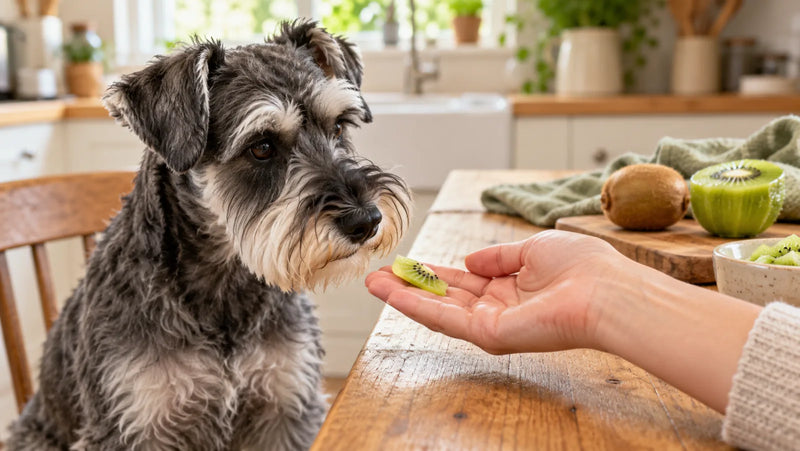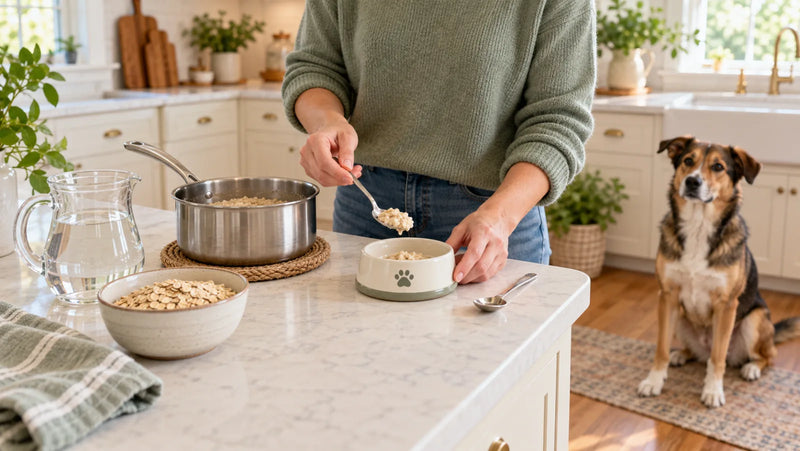

Chicken jerky and rawhide serve different purposes. Chicken jerky is an edible, portionable meat treat that works well for rewards, while rawhide is designed for longer chewing. Neither is automatically right for every dog: the better choice depends on the ingredient label, piece size, chewing style, calorie needs, and close supervision.
Chicken jerky vs rawhide: the quick answer
Choose chicken jerky when you want a food reward that can be measured and torn into smaller pieces. Consider a suitably sized long-lasting chew only when your dog chews rather than gulps and you can supervise the entire session. Rawhide lasts longer for many dogs, but softened or broken pieces can be swallowed. Jerky is easier to portion, but a large strip can also become a choking or obstruction risk.
The comparison is therefore not “safe versus unsafe.” It is food treat versus recreational chew, followed by a dog-specific risk assessment. Read the full label, match the format to the job, and remove any item that becomes small enough to swallow whole.
What chicken jerky and rawhide actually are
Chicken jerky is a dried edible treat
Dog chicken jerky is generally made by drying strips or pieces of chicken. Recipes differ: some use only chicken, while others add humectants, flavorings, preservatives, or other ingredients. Moisture level and thickness affect whether a strip is crisp, chewy, or soft. The package—not the product name—tells you what is actually present. Our complete chicken jerky guide for dogs covers types, labels, and portions in one place.
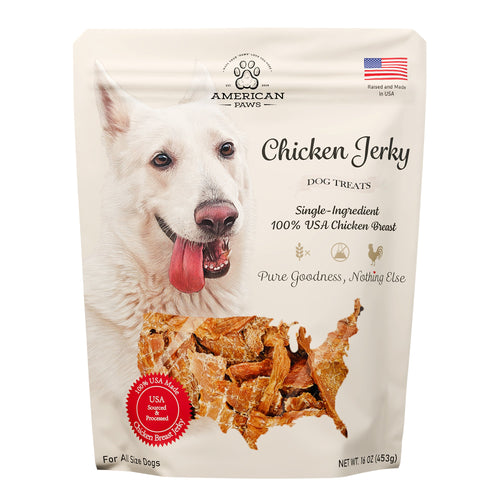
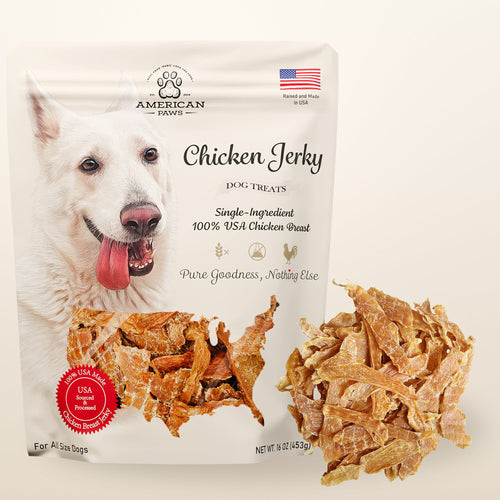
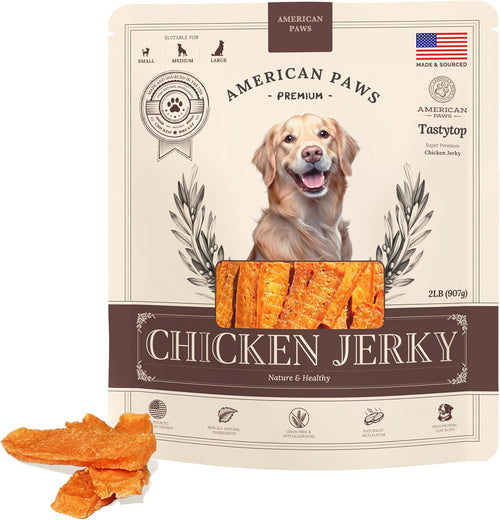
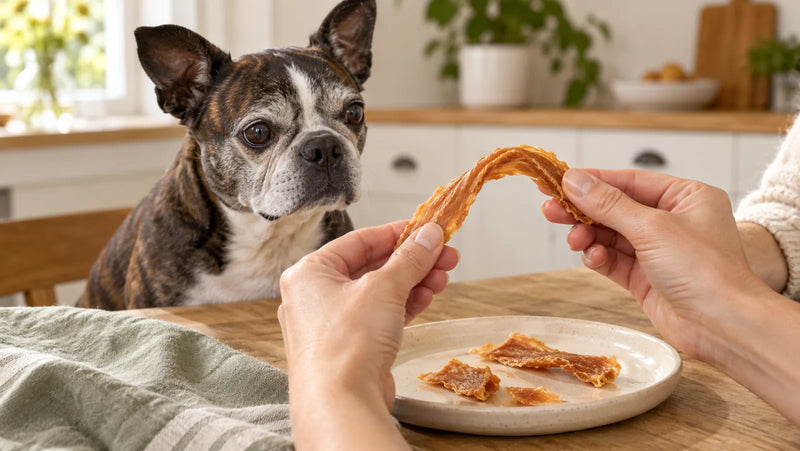
American Paws' single-ingredient whole-cut chicken breast jerky contains chicken breast. That verified claim applies to this product; it does not describe every jerky format or the full catalog. Because the strips can be torn or cut, owners can prepare small rewards before a training session rather than handing over an entire strip.
Rawhide is a processed hide chew
Rawhide is made from the inner layer of animal hide, commonly cattle hide. It may be rolled, pressed, twisted, or formed into shapes and can include flavor coatings or other ingredients. It is intended to soften as a dog works on it and often lasts longer than an ordinary food treat. Manufacturing, thickness, ingredients, and durability vary, so “rawhide” is not one uniform product.
Chicken jerky vs rawhide at a glance
- Main job: jerky is a food reward; rawhide is a recreational chew.
- Typical duration: jerky is eaten relatively quickly; rawhide may occupy a suitable chewer longer.
- Portion control: jerky can often be torn and measured; rawhide consumption is harder to quantify while the chew softens.
- Label focus: compare all ingredients, calorie information, feeding directions, origin, and the maker's size guidance.
- Shared risk: either can cause choking or gastrointestinal obstruction if a dog swallows an unsuitable piece.
- Supervision: both should be offered while an attentive adult can watch the dog.

Ingredients and label transparency
A short ingredient list can make a product easier to evaluate, but it does not make the product unlimited or appropriate for every dog. For jerky, identify the animal protein and every added ingredient. If your dog has a diagnosed chicken reaction or is completing a veterinary elimination diet, chicken jerky may be unsuitable even when the recipe is simple. For the full picture on quality and sourcing, see our guide on whether chicken jerky is good for dogs.
For rawhide, check the animal source, country of origin, flavorings, colors, coatings, and handling directions. Avoid treating the front-label words “natural” or “premium” as a substitute for the ingredient panel. Examine the product before every session and discard it if it smells abnormal, appears damaged, or does not match the package description.
Ingredient transparency matters, but physical behavior matters too. A simple product can still be a poor match for a dog that bolts food, tears off large pieces, or guards chews.
Digestion, choking, and blockage risks
Rawhide changes as it absorbs saliva. Some dogs gradually scrape off small amounts; others loosen and swallow large pieces. Those pieces may lodge in the throat, esophagus, stomach, or intestines. Jerky is meant to be eaten, but “edible” does not mean a large unchewed strip cannot create the same kind of mechanical emergency.
The FDA warns that unchewed treats, including rawhides and jerky sticks, can become stuck in a dog's airway or gastrointestinal tract. That is why piece size, observed chewing behavior, and supervision matter more than reassuring marketing language.
Do not assume that a product is fully digestible simply because a dog can swallow it. Do not make a hard chew small enough to fit entirely behind the back teeth, and do not offer a broad jerky strip to a dog that tries to inhale food. Learn how to serve chicken jerky safely, including what to look for on the label and how to match the piece to the dog.
Chewing time, texture, and dental expectations
Rawhide generally wins on duration, but duration is useful only when the dog handles the chew predictably. A determined power chewer may dismantle a product rapidly, while a gentle chewer may work on the same shape slowly. Observe the actual dog instead of relying only on a size label or an estimated number of minutes.
Chicken jerky is not intended to occupy a dog for a long period. Its advantage is controllability: you can cut a measured strip into many small rewards and deliver them with good timing. Softer pieces may suit some dogs better, while a tough whole strip may be inappropriate for a dog with dental pain, missing teeth, or swallowing difficulty.
Neither option replaces toothbrushing or professional veterinary dental care. Chewing can create friction, but it does not guarantee plaque removal, prevent periodontal disease, or make an unsuitable hard texture safe. Ask your veterinarian about dental products and chewing options for your dog's mouth.
Calories, portions, and training use
Jerky calories count with every other treat, topper, table scrap, dental chew, and flavored supplement. A common general guideline is to keep all extras to no more than about 10% of daily calories so complete and balanced food supplies most nutrition. Individual needs can be lower, especially for dogs on weight-management or therapeutic diets.
Use the current package calorie statement rather than guessing by strip count. Natural strips vary in weight. Our guide explains how to calculate a chicken jerky portion and divide it into training rewards without pretending that one strip has the same calories across every bag.
Rawhide consumption may be less obvious because part of the item remains after a session. Follow the maker's directions and account for any consumed portion with the dog's extras. If the product has no useful calorie or feeding information, contact the manufacturer before making it routine.
When chicken jerky may fit better
Chicken jerky may be the more practical choice when you need a high-interest food reward, want to control the amount before serving, or prefer a clearly identified meat ingredient. It can work well for recall practice, grooming cooperation, short training sessions, and occasional enrichment through scatter feeding when pieces are appropriately small.
It is not the better choice for a dog with a chicken reaction, a dog that cannot safely manage its texture, or a feeding plan that excludes extras. Jerky is also a poor substitute for a durable activity if the goal is sustained chewing. Match the format to the purpose instead of using more food to create a longer session.
When a longer-lasting chew may fit better
A long-lasting chew may fit a dog that chews methodically, does not detach large pieces, and can be watched without interruption. Choose a size and construction appropriate to the dog's weight and chewing strength, follow the manufacturer's instructions, and set a time limit. Take the chew away calmly when it becomes damaged, heavily softened, or small enough to swallow.
Rawhide is not appropriate for every household or dog. A history of gulping, obstruction, resource guarding, gastrointestinal trouble, or an inability to supervise is a reason to discuss other enrichment options with a veterinarian or qualified behavior professional.
How to choose and serve either option more safely
- Read the entire label. Confirm ingredients, origin, calories, warnings, storage, and size guidance.
- Watch the first session closely. Learn whether your dog nibbles, tears, gulps, guards, or loses interest.
- Use an appropriate size. The dog should not be able to swallow the offered piece whole.
- Prepare jerky portions first. Tear or cut the day's measured amount before training begins.
- Inspect long chews repeatedly. Remove pieces that loosen or become a swallowable size.
- Keep dogs separate. Competition can encourage hurried swallowing and guarding.
- Store the package securely. Prevent unsupervised access and retain the lot information.
What to do if your dog swallows a large piece
Active choking, difficulty breathing, blue or pale gums, collapse, or frantic distress is an emergency: contact an emergency veterinarian immediately. Do not blindly reach into the mouth or force food or water down the throat.
After a suspected swallowed piece, call your veterinarian for guidance even if breathing appears normal. Repeated gulping, drooling, regurgitation, vomiting, reduced appetite, abdominal pain, lethargy, diarrhea, or difficulty passing stool may indicate a lodged piece or gastrointestinal obstruction and require prompt care. Bring the package or a photo of it so the veterinary team knows the material, size, ingredients, and lot.
Frequently asked questions
Is chicken jerky better than rawhide for dogs?
It is better for portioned food rewards, but it does not provide the same chewing duration. Rawhide may last longer for a suitable, supervised chewer. Neither format is best for every dog, and both can be hazardous when swallowed in large pieces.
Is chicken jerky a long-lasting chew?
No. Chicken jerky is an edible treat and is usually consumed much faster than a recreational chew. Use small measured pieces for rewarding behavior rather than expecting a strip to provide prolonged chewing.
Can dogs digest rawhide?
Dogs may consume and pass small softened amounts, but rawhide is not reliably broken down in every situation. A large swallowed piece can lodge in the esophagus, stomach, or intestines. Supervise and remove the chew before it becomes swallowable.
What is a rawhide alternative for dogs?
The right alternative depends on whether you need food rewards, licking enrichment, or sustained chewing. Chicken jerky can replace rawhide as a food treat, but not as a direct long-duration chew. Ask your veterinarian about an appropriate chew if your dog has dental, digestive, allergy, or gulping concerns.
Can puppies have chicken jerky or rawhide?
Puppies vary in tooth development, chewing skill, size, and calorie needs. Ask your veterinarian, choose a puppy-appropriate product, begin with a very small supervised serving, and avoid any piece the puppy can gulp. Teething does not make every hard or long-lasting chew suitable.
Choose the format that matches the job
Use chicken jerky as a measured food reward and reserve long-duration chews for dogs that handle them safely under direct supervision. Compare the current label, account for calories, and let your dog's real chewing behavior—not a universal ranking—drive the decision. Explore the American Paws chicken jerky collection, choose the format that fits your reward plan, and prepare the portion before you serve it.