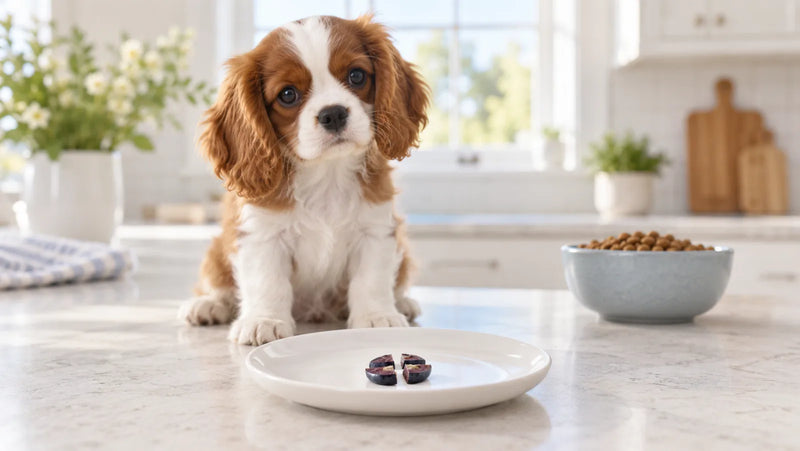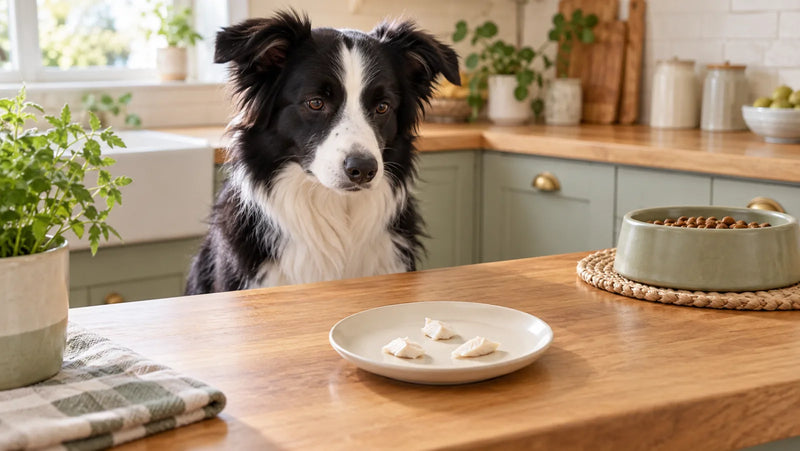

Dog treats without fillers start with a clear ingredient list, not just a front-of-bag promise. Because “filler” is a shopper shortcut rather than one fixed pet-food regulatory category, the practical test is simple: can you identify each ingredient, understand why it is there, and decide whether it fits your dog?
A clean label does not have to be fancy. It should make the main ingredient obvious, keep supporting ingredients purposeful, and avoid hiding behind vague flavors or wellness language. Use this guide to compare dog treats more carefully without turning every ingredient list into a guessing game.
Dog treats without fillers: the quick test
When you want dog treats without fillers, turn the package over and ask four questions before you buy:
- Is the main ingredient clearly named? “Chicken breast” or “beef liver” tells you more than a vague flavor claim.
- Can you explain each added ingredient? Texture, moisture, shelf stability, and flavor are different jobs.
- Do the claims match the panel? Single-ingredient should mean one ingredient; all-natural does not automatically mean one ingredient.
- Can you portion it easily? Even a clean treat still counts toward daily calories.
This keeps the focus where it belongs: the ingredient statement, the treat's job, and your dog's real routine.
What does “filler” mean on dog treat labels?
In everyday shopping, “filler” usually means an ingredient a pet parent sees as low-value, confusing, or unrelated to the reason they bought the treat. That might include a starch-heavy base in a product sold as meat-forward, a sweetener used mostly for palatability, or a color added to appeal to people rather than dogs.
But “filler” is not the same as a precise legal category printed into every pet treat rule. FDA and AAFCO labeling guidance focuses on truthful labeling, accepted ingredient names, and ingredient order, not on giving shoppers a single universal “filler” definition. The safer way to shop is to judge what each ingredient is and what role it plays.
The FDA explains animal food labeling and pet food claims around truthfulness, ingredient naming, and claim support. AAFCO also notes that pet food ingredients should use AAFCO-defined names where they exist, or common or usual names where they do not.
How pet treat ingredient lists actually work
Ingredient lists are not random. FDA guidance for animal food businesses says the ingredient statement lists ingredients by common or usual name in descending order by predominance by weight. In plain English, the ingredient used most by weight comes first, and the smallest amount comes later.
That order is useful, but it needs context. Fresh ingredients contain moisture, dried ingredients weigh differently, and treats are used in smaller amounts than complete meals. Do not treat ingredient order as a nutrition score by itself. Use it to see whether the product's story makes sense.
AAFCO's consumer guidance on reading pet food labels is helpful here: a labeler cannot simply invent proprietary ingredient names when an accepted or common name should be used. Clear names make cleaner decisions possible.
A clean-label checklist for dog treats without fillers
Clean-label shopping is easier when you stop hunting for one magic phrase and start using a repeatable checklist. The goal is not to fear every added ingredient. The goal is to avoid mystery, mismatch, and marketing that outruns the label.
Look for a named main ingredient
For a meat treat, the main ingredient should be specific. Chicken breast, beef liver, turkey, salmon, or another named protein is easier to evaluate than “meat flavor” or a broad animal-source term. Specific names help you match the treat to proteins your dog already handles well.
If the front says chicken but the first few ingredients are mostly starches, sweeteners, and flavors, pause. That does not automatically make the product unsafe, but it may not be the clean meat reward you expected.
Ask what each extra ingredient does
Some ingredients have a clear job. A humectant may help a soft treat stay flexible. A natural preservative may support shelf stability. A small amount of fiber may affect texture. Those jobs should be understandable and honestly labeled.
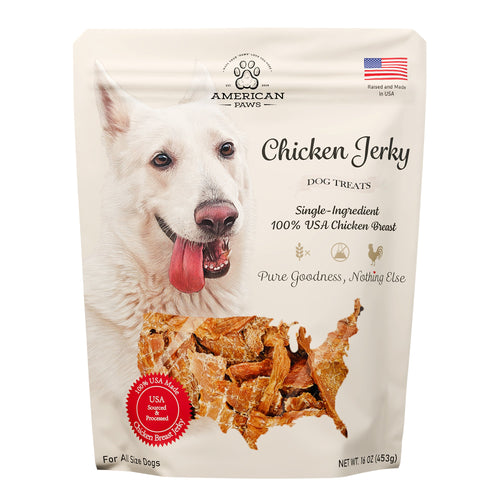
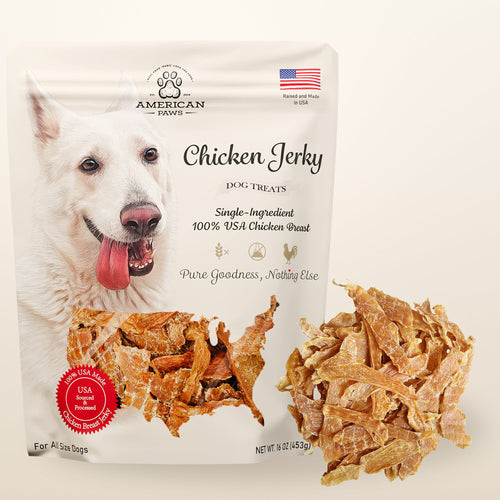
This matters for American Paws too. Whole-cut single-ingredient chicken breast jerky is exactly that: chicken breast. The softer 2 lb chicken jerky format is all-natural and made with chicken plus a touch of natural glycerin for texture, so it should not be described as single-ingredient. Accuracy builds trust.
Watch vague flavors, colors, and sweeteners
Dogs usually care about aroma and texture more than package color. Be skeptical of treats that need a long flavor system, bright colors, heavy sweetness, or unclear meat language to sound appealing. A treat can be fun without being complicated.
Vague does not always mean dangerous, but it does mean harder to evaluate. If you are buying a reward for a sensitive dog, a training dog, or a dog on a controlled diet, fewer unknowns make life easier.
Check calories and serving size
Filler-free does not mean calorie-free. Treats should stay a small part of the daily diet, and richer meat treats can add up quickly if pieces are large. Look for calorie information, feeding guidance, and a texture you can break or cut into the right size.
If you are training, tiny pieces often work better than full-size rewards. Small rewards let you repeat the behavior without turning a clean label into overfeeding.

Why short labels and single ingredients are easier to trust
A short label reduces the number of things you need to interpret. A true single-ingredient treat is the clearest version: one named ingredient, one simple exposure, and no hidden texture system. That can be useful for pet parents who want straightforward dog treats, especially when their dog already tolerates that protein.
Single-ingredient does not mean perfect for every dog. A chicken-only treat is still wrong for a dog who should avoid chicken. A beef liver treat still needs portion control. The benefit is clarity, not a medical guarantee.
For a deeper comparison, read our guide to single-ingredient dog treats. If you want a broader short-label framework that may include more than one ingredient, see limited ingredient dog treats.
American Paws clean-label options to compare
American Paws makes USA-made treats in Highland, California with a focus on recognizable ingredients and practical formats. The right product depends on your dog's chewing style, protein tolerance, and reward moment.
For the simplest chicken option, choose single-ingredient chicken breast jerky. It works well when you want a chewy real-meat reward that can be broken into smaller supervised pieces.
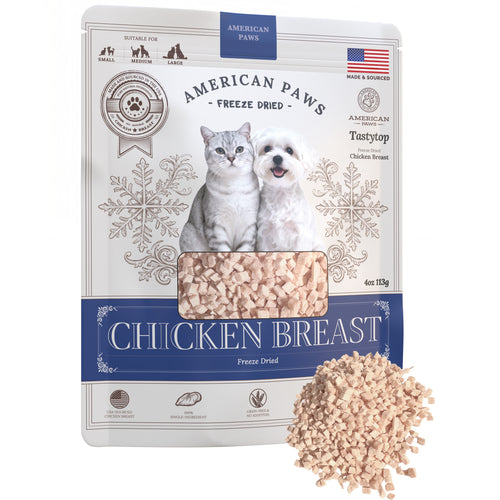
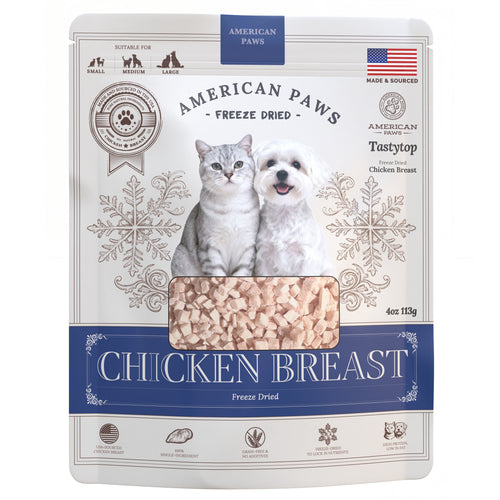
For a light crunchy option, freeze-dried chicken treats are made from USA chicken breast and are easy to crumble for small rewards or picky-meal aroma. For high-value training, freeze-dried beef liver training treats offer a different single-ingredient protein for dogs who tolerate beef liver.
You can also browse all American Paws dog treats to compare chicken, beef liver, toppers, and chew formats. Read each product's own ingredient panel instead of assuming every product has the same formula.
When a longer ingredient list is not automatically bad
A longer list can be appropriate when a treat has a specific job, such as a soft texture, a baked shape, or a formulated dental function. The issue is not length alone. The issue is whether the ingredients are named clearly, serve the treat's purpose, and match the claims.
For example, a soft treat may use a moisture-control ingredient to stay flexible. That does not make it a bad treat. It does mean you should not call it single-ingredient, and you should decide whether that ingredient fits your dog.
This is the difference between clean-label thinking and ingredient fear. Clean labels are transparent. They do not pretend every added ingredient is bad, and they do not hide a complicated recipe behind simple-looking design.
Common mistakes when shopping for filler-free treats
- Trusting the front label only. Phrases like natural, premium, and clean are not substitutes for the ingredient panel.
- Assuming grain-free means filler-free. Grain-free only tells you specified grains are absent; it does not prove the treat is meat-first or simple.
- Ignoring the treat's job. A chew, a topper, a training reward, and a jerky strip need different textures and portions.
- Calling all extras fillers. Some extras have a clear role. The question is whether they are necessary, named, and honest.
- Forgetting the dog in front of you. A clean label still needs to match your dog's size, chewing style, diet, and health history.
If you want a more complete label-reading routine, our guide on how to read a dog treat label walks through ingredient order, guaranteed analysis, calories, and claims.
Frequently asked questions
Are fillers illegal in dog treats?
No. “Filler” is a broad shopper term, not a single fixed illegal ingredient category. The better question is whether each ingredient is clearly named, legally appropriate for animal food, truthful on the label, and useful for the treat's purpose.
Are grain-free treats the same as filler-free treats?
No. Grain-free means certain grains are not used. A grain-free treat can still include starches, sweeteners, flavors, colors, or multiple supporting ingredients. Read the full ingredient list.
Are single-ingredient dog treats always better?
They are often easier to understand, but they are not automatically better for every dog. The single ingredient still has to be safe and appropriate for your dog's diet, tolerance, and veterinary needs.
Is glycerin a filler in dog treats?
Glycerin is commonly used to help create or maintain soft texture. Whether it fits your standards depends on the product and your dog. The key is transparency: if glycerin is present, the treat should not be called single-ingredient.
What is the easiest clean-label treat to start with?
Start with a clearly named protein your dog already tolerates, served in a small amount. For many dogs, a single-ingredient chicken, freeze-dried chicken, or beef liver treat is easier to evaluate than a long mixed recipe.
Choose treats with ingredients you can explain
Dog treats without fillers are really about clarity. Look for named proteins, purposeful supporting ingredients, honest claims, and portions that fit your dog's routine. Do not rely on one front-label phrase when the ingredient panel can give you a better answer.
When you want straightforward options, compare American Paws single-ingredient chicken jerky, freeze-dried chicken, and freeze-dried beef liver. Pick the format that matches your dog, start small, and keep the label easy to explain.