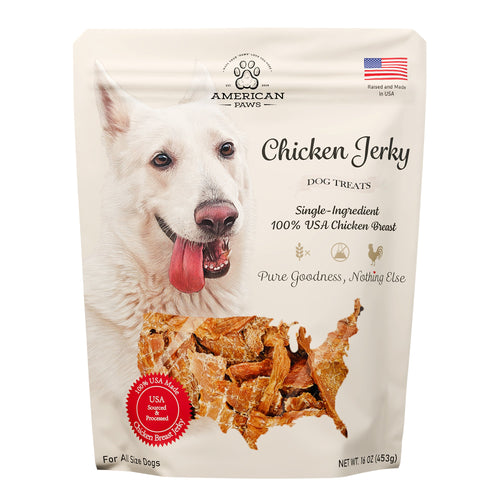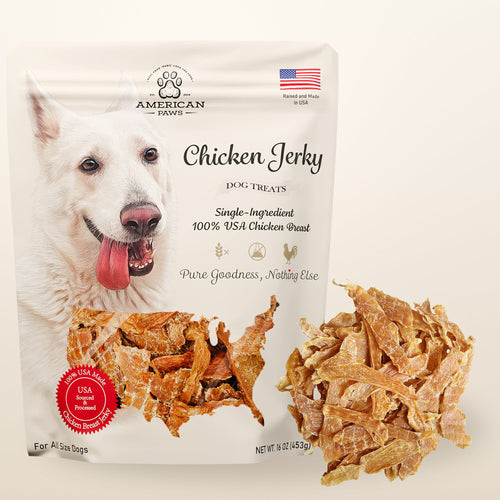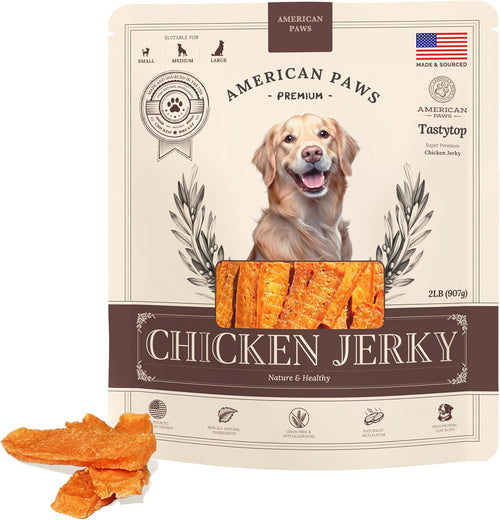

Made-in-USA chicken jerky can be a more reassuring choice because its manufacturer, ingredient list, and lot information may be easier to verify—but “made in USA” alone does not guarantee safety. Choose a clearly labeled, traceable product, check where both the treat and its chicken come from, and feed it as a supervised treat. That is the practical answer to is chicken jerky made in USA safer: origin is useful evidence, not a safety seal. For the wider quality picture, see our guide on whether chicken jerky is good for dogs.
The distinction matters. Pet parents deserve the facts behind the old jerky warnings without fear-based claims about every imported product or automatic promises about every domestic one.
Is Chicken Jerky Made in USA Safer? The Short Answer
USA manufacture can make chicken jerky easier to evaluate. A domestic maker can identify its facility, provide a reachable customer-service contact, print a lot code, and explain its ingredient and sourcing standards. Those details help you compare products and trace a package if a problem occurs.
But country of manufacture is only one part of the decision. A careful shopper should also verify the ingredient list, chicken origin, package condition, lot information, feeding directions, and whether the texture suits the individual dog. Even a simple treat can cause trouble if it is spoiled, fed in excessive amounts, or swallowed in pieces that are too large.
So the strongest choice is not merely a flag on the front of a bag. It is a made-in-USA product with specific, checkable information behind the claim.
What the FDA’s Jerky-Treat Investigation Actually Found
Reports began in 2007 and many involved imports
The concern has a real history. The FDA’s public jerky pet treat investigation says the agency began receiving illness reports associated with jerky treats in 2007. As of December 31, 2015, FDA had received approximately 5,200 complaints involving more than 6,200 dogs, 26 cats, and three people. Many reports involved chicken, duck, or sweet-potato jerky products imported from China.
FDA reported that gastrointestinal signs made up about 60% of complaints, kidney or urinary signs about 30%, and other signs the remaining 10%. The agency also investigated Fanconi-like syndrome, a rare kidney-tubule disorder seen in some reported dogs. These figures describe reports received during an investigation; they are not a count of cases in which jerky was proven to be the cause.
What the investigation did not prove
The same FDA record is explicit about uncertainty. It says a definitive causal conclusion was not possible in every report, and extensive testing had not identified one root cause for the different illnesses. FDA necropsies also found causes unrelated to jerky in more than half of the examined dogs.
That nuance prevents two bad conclusions. It is inaccurate to say every imported jerky treat is unsafe. It is also inaccurate to use “made in USA” as proof that a treat cannot present a problem. The history supports closer attention to source transparency, ingredient records, manufacturing accountability, and lot traceability.
Why Domestic Production Can Make a Treat Easier to Evaluate
A named manufacturing location
“Made in USA” is more useful when the company says where production happens. A named city and facility context give shoppers something concrete to assess. American Paws makes its treats in Highland, California, in a USDA-inspected facility. That is a specific manufacturing statement, not a vague suggestion created by colors or imagery.
An inspection claim should still be read accurately. It describes manufacturing oversight; it is not a promise that no animal will ever react poorly to a food. Good labeling and responsible feeding remain necessary.
Ingredient-origin transparency
Where a treat is made and where each ingredient comes from are separate questions. FDA noted during its investigation that manufacturers were not required to list the country of origin for every ingredient. A product could therefore be manufactured domestically with ingredients sourced elsewhere.
Look for a direct ingredient-origin statement, and ask the maker if the label is unclear. “Real chicken dog treats” is a marketing phrase until the ingredient panel and sourcing details explain what “real” means. For the full label walkthrough, see our chicken jerky for dogs guide.
Lot codes and a reachable maker
Traceability becomes practical when every package has a lot or batch code and the company can connect it to production records. FDA recommends retaining original packaging because the lot number can help investigators identify patterns and select samples if a pet becomes ill.
Before buying, check for a readable lot code, best-by information, sealed packaging, and a real way to contact the company. After opening, keep the bag or photograph both the front and the coded area until the treats are finished.
“Made in USA” Is Not a Complete Safety Test
Origin does not replace label reading. Start with the ingredient panel rather than front-of-package design. A one-ingredient product is simple to understand, but “single ingredient” is not automatically appropriate for every dog. Chicken is unsuitable for a dog with a diagnosed chicken allergy, and any rich or unfamiliar treat can cause digestive upset when introduced too quickly.
Texture and portion size matter too. Thick pieces can be difficult for small dogs, puppies, seniors with dental limitations, or dogs that gulp food. Break jerky into manageable pieces and supervise. Treats are supplemental food, not a complete and balanced diet.
Finally, inspect the actual product. Do not feed jerky from a damaged or swollen package, or pieces with unexpected moisture, mold, an unusual odor, or a major color change. Follow the storage directions printed by the maker.
How to Choose Made-in-USA Chicken Jerky Dog Treats
Use this short checklist instead of relying on one claim:
- Manufacturing: Does the label clearly say made in USA and identify the company?
- Chicken source: Does the maker explain where the chicken comes from?
- Ingredients: Is every ingredient named in plain language, with no implication that a multi-ingredient formula is single-ingredient?
- Traceability: Is there a lot code, best-by date, and reachable customer contact?
- Package integrity: Is the seal intact and the jerky dry, consistent, and free from unexpected odor or moisture?
- Fit for your dog: Can the pieces be sized appropriately, and does the formula avoid known dietary triggers?
For more detail on choking, portions, symptoms, and label red flags, use our complete chicken jerky safety guide. This article owns the narrower USA-origin question; the sibling covers general jerky safety.
How American Paws Labels Its Chicken Jerky Accurately
American Paws offers different jerky textures, so ingredient language must stay product-specific. The whole-cut flagship is single-ingredient whole-cut chicken breast jerky. It is the appropriate example when a shopper specifically wants a one-ingredient product.
The softer 2 lb jerky format is different: it contains chicken plus natural glycerin. It can accurately be described as all-natural, but it is not single-ingredient. That distinction is important because transparent labels are more valuable than sweeping catalog-wide claims.
You can compare formats in the made-in-USA chicken jerky collection, or browse all American Paws dog treats when a different protein or texture better fits your dog.
How to Introduce and Serve Chicken Jerky Safely
Start with a small piece and observe your dog before increasing the amount. Break strips into bites appropriate for the dog’s mouth and chewing style. Supervise every serving, especially for fast eaters, and keep fresh water available.
Count jerky within the dog’s total treat allowance rather than treating it as unlimited meat. A commonly used general guideline is to keep all treats combined to no more than about 10% of daily calories, with the primary diet providing complete and balanced nutrition. Calorie needs vary, so ask a veterinarian for an individualized amount if your dog has a medical condition or prescribed diet.
Stop feeding the product and contact a veterinarian if your dog develops concerning signs such as repeated vomiting, diarrhea, marked lethargy, decreased appetite, or unusual changes in drinking or urination. Save the package and lot code. A veterinarian can assess the dog; a report with precise product information can also be more useful than a general description.
Frequently Asked Questions
Does made in USA mean every ingredient is from the USA?
No. The manufacturing location and ingredient origins are different facts. Look for a specific sourcing statement or contact the manufacturer to ask where the chicken and any additional ingredients originate.
Are imported chicken jerky treats always unsafe?
No. FDA’s historical investigation found that many reports involved imported products, but it did not prove that every imported jerky treat was unsafe. Evaluate each product’s sourcing, ingredients, manufacturing information, package condition, and traceability.
Is single-ingredient chicken jerky safer?
A single-ingredient label is easier to interpret and reduces the number of ingredients a shopper must evaluate. It does not eliminate choking risk, spoilage, overfeeding, individual intolerance, or chicken allergy. Product handling and fit for the dog still matter.
What should I save from the package?
Keep the original bag, or clear photos of the front, ingredient panel, lot code, and best-by date. Retain the purchase receipt when practical. Those details are useful if you need to contact the maker, veterinarian, retailer, or FDA.
Choose Traceability, Then Feed Thoughtfully
Made-in-USA chicken jerky can offer a meaningful advantage: clearer, more accessible information about who made the treat and how to trace it. The strongest decision combines that origin information with a precise ingredient label, known chicken source, intact package, batch code, appropriate texture, and sensible portions.
Ready to compare clearly labeled options? Review our whole-cut single-ingredient chicken jerky and the broader chicken jerky collection, then choose the formula and texture that fit your dog.