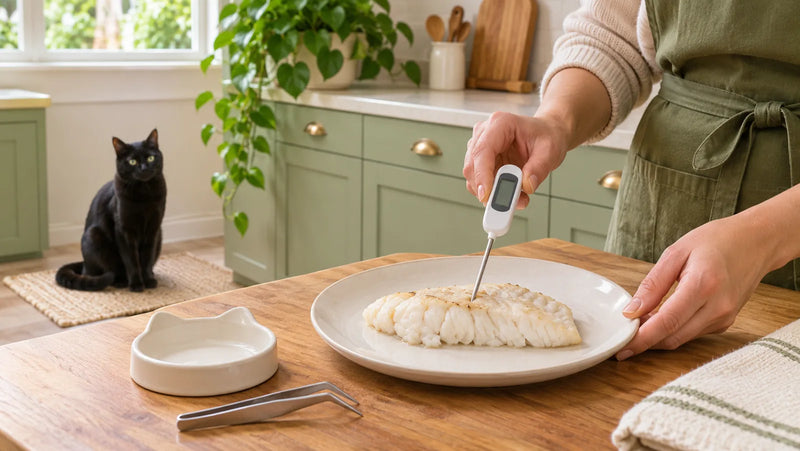

If your cat throws up after eating treats, stop that treat and record exactly what happened before assuming an allergy. Food that returns immediately and passively may be regurgitation, while vomiting usually involves nausea, retching and abdominal effort. A fast gulp, oversized portion, abrupt new treat, hairball or adverse food reaction are possibilities—but the timing alone does not prove the treat caused the episode.
Frequent vomiting can also accompany a foreign object, toxin, parasite, gastrointestinal disorder, kidney disease, diabetes, hyperthyroidism or another condition that has nothing to do with the treat. Call a veterinarian promptly for repeated episodes, blood, lethargy, weakness, appetite loss, pain, dehydration, diarrhea, weight loss, drinking or urination changes, or any suspected string, wrapper, medication, plant or toxic ingredient.
Do not fast the cat, restrict water, give a human medication or start a hairball or “sensitive stomach” remedy from a blog post. Pause only the optional treat, keep the package and lot information, preserve fresh water unless the veterinarian directs otherwise, and let the veterinary team decide what the cat should eat next.
First, Is It Vomiting or Regurgitation?
The mechanics are more useful than the mess. The Merck Veterinary Manual's cat vomiting reference describes vomiting as forceful ejection from the stomach or upper small intestine, often preceded by salivation, repeated swallowing, retching and abdominal contractions.
Regurgitation is passive. Undigested food or fluid may appear cylindrical because it has not reached the stomach and reflects the shape of the esophagus. A cat may lower the head and material simply comes out, with little warning and no abdominal heaving. The event can happen soon after eating, but timing alone cannot confirm it.
When it is safe, take a short video instead of interrupting the cat. Record whether there was retching, abdominal movement, drooling, repeated swallowing, coughing or a passive release. Repeated regurgitation also needs veterinary evaluation because an eating-speed problem and an esophageal problem can look similar at home.
Why a Cat Throws Up After Eating Treats: Six Patterns at a Glance
| Possible pattern | Useful clue | Safe first action | Do not assume |
|---|---|---|---|
| 1. Fast eating | Food returns quickly and passively, often undigested | Pause treats, video the event, ask whether slower delivery is appropriate | Every immediate event is harmless speed-eating |
| 2. Too much or too rich | Large amount or several extras near the main meal | Total every treat, topper and table food; keep the package | “Under 10%” guarantees stomach tolerance |
| 3. Abrupt new treat | Only recent change is a new ingredient, texture or format | Stop the new item and keep the rest of the diet stable | The new ingredient is proven guilty |
| 4. Hairball | Hair is present or grooming/shedding recently increased | Document it and brush loose coat if the cat tolerates grooming | Repeated vomiting is “just hairballs” |
| 5. Adverse food reaction | Repeatable GI and/or skin signs linked to diet history | Ask for a veterinarian-directed diet trial | One episode diagnoses allergy or intolerance |
| 6. Another cause | Red flags, access to objects/toxins or no consistent treat link | Contact the veterinarian or emergency clinic promptly | Post-treat timing rules out disease |
1. The Cat Ate the Treat Too Fast
A highly appealing treat can disappear with almost no chewing. Veterinary nutrition guidance from VCA notes that speed-eating can sometimes lead to regurgitation. That makes eating rate a plausible clue, not a diagnosis and not permission to ignore recurrence.
After the veterinarian clears continued treats and swallowing is normal, slow delivery rather than increase the portion. Break an eligible treat below the cat's comfortable swallow size, offer one piece at a time, divide the measured allowance into several moments, or use a cat-appropriate interactive feeder. In a multi-cat home, feed separately if competition drives gulping.
Stop the experiment and call the veterinarian for repeated passive episodes, coughing, drooling, difficulty or repeated swallowing, neck extension, pain, appetite loss or weight loss. Do not prescribe an elevated bowl or special position from an online symptom description; esophageal problems require an exam.
2. The Treat Portion Was Too Large or Too Rich
“A few treats” can mean several original pieces, fragments from multiple people, a topper, lickable paste and table scraps on the same day. A large volume, higher-calorie food or several unfamiliar extras can coincide with stomach upset without establishing an allergy.
The World Small Animal Veterinary Association's cat treat guidance says treats should stay under 10% of daily calories and never replace a meal. That ceiling protects nutritional balance; it is not a promise that any food under the line will agree with a particular cat.
Pause the optional treat and add up every extra from the same day. Save the calorie statement, ingredient list, original piece size and amount actually given. The guide to how many treats a cat can have per day explains the shared extras budget, but the veterinarian decides the next portion after vomiting. Do not cut complete food or fast the cat to “make room.”
3. A New Treat Was Added Too Abruptly
A new treat can change protein, fat, fiber, texture, moisture, calorie density and eating speed at once. When the only recent change is one product, stopping that optional item gives the veterinarian a cleaner history. Introducing two more “gentle” treats only adds variables.
WSAVA's nutrition questions and myths reference recommends a slow transition when healthy pets change diets and warns that sudden changes can result in vomiting or diarrhea. A treat is not a complete-diet transition, but the same one-change-at-a-time discipline makes the response easier to interpret.
Do not deliberately re-challenge a suspected trigger after vomiting without veterinary direction. If the cat is cleared for treats again, keep the complete diet stable, use one exact product, begin with one tiny measured piece and record the response. The separate guide to introducing new treats to dogs is the canine sibling; its dog portions and decisions should not be copied to a cat.
4. A Hairball Happened Near Treat Time
Cats swallow loose hair while grooming. Merck explains that hair can collect in the stomach and may be vomited as a hairball. If the material contains a damp cylindrical wad of hair, grooming and recent shedding belong in the history—but a treat given minutes earlier may simply be the last visible event before it appeared.
Regular brushing can reduce loose hair for a cat that accepts grooming. That is a prevention step, not a treatment for active vomiting or a possible blockage. Do not give mineral oil, butter, petroleum products or an over-the-counter hairball remedy unless the veterinarian recommends an exact product and plan for this cat.
Repeated hairballs, repeated vomiting, unproductive retching, appetite loss, constipation, pain, lethargy or weight change need veterinary evaluation. Merck warns that a hairball can remain in the stomach, irritate it or obstruct the digestive tract. “Hairball” should never become a permanent explanation for a worsening pattern.
5. The Cat May Have an Adverse Food Reaction
An adverse reaction is broader than allergy. Merck's nutrition reference for adverse food reactions defines food intolerance as a reaction that does not involve the immune system and food allergy as one that does. Both can be associated with gastrointestinal signs, while feline food allergy can also involve itchy skin around the neck or face.
Those signs do not identify a culprit at home. Merck says allergy cannot be distinguished from intolerance by the symptoms alone and that skin, blood and saliva testing are unreliable for diagnosing food allergy. The diagnostic standard is a carefully selected, veterinarian-directed food trial followed by controlled decisions—not a carousel of retail proteins.
During an elimination trial, every unapproved treat, topper, table scrap, flavored supplement and chewable medication can undermine the result. If the suspect item was dairy, the guide to milk and lactose decisions for cats owns that specific form. If it was pork, use the plain pork, fat, bone and seasoning guide after medical clearance. Neither link diagnoses why this cat vomited.
6. The Treat May Be a Coincidence
The Cornell Feline Health Center's overview of vomiting in cats lists a wide range of causes: spoiled food, toxic plants, human medications, string or yarn, antifreeze, certain human foods, foreign objects, parasites, constipation, inflammatory bowel disease, kidney disease, diabetes, hyperthyroidism and more.
That breadth is why “it happened after a treat” is a timestamp, not a diagnosis. Check whether a wrapper, absorbent pad, string, ribbon or part of a toy is missing. Review medications and supplements, access to plants, cleaners and human food, recent stool, appetite, drinking and urination, energy and weight. Keep the exact treat package without assuming it is the cause.
A suspected string, foreign object, toxin or medication exposure requires immediate veterinary or emergency direction. Do not pull visible string from the mouth or anus, induce vomiting, give hydrogen peroxide, offer bread or oil, or wait for another episode. The safest next action depends on what entered the cat and where it may be.
When to Call the Veterinarian
Cornell advises prompt veterinary evaluation for cats vomiting more frequently than once per week or showing lethargy, weakness, decreased appetite, blood in vomit, increased thirst, increased or decreased urination, or diarrhea at the same time. That is a published threshold for evaluation, not permission to wait until a cat reaches it.
Merck says long-term vomiting, vomiting more often than once or twice daily, or vomiting accompanied by blood, abdominal pain, depression, dehydration, weakness, fever, weight loss or other adverse signs requires a detailed veterinary examination. Different sources frame frequency differently because pattern and the whole cat matter; a caregiver can always call sooner.
Seek emergency care for breathing difficulty, collapse, severe weakness, repeated uncontrolled vomiting, a painful or distended abdomen, inability to keep water down, or a suspected string, foreign object, medication or toxin. A kitten, senior, cat on a prescription diet or cat with kidney, heart, endocrine or gastrointestinal disease deserves a lower threshold for a call.
Build a Useful Treat-and-Symptom Record
A precise record helps the clinic decide what matters. Capture:
- date, time and relationship to the main meal, treat and medication;
- a video showing active abdominal effort or passive return, when safely possible;
- appearance of the material, including whole treats, liquid, foam, bile, hair or blood;
- exact product, ingredient list, lot/date, original piece size and credible maximum amount;
- every other treat, topper, table food, supplement and flavored medication;
- stool, appetite, water intake, urination, energy, pain, grooming and weight trend;
- access to trash, wrappers, string, toys, plants, cleaners, medications or spoiled food.

Photograph the package and the material if needed for the veterinary call. Do not transport loose vomit unless the clinic specifically asks for a sample and explains how to contain it. Keep a clean copy of the record even if the cat seems normal later; repeat patterns are easier to see when time and food details are not reconstructed from memory.
Restart Treats Only After the Cat Is Cleared
A vomiting or inappetent cat does not need a parade of toppers. Keep fresh water available and follow the veterinarian's feeding plan. Do not use a new flavor to test appetite or hide a continuing problem; decreased appetite is itself an important sign in cats.
Once the cat is medically cleared, the guide to choosing cat treats by ingredients, calories and texture helps match one item to the cat's mouth, purpose and diet. The cat food topper guide is only for an otherwise healthy picky cat, not a vomiting treatment or a way to bypass appetite loss.
Dog products and portions stay on the dog side. The comparison of dog food topper formats should not be used to treat a cat's nausea, replace feline complete food or choose a post-vomiting ingredient.
The American Paws Chicken Treat Is an Option Only After Clearance
The current American Paws freeze-dried chicken training treat for cats and dogs page lists 100% USA chicken breast, All Life Stages, about five calories per original piece and intermittent or supplemental feeding. Those are label facts—not a claim that chicken prevents vomiting or fits every cat.
It is not a bland diet, nausea remedy, hypoallergenic product, complete meal or diagnostic tool. Skip it when chicken is suspected or excluded, during an unapproved elimination trial, or while the cat is still vomiting or awaiting veterinary direction.
After the veterinarian clears both chicken and treats, break a piece below the cat's comfortable swallow size, count every fragment in the shared extras budget and observe without adding a second new item. Browse current American Paws dog treats and cat treats only by their live individual labels; one product's ingredient statement does not describe the whole collection.
Frequently Asked Questions
Why does my cat throw up treats right after eating?
Immediate passive return can be regurgitation, and fast eating is one possible contributor. Active retching and abdominal contractions point more toward vomiting. Video the mechanics, stop the treat and call the veterinarian if it repeats or comes with another sign.
How can I tell regurgitation from vomiting?
Vomiting is forceful and may include drooling, repeated swallowing, retching and abdominal effort. Regurgitation is usually passive, and the material may be undigested and cylindrical. A veterinarian should evaluate repeated events of either type.
Can eating treats too fast make a cat regurgitate?
Yes, speed-eating can contribute to regurgitation. After veterinary clearance, one-piece delivery, smaller measured portions, separate feeding or an appropriate interactive feeder may slow the event. Persistent regurgitation needs an exam rather than a feeder-only fix.
Can too many treats make a cat vomit?
A large or rich treat load can coincide with stomach upset, but vomiting has many possible causes. Add up all extras, stop the optional item and preserve the package. The under-10% calorie ceiling protects diet balance; it does not guarantee tolerance.
Can a new treat upset a cat's stomach?
A sudden change can be associated with vomiting or diarrhea, but one episode does not prove the new ingredient caused it. Stop the new treat, keep the main diet stable and ask the veterinarian before any controlled reintroduction.
Is vomiting after a treat a food allergy?
Not by itself. Food allergy, food intolerance and unrelated disease can overlap in their signs. Diagnosis requires a detailed history and veterinarian-directed food trial; retail tests and casual protein swaps cannot confirm it.
Could it just be a hairball?
It could be when a wad of hair is present, but repeated vomiting, unproductive retching, appetite or weight change, pain or lethargy should not be dismissed as hairballs. A hair mass can also irritate or obstruct the digestive tract.
When is cat vomiting an emergency?
Breathing trouble, collapse, severe weakness, repeated uncontrolled vomiting, marked abdominal pain or swelling, inability to keep water down, or suspected string, foreign object, medication or toxin calls for emergency veterinary direction. Blood, lethargy, appetite loss, diarrhea, weight loss and drinking or urination changes also warrant prompt contact.
Should I stop feeding my cat after vomiting?
Stop the optional treat, but do not fast the cat or restrict water without veterinary direction. Cats have special nutritional risks when they do not eat. Call the veterinarian for a feeding plan, especially if appetite is reduced or vomiting repeats.
Pause the Treat, Preserve the Evidence and Let the Veterinarian Lead
Start with what can be observed: active vomiting or passive regurgitation, exact timing, amount, ingredient, speed, hair, repeat pattern and the cat's appetite, energy, stool, water and urine. Pause the optional treat, save the package and video, and use the red flags to call promptly. Only after the cat is cleared should portion, pace, texture or a carefully selected new cat treat return to the plan.