
If you have ever asked, why is my dog obsessed with chicken jerky, the answer is probably a mix of smell, real-meat flavor, satisfying texture, and happy repetition. Slow-dried chicken sends a strong food signal to a nose-led animal, while the sight of the bag may already predict praise, training, a walk, or another favorite routine.
That wide-eyed enthusiasm is useful, but it does not mean your dog is addicted or needs a whole strip every time. Chicken jerky works best as a measured reward: choose an appropriate piece, break it smaller when needed, and count every fragment inside the day’s treat allowance.
Why is my dog obsessed with chicken jerky? The quick answer
There is rarely one universal reason. Most dogs are responding to several appealing features at once:
- A noticeable meaty aroma: dogs gather a great deal of information through scent, and opening a bag of dried chicken creates an easy-to-recognize cue.
- A direct real-chicken flavor: whole-cut chicken jerky keeps the eating experience focused on meat rather than a long blend of fillers and flavorings.
- A firm, chewy texture: a strip feels more substantial than a tiny crumb, even when you tear it into training-size pieces.
- A learned reward history: if jerky appears after good choices, grooming, walks, or recall practice, your dog learns that the bag predicts something worthwhile.
Personality matters too. One dog may race to the kitchen for chicken and ignore another protein; another may prefer a crunchy freeze-dried bite. Preference is information about what motivates your dog, not a medical verdict about what the dog needs.
1. The meaty aroma gets your dog’s attention
Dogs experience food nose first
People often inspect a treat with their eyes. Dogs are far more likely to investigate with their noses. The American Kennel Club’s overview of canine sniffing describes smell as a dog’s primary way of understanding the environment. That helps explain why your dog may notice the chicken jerky bag before you have fully opened it.
Drying removes much of the water from a piece of meat and gives jerky its dense, recognizable aroma. It is reasonable to say the smell is compelling to many dogs; it is not reasonable to claim that every dog reacts the same way or that the aroma proves one treat is healthier than another.
The bag-opening ritual becomes part of the scent
Dogs also learn the small signals around food. The cupboard door, the crinkle of a pouch, the time of day, and the place where you stand can all arrive before the treat itself. After enough repetitions, your dog may become alert at the first cue because the whole sequence predicts chicken jerky.
You can test this gently by changing one part of the routine. Put the planned pieces in a quiet training pouch before your dog enters the room, then reward calm behavior. If the dramatic reaction to the original bag becomes smaller, part of the “obsession” was probably anticipation built around the packaging ritual.
2. Real chicken gives one clear flavor signal
A short ingredient list keeps the recipe understandable
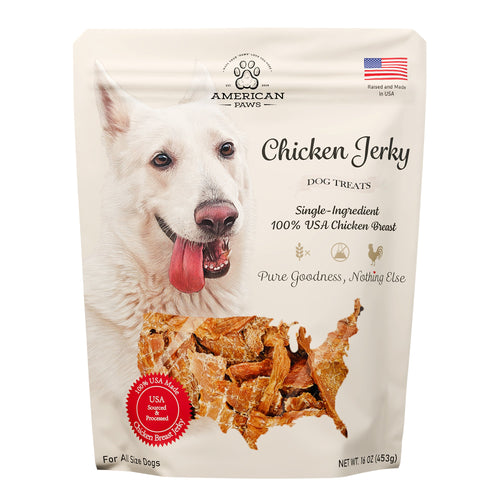
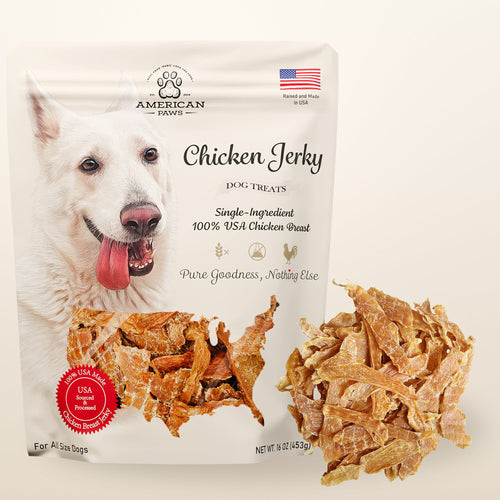
The American Paws single-ingredient whole-cut chicken jerky currently lists one ingredient: 100% USA chicken breast. It is slow-dried whole rather than ground and formed. There are no added fillers, artificial preservatives, or competing flavor blends in that verified product, so the taste and aroma come directly from chicken.
That simple label is valuable for the person buying the treat because it makes the ingredient source clear. Your dog is not reading the label, and “single-ingredient” is not a magic palatability claim. The practical connection is simpler: a dog that loves chicken gets a very direct chicken experience. Our chicken jerky for dogs guide explains how to compare jerky labels and formats.
High protein describes the treat; it does not diagnose the craving
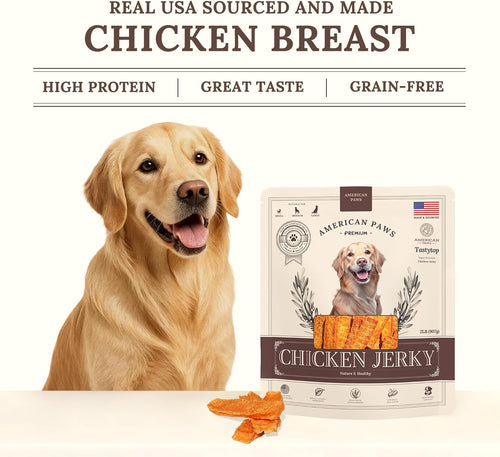
The current flagship jerky label lists a minimum of 70% crude protein, so it is fair to describe the product as a high-protein dog treat. It is not fair to say that your dog smells the protein percentage, is correcting a protein deficiency, or is biologically addicted to a high number on the guaranteed analysis. Aroma, flavor, texture, and learned value are more useful explanations for the behavior you can see.
Chicken tolerance still comes first. A clean label does not make chicken suitable for a dog with a known chicken allergy, a prescribed diet, or another condition that changes food choices. When those issues apply, ask your veterinarian before using jerky—even if your dog is extremely enthusiastic about it.
3. The chewy texture makes the reward feel substantial
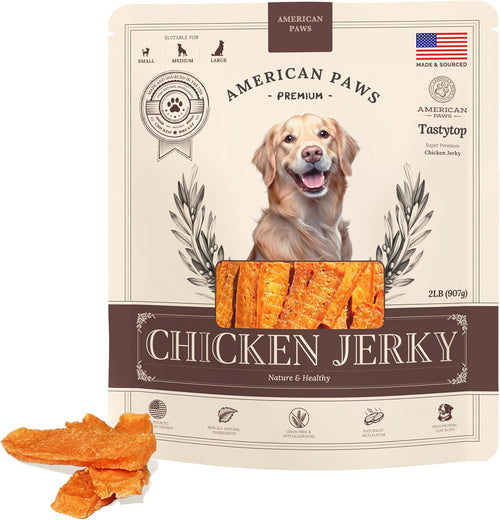
Whole-cut chicken jerky has a firm, chewy texture that is different from a biscuit or a light freeze-dried cube. The resistance can make one piece feel like a distinct reward event. That may be part of why a dog pauses, focuses, and watches your hand so closely when a strip appears.
Chewy does not mean long-lasting, dental, or appropriate as an unsupervised chew. A motivated dog may finish jerky quickly. Look at the actual strip, tear it to a manageable size, and supervise. Smaller dogs and fast gulpers may need much smaller pieces than the natural strip that came out of the bag.

4. Your dog has learned what chicken jerky predicts
Rewards build strong associations
When a behavior is followed by something the dog values, the dog is more likely to offer that behavior again. If chicken jerky repeatedly arrives after coming when called, settling on a mat, allowing a paw wipe, or walking politely, the treat becomes connected to both the action and the positive social moment around it.
This is one reason a favorite food can seem more exciting over time. The jerky is not only meat; it is also a reliable signal that your attention, praise, and a successful routine are about to happen. That learned anticipation is normal and can be put to work without escalating the serving size.
Excitement is not the same as addiction
A dog who stares, spins, drools, or runs to the treat cabinet may be highly food-motivated, but those signs alone do not diagnose addiction or a behavioral disorder. Avoid making the reaction bigger by rewarding frantic behavior immediately. Wait for four paws on the floor or another simple calm behavior, mark that moment, and then deliver the piece.
If food-seeking becomes sudden, extreme, difficult to interrupt, or appears with weight change, unusual thirst, vomiting, diarrhea, or other symptoms, the question has moved beyond a fun jerky preference. Contact your veterinarian instead of trying to solve it by changing treats.
Turn the obsession into better training
A reward your dog genuinely values is useful training equipment. The trick is to spend that value carefully:
- Plan the amount first. Decide how much jerky belongs in the session before you begin, then close the main bag.
- Break strips in advance. Make small, quick-to-eat pieces so your dog can return attention to the next cue.
- Pay for the behavior you want. Deliver the reward after the marker or successful response, not simply because the dog is staring at the pouch.
- Vary reward size thoughtfully. Use a tiny piece for an easy repetition and a slightly larger piece or several quick pieces for an exceptional response.
- Keep praise in the picture. Food can be powerful without becoming the only part of the interaction.
Jerky is especially practical for short sessions because one strip can be divided. The fragments do not become calorie-free when they get smaller, though. If you start with one strip and tear it into eight rewards, the session still used one strip.
Enthusiasm does not mean unlimited chicken jerky
Count jerky inside the daily treat allowance
A common veterinary nutrition guideline is to keep treats and other extras to no more than about 10% of a dog’s daily calories, leaving at least 90% for complete and balanced food. VCA’s veterinary guidance on dog treats explains the same 90/10 framework.
The 10% figure is a ceiling, not a daily goal and not a universal strip count. Dogs differ in size, body condition, age, activity, health, and main diet. Natural jerky strips also vary. Use the calorie information on the package in your hand and ask your veterinary team for an individual daily target when weight control or a medical diet matters.
For the detailed portion calculation and examples, use our guide to how much chicken jerky to give your dog. That article owns the amount question; the simple lesson here is that intense enthusiasm should not quietly expand the day’s treat budget.
Do not replace meals with a favorite treat
Chicken jerky is intended for intermittent or supplemental feeding. Even a high-protein, single-ingredient treat is not complete and balanced food. Replacing a meaningful share of meals with jerky can crowd out nutrients supplied by the main diet and can teach a clever dog to hold out for extras.
If you use many rewards during training, consider reserving some of the dog’s measured meal for easy repetitions and saving small jerky pieces for the hardest or most important behaviors. This keeps the premium reward special while protecting the daily balance.
How to choose chicken jerky your dog can enjoy
- Read the ingredient list. Confirm the exact animal protein and any added ingredients instead of assuming all jerky recipes are alike.
- Check the feeding statement and calories. Treats are supplemental, and the calorie number is more useful for portioning than the front-of-bag excitement.
- Match texture and size to the dog. Break larger strips for small dogs, seniors with chewing changes, and fast eaters.
- Supervise every serving. Jerky is food, not an unattended chew toy.
- Store it as directed. Reseal the bag, keep it cool and dry, and discard pieces with mold, off odors, or unexpected moisture.
To compare formats and sizes, browse the American Paws chicken jerky collection. For the broader benefits and quality questions, read the jerky-cluster pillar on why chicken jerky can be a good dog treat. If you want another protein or format, explore all American Paws dog treats and check each product’s own ingredient label.
For a fuller safety checklist—from sourcing and label reading to serving and storage—see how to choose and serve chicken jerky safely.
Frequently asked questions
Is it normal for dogs to go wild for chicken jerky?
Yes, many dogs become visibly excited about a favorite meaty reward. Aroma, texture, routine, and learned associations can all contribute. Reward a calm behavior before delivering the piece so excitement does not become the only behavior that works.
Is chicken jerky addictive to dogs?
Enjoying a food intensely is not, by itself, evidence of addiction. “Obsessed” is usually a playful description of strong preference and anticipation. A sudden or extreme appetite change accompanied by other symptoms deserves veterinary attention.
Can I use chicken jerky as a training treat?
Yes. Break a strip into small pieces before training, plan the session amount, and deliver each piece promptly after the desired behavior. Count the starting strip—not just the number of fragments—toward the day’s calories.
How much chicken jerky can I give my dog?
There is no safe universal number of strips. Keep all treats within roughly 10% of daily calories, use the specific package’s calorie information, and adjust for your dog’s size, diet, and health. Your veterinarian can calculate an individual target.
What if chicken does not agree with my dog?
Stop serving it if you see vomiting, diarrhea, itching, swelling, or another concerning reaction, and contact your veterinarian. A one-ingredient chicken treat is still chicken; a shorter label cannot make the protein suitable for a dog that needs to avoid it.
Make your dog’s favorite reward work smarter
Your dog’s excitement can be a training advantage when you control the portion and timing. Choose whole-cut American Paws chicken jerky, break the strip to fit your dog and the task, reward the behavior you want, and keep the total inside the day’s treat plan. The goal is not to make the favorite less exciting—it is to make every piece count.