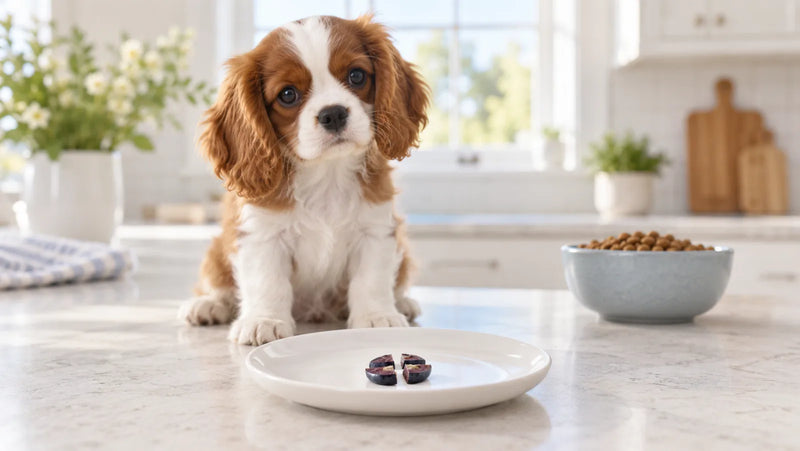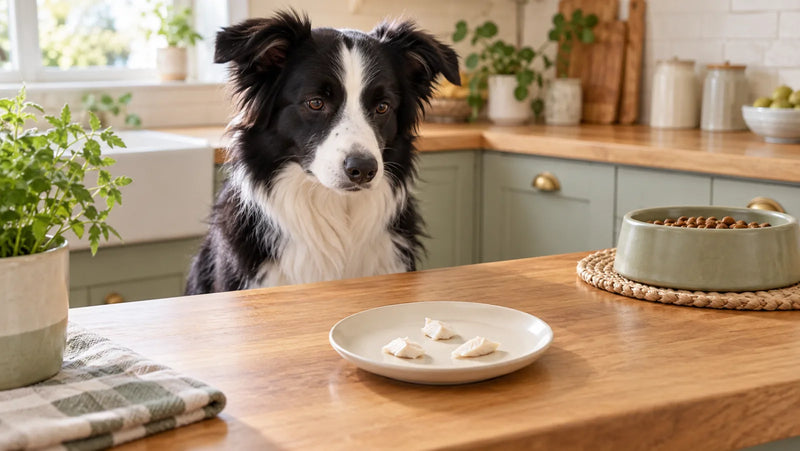

Raw chicken hearts are not inherently toxic to dogs, but they are not the low-risk choice. Like other raw poultry, raw chicken hearts for dogs can carry Salmonella and Campylobacter that may sicken a dog or spread through hands, utensils, bowls, saliva, stool, and kitchen surfaces to people.
Fully cooking plain hearts is the more conservative home option. If you still choose raw, treat the heart and everything it touches as raw poultry—not as a clean snack—and consider the health of every dog and person in the household before opening the package.
Raw chicken hearts for dogs: the quick safety answer
| Question | Practical answer |
|---|---|
| Are chicken hearts poisonous? | No. The concern with a plain raw heart is microbial contamination, not a naturally occurring poison. |
| Can a healthy adult dog eat one without becoming ill? | Possibly, but one uneventful feeding does not prove the next package is free of pathogens or that the dog cannot carry germs. |
| Does freezing make raw hearts safe? | No. Freezing can reduce some organisms, but it is not sterilization. |
| Is raw appropriate in every home? | No. Young, older, pregnant, or immunocompromised dogs and higher-risk people in the household make a non-raw choice more prudent. |
| What is the conservative alternative? | Cook plain poultry hearts to 165°F, cool them, cut them for the dog, and keep them within the treat allowance. |
This article is deliberately about the raw-format safety decision. For the separate nutrition, heart-versus-liver distinction, cooked preparation, and portion context, see our guide to the benefits and cooked serving of chicken hearts.
Why raw chicken hearts can expose both dogs and people
Salmonella and Campylobacter begin with raw poultry
A chicken heart is a poultry giblet. Removing it from the muscle-meat category does not remove the raw-poultry risk. The CDC’s raw-chicken safety guidance says raw chicken can be contaminated with Campylobacter, Salmonella, or Clostridium perfringens and uses 165°F as the safe cooking temperature.
“Can carry” is important wording. It does not mean every package is contaminated, and it does not mean every exposed dog or person will become ill. It means you cannot tell by color, smell, source, or a dog’s enthusiasm whether a particular raw heart is carrying disease-causing bacteria.
The FDA’s raw-pet-food study and handling guidance found raw pet food more likely than the other tested categories to contain disease-causing bacteria. In the agency’s 196 raw-food samples, 15 tested positive for Salmonella and 32 for Listeria monocytogenes. Those numbers are not a chicken-heart contamination rate; they support the broader reason raw animal food receives stricter handling.
A dog can look healthy and still move germs through the home
The exposure does not stop when the dog swallows. Raw juices can reach a refrigerator shelf, sink, handle, phone, floor, feeding mat, toy, or another food. A dog may then move organisms through its mouth, face, bowl, saliva, vomit, or stool. A dog that looks normal is not a laboratory test of the food or proof that it cannot expose another animal or person.
The AVMA’s revised raw or undercooked animal-protein policy specifically recognizes that apparently healthy animals can still pose risks to animals and people and that handling raw diets can expose humans. This is a household decision, not only a dog-bowl decision.
Which dogs and households should avoid raw chicken hearts?
Higher-risk dogs
Choose a non-raw format and ask the veterinarian before adding chicken heart when the dog is:
- a puppy whose immune system and complete growth diet deserve extra protection;
- a senior dog, especially one with another illness;
- pregnant, nursing, immunocompromised, or receiving immune-suppressing treatment;
- living with chronic gastrointestinal disease or another condition that may reduce resilience;
- allergic or intolerant to chicken, because heart is still chicken;
- on a prescription diet or elimination trial that does not include chicken; or
- a therapy, school, hospital, nursing-home, or other visiting dog whose mouth and coat may contact vulnerable people.
Raw is not required to obtain the nutrients in chicken heart. Cooking changes the food, but it does not turn heart into an empty ingredient. More importantly, a treat is optional; the dog’s complete-and-balanced main diet should remain the nutritional foundation.
Higher-risk people in the household
The CDC does not recommend raw pet food or treats and asks families to consider whether anyone is more likely to become seriously ill from foodborne germs. That includes children under five, adults 65 and older, pregnant people, and people with weakened immune systems.
A baby does not need to touch the heart to be part of the risk calculation. Shared floors, dropped utensils, a dog’s lick, feeding bowls, and the hands of another caregiver can bridge the distance. In a higher-risk household, fully cooked heart or a suitable packaged non-raw dog treat is the simpler control.
How to handle raw chicken hearts if you choose to feed them
No kitchen routine can make raw feeding risk-free. The following steps reduce cross-contamination when an owner chooses raw despite the public-health guidance.
Buy cold, intact, food-grade poultry and contain leaks
Choose fresh or frozen hearts sold for human food in an intact, in-date package with a known cold-storage history. Put the package in a separate disposable bag at the store. At home, keep it in a sealed leakproof tray or container on the lowest refrigerator shelf, away from produce and ready-to-eat food.
Reject a torn, swollen, leaking, warm, or foul-smelling package. Spoilage signs can tell you to discard food, but their absence cannot certify that pathogens are absent.
Thaw in the refrigerator, never on the counter
Thaw frozen hearts in a covered container in the refrigerator. A microwave can be used only when the food will be handled and used immediately afterward. Do not leave poultry on the counter or thaw it in standing water in the sink.
Portion the batch while it is cold and return unused food promptly. Keep a dated label on the container. Follow the seller’s storage guidance rather than assuming all raw organs have the same shelf life.
Do not rinse; keep tools and ready-to-eat food separate
Do not wash raw hearts under the faucet. Rinsing does not sterilize poultry; it can splash contaminated droplets around the sink and surrounding surfaces. Use a dedicated board, knife, tongs, and container, and keep them away from salad, fruit, cooked food, dishes, and the dog’s regular scoop.
Plan the workflow before touching the package. Open cabinets, move phones and towels away, and set out the raw-only tools so contaminated hands do not need to travel through the kitchen.
Portion without letting the dog roam through the prep area
Keep the dog out of the kitchen while portioning. Put one measured serving directly into a washable bowl in a contained feeding area. Do not use raw heart as a pocket treat, scatter it on the floor, stuff it into a fabric toy, or let the dog carry it through the house.
Small hearts can still be gulped. Size the piece for the individual dog, supervise eating, and remove anything the dog abandons. Raw food is not a long-lasting chew.
Clean first, then disinfect; wash hands for 20 seconds
Wash hands with soap and water for at least 20 seconds after handling the food, package, bowl, utensils, or anything the raw juices touched. Cleaning and disinfecting are separate jobs: hot soapy water removes food and soil; an appropriate food-surface disinfectant used exactly according to its label addresses remaining germs.
Never mix cleaning chemicals. Clean the sink, counter, refrigerator contact points, board, utensils, faucet, and feeding surface. A dishwasher can be useful for dishwasher-safe bowls and tools. Launder a contaminated cloth promptly rather than wiping the kitchen repeatedly with it.
Manage bowls, leftovers, face licking, saliva, and stool
Pick up the bowl immediately after the dog finishes. Cover and refrigerate the unused portion promptly or discard it securely; do not save a room-temperature leftover for later. Wash the bowl and feeding mat separately from children’s items and ready-to-eat food equipment.
Do not let the dog lick faces, mouths, open wounds, food-preparation surfaces, or a baby’s hands after a raw meal. Wash hands after cleaning stool or vomit, and remove waste promptly from the yard. These steps are easy to overlook because the heart is gone, but household handling continues after feeding.
What freezing, dehydration, and freeze-drying do—and do not—prove
A frozen heart is still raw. Freezing may reduce some organisms, but it does not reliably eliminate every pathogen. Home dehydration removes moisture; it is not a validated poultry kill step unless a controlled process has been shown to reach the required time and temperature throughout the food.
Freeze-dried also describes a moisture-removal method, not a safety guarantee. CDC notes that raw pet foods can be sold raw frozen, freeze-dried, or dehydrated and that these processes do not necessarily kill all germs. Read the package for the word “raw,” safe-handling instructions, storage directions, lot information, and what the company does to reduce or eliminate pathogens.
A sealed bag and a dry texture can be more convenient than cutting grocery-store organs, but convenience and microbial control are different claims. Do not infer a validated kill step from appearance or format alone.
Lower-risk alternatives to raw chicken hearts
Fully cook plain hearts to 165°F
For home-prepared hearts, the straightforward alternative is thorough cooking. Simmer or bake them plain—without onion, garlic, salt, broth, butter, oil, sauce, or seasoning—and use a food thermometer to confirm 165°F at the thickest part of several pieces. Color alone is unreliable because heart is dark muscle.
Transfer the cooked hearts with clean utensils, cool them, trim obvious excess fat if needed, and cut them into pieces suitable for the dog. The separate plain poultry-giblet cooking workflow explains the same separation, temperature, cooling, cutting, and storage principles using gizzards.

Evaluate packaged treats by the label and pathogen controls
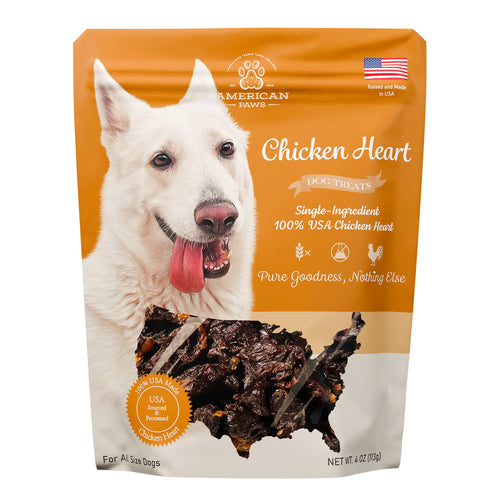
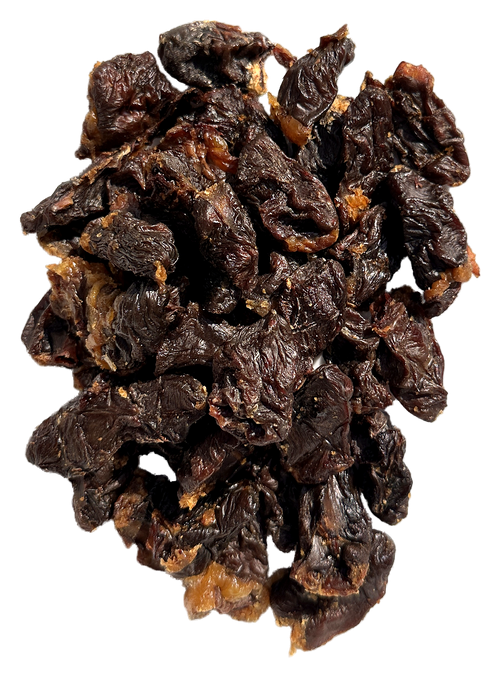
If you want the same ingredient without grocery-store raw-organ preparation, American Paws now offers single-ingredient dehydrated chicken-heart dog treats made from 100% U.S. chicken hearts in a 4 oz resealable bag. This is a labeled supplemental treat, not homemade raw heart and not a complete meal.
The dehydrated format and sealed package make portioning and storage more convenient; they are not, by themselves, proof of sterility or universal safety. Evaluate the current label, storage directions, company controls, and the dog’s needs. If you prefer a non-organ chicken reward, our single-ingredient freeze-dried chicken breast treat is chicken breast rather than heart. You can also compare the current choices in our chicken jerky dog-treat collection; products and formats are not interchangeable.
How much chicken heart belongs in the diet?
Changing raw heart to cooked heart reduces a microbial hazard, but it does not turn the food into a balanced meal. Chicken heart is an extra. It shares the treat allowance with training rewards, toppers, chews, table bites, and food used for medication.
Keep all extras together below about 10% of daily calories unless the veterinarian has designed a different plan. Our daily dog-treat calorie guide explains why one universal hearts-per-day chart would be misleading. Whole hearts vary in size and attached fat, cooking changes water weight, and dogs of equal body weight can have different energy needs.
Start with one small cooked piece if chicken heart is new. Offer no other new food that day and watch for vomiting, diarrhea, itching, swelling, or discomfort. A repeated or severe reaction deserves veterinary advice; do not keep testing a suspected chicken intolerance.
When to call a veterinarian or doctor
Contact the veterinarian if a dog develops repeated vomiting or diarrhea, bloody stool, fever, marked lethargy, loss of appetite, dehydration, abdominal pain, collapse, or another concerning change after raw poultry. Tell the clinic exactly what was fed, when, how much, the package or lot information, and whether anyone else is ill.
A person who develops fever, significant diarrhea, bloody diarrhea, persistent vomiting, dehydration, or severe abdominal symptoms after handling raw poultry or contacting an exposed animal should contact a healthcare professional. Infants, older adults, pregnant people, and immunocompromised people should seek individualized advice promptly rather than relying on a pet-food article.
Do not give the dog leftover antibiotics, human anti-diarrheal medicine, or another home treatment unless the veterinarian directs it. Do not assume one symptom proves Salmonella or Campylobacter; diagnosis and treatment require professional assessment.
Frequently asked questions
Can puppies eat raw chicken hearts?
Raw poultry is a poor default for puppies. Young animals are among the pets CDC identifies as more likely to become sick from foodborne germs, and puppies need a complete-and-balanced growth diet. Ask the veterinarian before adding any heart; if permitted, a tiny fully cooked plain piece is the more conservative treat format.
Does freezing chicken hearts kill Salmonella or Campylobacter?
No. Freezing can reduce some organisms but is not sterilization and should not be treated as a kill step. Handle thawed hearts with the same separation, handwashing, cleanup, and storage controls used for fresh raw poultry.
Are freeze-dried chicken hearts safer than raw hearts?
The words “freeze-dried” alone cannot answer that question. A product may begin raw, and moisture removal does not necessarily eliminate every pathogen. Ask what validated control the company uses, whether final lots are tested, and how the product must be stored and handled.
Can raw chicken hearts be part of a complete diet?
A heart by itself is not complete and balanced. If raw heart will be a meaningful part of a home-prepared diet rather than an occasional treat, work with a board-certified veterinary nutritionist so the entire recipe—not one ingredient—meets the dog’s life-stage needs.
Should I wash raw chicken hearts before feeding them?
No. Rinsing raw poultry can spread contaminated droplets around the sink and kitchen and does not replace a validated pathogen-control step. Keep the juices contained, avoid rinsing, and clean and disinfect every contacted surface after handling.
Choose the format your household can control safely
Raw chicken hearts are not a poison, but they create a preventable raw-poultry exposure for the dog and the people around it. The decision should account for the most vulnerable household member, the dog’s health, the kitchen workflow, and whether the same goal can be met with a fully cooked or suitable packaged reward. For the wider organ-feeding picture, see our guide to organ meats for dogs.
If you choose chicken heart, fully cooked and plain is the conservative home route. If you prefer an ingredient label and no raw-organ prep, browse all current American Paws dog treats and choose a protein and texture that suit your dog. For organ-meat distinctions, keep heart advice separate from our chicken-liver guide; heart and liver are not nutritionally interchangeable.