
Beef liver for puppies can be safe in very small amounts once a puppy is eating solid food, but it should be treated as a rich training reward, not a supplement plan or meal replacement. Start with tiny pieces, introduce it slowly, keep total treats under the general 10% daily calorie guideline, and ask your veterinarian first if your puppy is very young, has a sensitive stomach, is on a prescription diet, or has any medical concern.
That cautious answer matters because puppies are not just small adult dogs. They are growing quickly, their stomachs can be touchy, and their regular puppy food is already designed to provide balanced nutrition. Liver can be useful, especially as a high-value reward, but more is not better.
Beef liver for puppies: the quick answer
Many healthy puppies can try a tiny amount of plain beef liver as an occasional treat. The safest approach is simple: wait until the puppy is fully weaned and reliably eating solid puppy food, use pieces smaller than you would use for an adult dog, and treat liver as one small part of the overall treat budget.
If your puppy is new to liver, start with one very small piece and stop there for the day. Watch appetite, stool, energy, and any vomiting or itching. If everything looks normal, you can use tiny pieces again in future training sessions, but you do not need liver every day for it to be useful.
For the broader adult-dog safety question, including raw versus cooked liver, see our guide on can dogs eat beef liver. This page focuses on the puppy-specific version: age, portion size, introduction, and caution.
When can puppies try beef liver?
A puppy should be fully weaned and eating a complete puppy food before liver treats enter the routine. For many puppies, that means waiting until the puppy has settled into their normal food after coming home, rather than adding rich treats during the first stressful days in a new household.
Even then, go slowly. New homes, new water, vaccines, deworming, schedule changes, and training all happen close together for young puppies. If the stomach is already adjusting, adding a rich organ-meat treat can make it harder to tell what caused loose stool or a skipped meal.
Ask your veterinarian before offering liver if your puppy is underweight, recovering from illness, has chronic diarrhea, has a known food sensitivity, is on a veterinary diet, or is eating a homemade or raw feeding plan. Those puppies need individual guidance, not a generic serving chart.
Why beef liver treats can work for puppy training
Puppy training rewards should be small, easy to eat, and interesting enough to keep attention. Beef liver can fit that job because it has a strong aroma and a rich taste, so a tiny piece can feel rewarding without using a big chunk.
Strong aroma for new skills
Young puppies are learning house training, crate routines, name response, gentle handling, leash basics, and calm behavior around everyday distractions. In easy moments, part of a puppy's regular kibble may be enough. In harder moments, a higher-value treat can help the puppy notice you and repeat the behavior you want.
That does not mean liver should replace everyday rewards. Use it strategically for moments that need extra value: coming when called, calm grooming practice, vet-style handling, or short focus work around distractions.
Tiny pieces matter more than big rewards
For puppies, reward size is the biggest safety and training detail. A puppy does not need a large treat to understand that a behavior paid off. In fact, large pieces can slow the session, add too many calories, and upset the stomach.
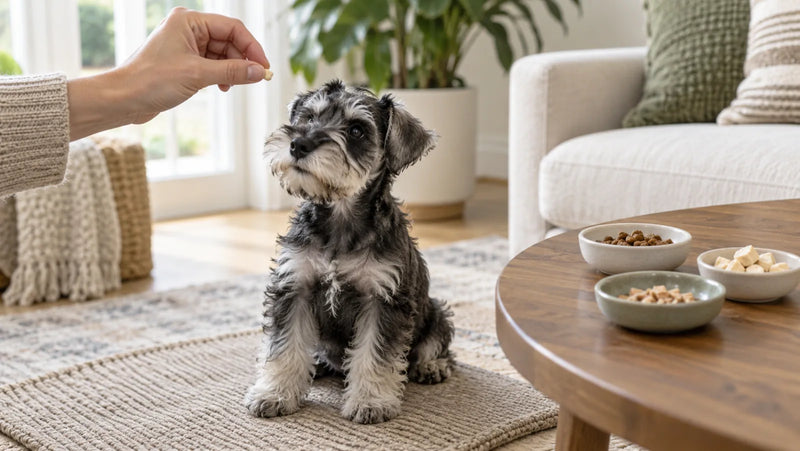
Break liver treats into pieces small enough that your puppy can chew and swallow quickly. For very small puppies, that may mean crumbs or pea-sized pieces rather than full cubes. If your puppy gulps, hold the piece, break it smaller, or choose a softer reward until chewing improves.

How much beef liver can a puppy eat?
There is no single perfect liver amount for every puppy because age, breed size, diet, activity, health history, and treat size all matter. The practical rule is to start smaller than you think and keep liver inside the overall treat allowance.
A useful general guideline is that treats of all kinds should make up no more than about 10% of a dog's daily calories. For puppies, that ceiling matters because their main puppy food is doing the important work of balanced growth nutrition. Liver should be a tiny part of that small treat budget.
Use the 10% treat guideline as the ceiling
The 10% rule is a ceiling, not a target. Your puppy does not need to reach it. Many training sessions can use part of the puppy's normal food, then save a few tiny liver pieces for the hardest repetitions.
If you are trying to calculate a more detailed amount, our adult-dog guide on how much beef liver can a dog eat explains the moderation logic. For puppies, be more conservative and ask your veterinarian when in doubt.
Start smaller than the label serving
Package feeding suggestions are general, and puppies often need a gentler start. On day one, offer one tiny piece. If your puppy does well, use a few tiny pieces in later sessions, spaced out rather than poured into one bowl.
Stop or scale back if you notice loose stool, vomiting, itchiness, loss of appetite, or a puppy who starts ignoring regular food because richer treats are appearing too often.
Raw, cooked, or freeze-dried beef liver for puppies?
The format matters. Liver can be raw, cooked plain, or freeze-dried, but those choices do not carry the same risk or convenience level for a young puppy.
Raw liver carries extra food-safety risk
Raw animal-source proteins can carry pathogens that matter for pets and people in the home. The American Veterinary Medical Association discourages feeding cats and dogs animal-source protein that has not first been treated to eliminate pathogens. Puppies, children, older adults, pregnant people, and immunocompromised household members are all good reasons to be extra cautious.
If your puppy is on a raw feeding plan, your veterinarian or a board-certified veterinary nutritionist should help set the rules. This article is not a raw-feeding plan.
Cooked liver must be plain
Cooked beef liver can be safe when it is plain and served in tiny amounts. Do not cook puppy liver treats with onion, garlic, salt, butter, oil, sauces, or seasoning blends. Those ingredients are unnecessary and some can be unsafe for dogs.
Home-cooked liver also takes planning. It has to be stored safely, cut small, and used before it spoils. That can work for some homes, but it is not the easiest training pouch option.
Freeze-dried liver is the practical training option
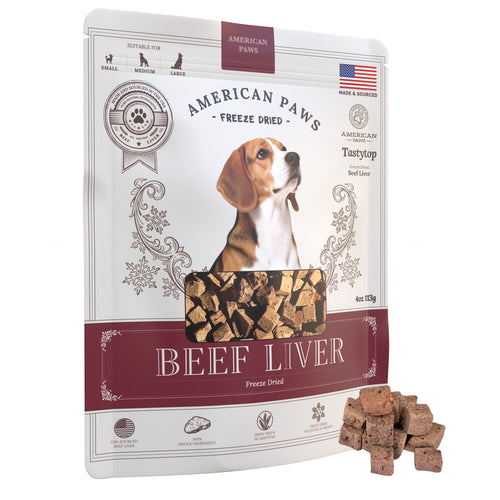
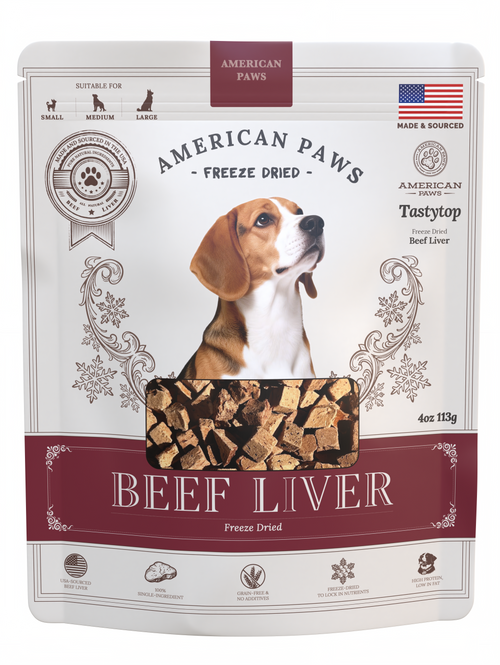
Freeze-dried beef liver is convenient because it is dry, portable, aromatic, and easy to break into tiny rewards. American Paws freeze-dried beef liver training treats are single-ingredient beef liver, made in the USA, and designed for high-value reward use rather than meal replacement.
Use the format for what it does best: short training sessions, puppy handling practice, and occasional high-value rewards. Keep the bag sealed and dry, and always supervise a puppy with any treat.
How to introduce beef liver treats to a puppy
A slow introduction protects the puppy and gives you useful information. Try this simple approach:
- Pick a calm day: avoid starting a new rich treat on a vaccine day, travel day, or upset-stomach day.
- Start with one tiny piece: crumbs or pea-sized pieces are enough for many puppies.
- Use it during training: reward one or two important repetitions rather than adding liver to a full meal.
- Watch for 24 hours: check stool, appetite, vomiting, itching, and energy.
- Increase slowly if tolerated: use a few tiny pieces in future sessions, not large handfuls.
If you are still building your reward plan, our guide to puppy training treats explains how to balance size, softness, motivation, and total calories.
Puppies who should avoid liver or wait
Some puppies should skip liver treats until a veterinarian weighs in. Wait or ask first if your puppy has ongoing diarrhea, vomiting, poor appetite, pancreatitis risk, liver or copper-related concerns, food allergies, a prescription diet, or a homemade diet that already includes organ meat. For how liver fits alongside hearts and gizzards in a treat rotation, see our organ meats for dogs guide.
Also be careful if your puppy is very small. Toy-breed puppies have less calorie room for extras, and a treat that looks tiny to a person may be a meaningful portion for the puppy. Break pieces smaller and use fewer repetitions.
For general puppy nutrition, VCA Hospitals notes that puppies need balanced growth diets and measured feeding routines. Their general dog nutrition guidance is a useful reminder that treats should support, not replace, a complete diet.
What to watch after a new liver treat
After any new puppy treat, watch the puppy instead of the calendar. Stop and reassess if you see:
- Loose stool or diarrhea
- Vomiting or drooling after eating
- New itching, ear scratching, or skin redness
- Loss of appetite for regular puppy food
- Lethargy, belly pain, or unusual behavior
One mild stool change can happen when puppies try new foods, but repeated symptoms are not a training-treat problem to solve with a different snack. Call your veterinarian, especially for young puppies, small breeds, or any puppy acting unwell.
Frequently asked questions
Can puppies eat beef liver every day?
Daily beef liver is usually unnecessary for puppies. Liver is rich in nutrients, including vitamin A, so it is better used as an occasional high-value training treat in tiny pieces. Ask your veterinarian before using liver daily.
Is freeze-dried beef liver safe for puppies?
Freeze-dried beef liver can be safe for many puppies when it is introduced slowly, broken into tiny pieces, and kept within the treat budget. It is not right for every puppy, especially those with digestive issues, prescription diets, or health concerns.
Can an 8-week-old puppy have beef liver?
An 8-week-old puppy may be able to try one tiny piece if fully weaned and healthy, but it is often smarter to wait until the puppy has settled into their normal food and routine. Ask your veterinarian if the puppy is small, fragile, underweight, or having any stomach trouble.
Are beef liver treats good puppy training treats?
They can be excellent for short training moments because many puppies notice the aroma. Use very small pieces and save liver for higher-value moments instead of using it as the only reward.
Can too much liver hurt a puppy?
Yes. Too much liver can upset the stomach and may create nutrient imbalance concerns over time because liver is very rich. Keep portions tiny and let complete puppy food provide the balanced nutrition.
Choose tiny, simple training rewards
The safest way to use beef liver for puppies is to keep it small, occasional, and purposeful. If your puppy tolerates beef and needs a higher-value reward for recall, handling, or focus work, break American Paws freeze-dried beef liver training treats into puppy-sized pieces and introduce them slowly. For a deeper look at the format, read our guide to freeze-dried beef liver benefits, then keep your puppy's regular food as the foundation of the diet.