
Chicken jerky vs bully sticks is mostly a question of purpose. Chicken jerky is usually better when you need a measured food reward for training, recall, grooming cooperation, or quick reinforcement. Bully sticks are usually better when the goal is a longer supervised chew session. The safer choice depends on label clarity, piece size, chewing style, calories, odor tolerance, and how closely you can supervise.
Both can have a place in a dog's routine. A jerky strip is not meant to replace a long chew, and a bully stick is not the cleanest way to deliver fast training rewards. Start by deciding what job you need the treat to do, then match the format to your dog's size, habits, diet, and health history.
Chicken jerky vs bully sticks: the quick answer
Choose chicken jerky when you want a high-value food reward that can be torn or cut into small portions. It works especially well for short training sessions, leash walking, recall practice, and situations where timing matters. A dog gets the reward quickly, you control the amount, and the session moves on. For more on what makes a good one, see our guide on whether chicken jerky is good for dogs.
Choose a bully stick when your dog needs a longer chewing activity and you can watch the entire session. Bully sticks are typically dried beef chews, often sold as single-ingredient pizzle chews. They are designed to last longer than ordinary treats, but that duration also brings supervision duties: remove the chew when it becomes small enough to swallow or when the dog starts breaking off large pieces.
There is no universal winner. Chicken jerky wins on portion control and reward timing. Bully sticks win on chewing duration. The best choice is the one that fits the moment without creating a calorie, choking, digestive, dental, or household handling problem.
What each treat is designed to do
Chicken jerky is a food reward
Chicken jerky dog treats are dried meat treats. Recipes vary, so the ingredient panel matters. Some jerky is made with only chicken; other soft or flavored formats may include additional ingredients to change texture, moisture, or shelf stability. The product name alone does not prove what is inside. For a full walkthrough of jerky types, safety, and portions, read our chicken jerky for dogs guide.
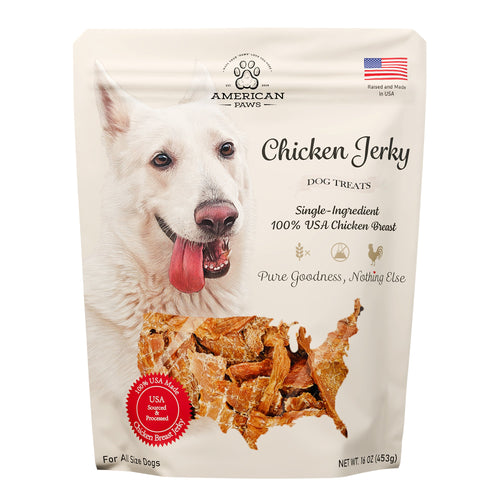
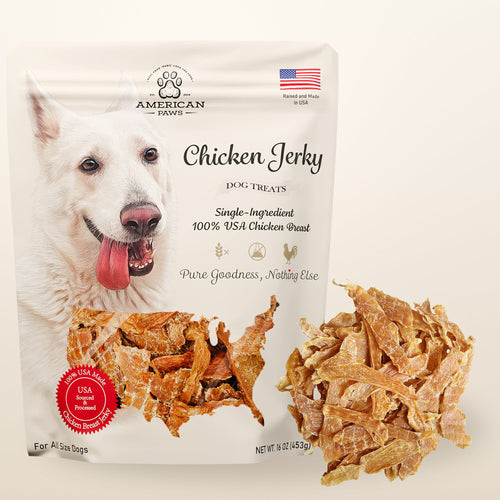
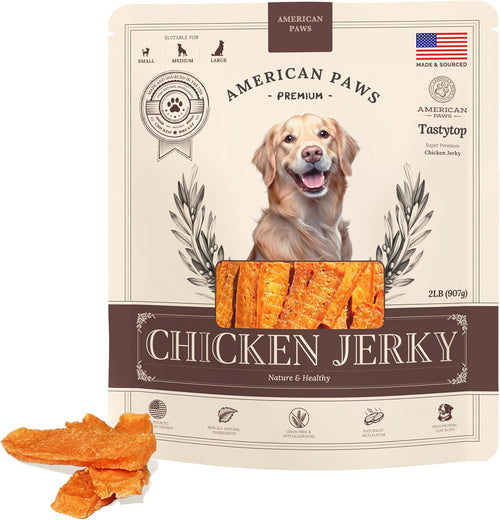
American Paws single-ingredient whole-cut chicken breast jerky contains chicken breast only. That clear label makes it easy to understand what you are feeding, and the strip format lets many owners prepare smaller reward pieces before a session. That single-ingredient claim belongs to this verified product, not automatically to every treat in the catalog or every jerky sold elsewhere.
Bully sticks are long-lasting chews
Bully sticks are usually dried beef pizzle chews. Many are sold as single-ingredient chews, though size, thickness, odor level, sourcing, processing, and consistency vary by maker. Their main job is chewing duration, not fast reward delivery.
A bully stick can be useful for a dog that settles with a chew, works steadily rather than gulping, and does not guard high-value items. It is less useful when you need to reward a behavior immediately or give many small repetitions. A trainer cannot easily click a behavior and hand over one controlled bite from a full bully stick.
Ingredient transparency and label clarity
Ingredient transparency is one of chicken jerky's strongest advantages when the product has a short, specific label. A simple chicken label lets a pet parent check for known protein tolerance, avoid unnecessary extras, and understand the treat as food. That is helpful for dogs whose owners are already reading labels across all American Paws dog treats.
Bully sticks can also be straightforward when the label clearly states the animal source, country of origin, size guidance, calories, and any processing details. Problems begin when a chew is vague about sourcing, heavily coated, artificially flavored, or sold without useful feeding directions. Clear labels matter for both products.
Neither format is right for a dog with a known ingredient conflict. A dog with a chicken allergy should not receive chicken jerky simply because the label is short. A dog that cannot tolerate beef, rich chews, or long chewing sessions may not be a good bully-stick candidate. Ingredient clarity helps you say yes or no for the individual dog.
Digestive safety and chewing risks
Chicken jerky is meant to be eaten, but edible does not mean swallow-proof. A broad strip can still be a choking or obstruction hazard if a dog tries to swallow it whole. Tear or cut pieces before serving, especially for small dogs, puppies, seniors, and fast eaters.
Bully sticks are chews, so the main safety question is how the dog handles the chew over time. Some dogs gradually soften and consume small amounts. Others bite off chunks or try to gulp the final nub. That behavior can turn a useful chew into a choking or gastrointestinal risk.
The FDA reminds pet owners that unchewed treats, including rawhides and jerky-style items, can become stuck in a pet's airway or digestive tract. The same practical rule applies here: supervise, size the item appropriately, and remove anything that becomes swallowable. If your dog coughs, gags, has trouble breathing, drools excessively, vomits, refuses food, seems painful, or may have swallowed a large piece, contact a veterinarian promptly.
This comparison is different from our chicken jerky vs rawhide comparison. Rawhide is a processed hide chew; bully sticks are usually beef chews. They overlap as longer-duration items, but they are not the same product and should not be judged by the same shorthand.
Calories, portions, and daily treat limits
Chicken jerky is usually easier to portion before serving. You can decide today's treat allowance, cut the strip into small pieces, and stop when the planned amount is gone. That makes it useful for training without accidentally turning one reward into a meal-sized extra.
Bully sticks can be calorie-dense, and the amount consumed during a chew session may be harder to measure. If the package provides calories, use that information. If it does not, treat the chew as a meaningful dietary extra rather than a free activity. This matters for small dogs, weight-prone dogs, and dogs on veterinary diets.
A common conservative guideline is to keep all treats and chews together to about 10% or less of daily calories, with complete and balanced food providing the rest. Our chicken jerky portion guide explains how to think through that limit for jerky. The same principle applies to bully sticks: count what the dog consumes, not just what you hand over.
Odor and handling at home
Odor is not a safety score, but it affects whether a treat fits your household. Chicken jerky has a meaty aroma, which is part of why dogs often find it motivating. It is usually simple to handle, portion, reseal, and carry in a training pouch when the pieces are dry and appropriately sized.
Bully sticks can have a stronger odor, especially once softened with saliva. Some low-odor versions are processed to reduce smell, but they still require handling after a chew session. Owners need a plan for storage, cleanup, and removal of the remaining piece.
If you need a pocketable reward for a walk, jerky usually fits better. If you are setting up a supervised chew mat at home and can clean up afterward, a bully stick may be acceptable for the right dog.
Chewing duration and enrichment value
Bully sticks usually last longer than chicken jerky. That duration can help a suitable dog settle, satisfy chewing behavior, and stay occupied during a supervised quiet period. It is most useful when the dog chews calmly and the owner can remove the chew before the end becomes a hazard.
Chicken jerky is not designed for long chewing. Its enrichment value comes from reward timing, scent, and small food-motivation moments. You can scatter tiny pieces in a snuffle mat, reward polite grooming cooperation, or use them for short obedience repetitions, but you should not expect one strip to occupy a dog the way a chew might.
Dental expectations should stay realistic. Chewing creates friction, but neither chicken jerky nor bully sticks replace toothbrushing, veterinary dental care, or products specifically recommended by a veterinarian for oral health.
Best situations for chicken jerky
Chicken jerky is often the better fit when you need:
- Training rewards: small pieces can be delivered quickly and repeatedly.
- Portion control: the daily amount can be prepared before the session starts.
- Ingredient clarity: a product like whole-cut chicken breast jerky has a simple, specific label.
- Lower mess: dry pieces are easier to carry than a partially chewed item.
- Short reward moments: recall, leash manners, crate entry, grooming cooperation, and photo sessions all benefit from fast delivery.
Chicken jerky is not the right fit for a dog with chicken sensitivity, a dog that gulps large strips, or a dog whose diet leaves no room for extras. It should be prepared in sensible pieces and supervised like any other high-value treat.
Best situations for bully sticks
A bully stick may fit better when the goal is a supervised chewing session rather than a quick reward. It may suit a dog that chews steadily, does not swallow chunks, tolerates beef, and can relax with a high-value chew without guarding.
Use the maker's size guidance, choose a chew that is too large to swallow whole, and consider using a chew holder if appropriate. Set a time limit, inspect the chew during the session, and remove it when it becomes small, split, sharp, heavily softened, or likely to be gulped.
Bully sticks may be a poor fit for dogs with a history of choking, gulping, obstruction, pancreatitis or other diet restrictions, resource guarding, dental pain, or unsupervised access. Those dogs need individualized guidance from a veterinarian or qualified behavior professional.
How to choose between them
| Decision point | Chicken jerky may fit | Bully stick may fit |
|---|---|---|
| Main job | Fast food reward | Longer chewing activity |
| Control | Easy to cut and count | Harder to measure during chewing |
| Odor and cleanup | Usually easier for pouches and walks | Often stronger once chewed |
| Best setting | Training, recall, grooming rewards | Supervised quiet chew time |
| Main watch-out | Large strips can be gulped | End pieces or chunks can be swallowed |
When in doubt, make the first serving small and supervised. Watch how your dog actually eats or chews instead of relying only on package promises. A calm moderate chewer and a frantic gulper need different plans.
Frequently asked questions
Are bully sticks better than chicken jerky?
They are better for longer chewing, not for every purpose. Chicken jerky is usually better for quick rewards and measured training portions. Bully sticks may be better for supervised chew time when the dog handles them safely.
Is chicken jerky a long-lasting chew?
No. Chicken jerky is a food treat. It may be chewy, but it should be used as a reward or snack, not as a long-duration chew toy.
Can dogs have both chicken jerky and bully sticks?
Some dogs can have both if they tolerate the ingredients, chew safely, and stay within a sensible treat allowance. Introduce one new item at a time so you can notice digestive or skin reactions.
Which is better for training?
Chicken jerky is usually better for training because it can be cut into small pieces and delivered at the exact moment you want to reward. A bully stick is better saved for a separate chewing session.
What if my dog swallows a large piece?
Call a veterinarian for guidance. Breathing trouble, active choking, collapse, repeated vomiting, severe drooling, abdominal pain, loss of appetite, or distress should be treated as urgent.
Match the treat to the job
The honest answer is not that chicken jerky beats bully sticks or that bully sticks beat chicken jerky. Chicken jerky is the better tool for measured food rewards; bully sticks are the better tool for longer supervised chewing when the dog is a safe candidate. Use the format that fits the job, keep portions conservative, and remove any piece that becomes risky.
For a clear-label reward option, compare the American Paws chicken jerky collection and start with small prepared pieces. If your dog needs a chew instead, choose a properly sized product from a maker with transparent labeling and supervise the full session.