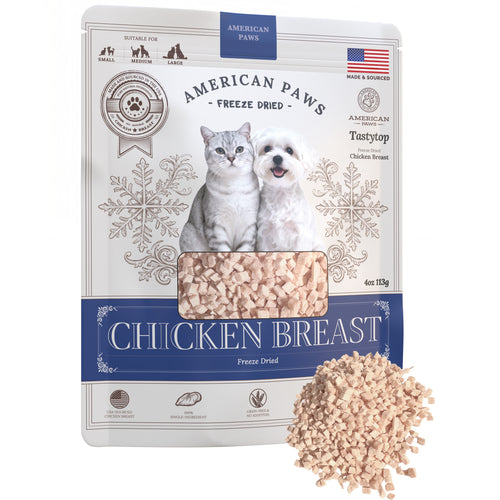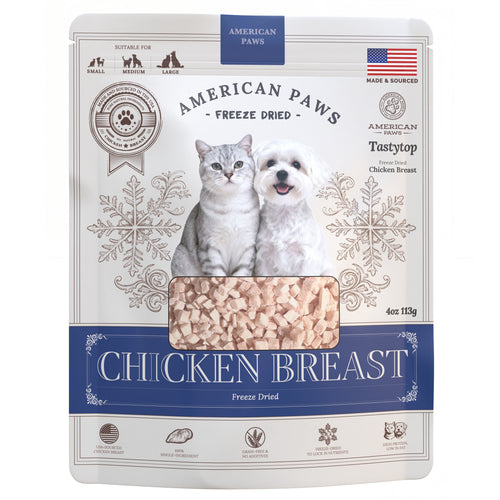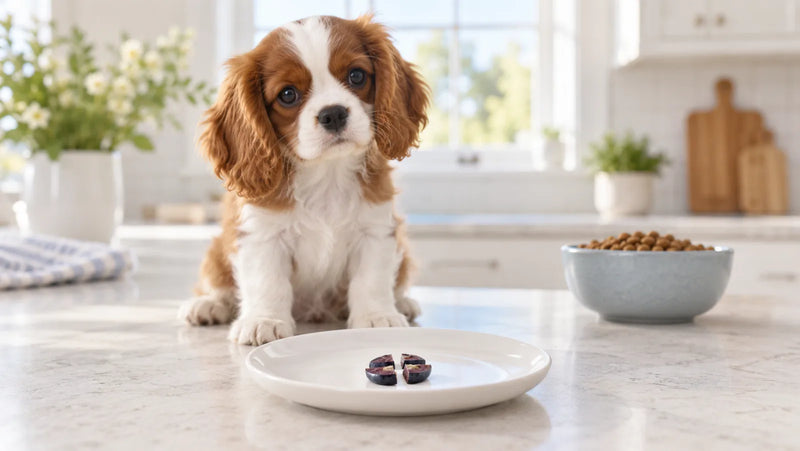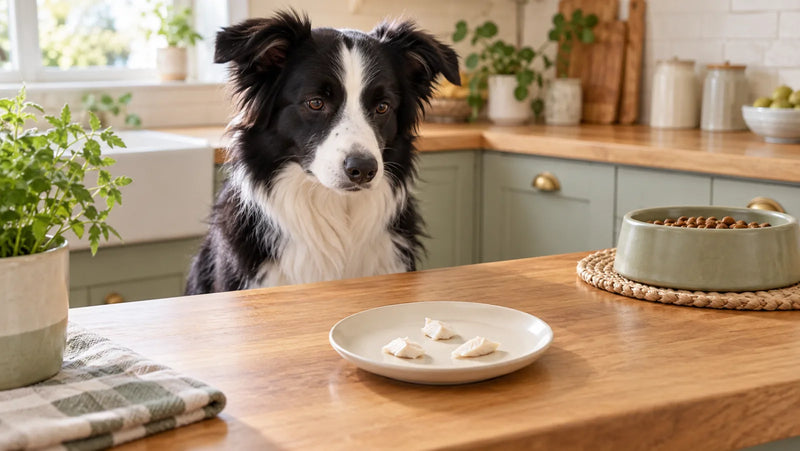

Choose freeze-dried chicken for fast, repeated training rewards; choose dehydrated whole-cut chicken jerky for a larger, chewy reward. If you are comparing dehydrated vs freeze dried chicken for dogs, both American Paws options start with the same single ingredient—100% USA chicken breast. The useful difference is not good chicken versus bad chicken. It is texture, piece size, pace, and the job you want the treat to do.
That makes this a practical product choice. One bag gives you light, crunchy pieces that are already close to training size. The other gives you firm, irregular strips you can offer as a more substantial reward or tear down before a session. Neither format wins every moment, and many households can use both without making treat time complicated.
Dehydrated vs freeze dried chicken for dogs: the quick pick
Start with the moment in front of you:
- Choose freeze-dried chicken when you need quick, small rewards for recall, manners, or repeated practice.
- Choose whole-cut chicken jerky when you want a larger, chewy reward after a walk, grooming, or a calm everyday win.
- Choose by texture when your dog has a clear preference for a light crunch or a firmer meat strip.
- Keep both when training and everyday treating call for different reward speeds.
American Paws lists the freeze-dried pieces at approximately 0.5–1 inch and about 5 calories per piece. The whole-cut jerky comes in irregular strips approximately 2–5 inches and about 15 calories per piece. Those are current label estimates for differently sized natural pieces—not an equal-weight test and not proof that one drying method is inherently lower in calories.
Same chicken, two different jobs
What both American Paws products share
The cleanest comparison begins with what does not change. Both the single-ingredient whole-cut chicken jerky and the single-ingredient freeze-dried chicken list 100% USA chicken breast. Both are made in the USA, contain no second ingredient, and are labeled for intermittent or supplemental feeding rather than as a complete meal.
Holding the protein source steady makes the decision easier. You are choosing a format for a dog that tolerates chicken, not switching between two recipes with different fillers or flavor systems. If your dog cannot eat chicken or follows a veterinarian-prescribed diet, both products share the same limitation and should stay off the menu unless your veterinarian says otherwise. For the wider quality picture, see our guide on whether chicken jerky is good for dogs.
The processes are different, but this guide deliberately does not repeat the science lesson. In brief, dehydration produces the denser jerky strip, while freeze-drying produces the lighter, porous piece. For the wider process, storage, and format comparison across dog treats, use our general freeze-dried versus dehydrated dog treats guide. For the jerky side in depth, see our chicken jerky for dogs guide.
The product-specific differences at a glance
| Feature | Whole-cut chicken jerky | Freeze-dried chicken |
|---|---|---|
| Ingredient | 100% USA chicken breast | 100% USA chicken breast |
| Texture | Firm, chewy, whole-cut strip | Light, crunchy, airy piece |
| Approximate piece size | Irregular 2–5 inch strips | Approximately 0.5–1 inch pieces |
| Labeled calorie estimate | About 15 kcal per piece | About 5 kcal per piece |
| Current pack format | 1, 2, or 5 lb | 4 oz |
| Best starting use | Chewy everyday or single-event reward | Fast, repeated training reward |
Natural meat pieces vary, so the dimensions and calories are practical estimates rather than identical-unit promises. Check the package in your hand, look at the actual piece, and break it to a size your dog can handle comfortably.
Pick freeze-dried chicken for fast training rewards
When the smaller crunchy pieces help
Training works best when the reward arrives promptly and the dog can finish it without losing the thread of the exercise. The freeze-dried chicken pieces are light, crunchy, and already much smaller than a full jerky strip. That makes them the straightforward first choice for a session with many repetitions: name response, leash check-ins, place work, grooming cooperation, or recall games.
A smaller starting piece also reduces preparation. You may still break a piece for a tiny dog or a long session, but you are not beginning with a 2–5 inch strip. Put the planned session portion in a clean pouch, close the main bag, and reward one brief success at a time. The goal is not to give the largest possible bite; it is to give a reward the dog values while keeping the exercise moving.
How to portion freeze-dried pieces for your dog
The current product page lists about 5 calories per piece, but pieces of real chicken are not machine-perfect cubes. Count the total you use and adjust the physical size for your dog instead of assuming every piece is identical. A small dog may need a piece divided into several rewards. A larger dog may still work happily for a small piece when the timing and value are right.
Prepare the session amount before training begins. That lets you see the whole reward budget instead of reaching into the bag without a count. It also keeps the dry, porous pieces away from wet hands and slobber, which helps protect their crunchy texture.
Pick whole-cut chicken jerky for a chewy reward
When the larger strip format fits
Whole-cut jerky feels like a different event. The strip is firm, chewy, and visually larger, so it fits moments when you want one measured reward rather than a rapid series: after a walk, after nail handling, when the dog settles during visitors, or as part of a quiet bonding routine. Dogs that prefer a firmer meat texture may also find the strip more satisfying than a quick crunch.
That does not turn jerky into a long-lasting chew. It is still an edible dog treat, and a determined dog may finish it quickly. Offer an appropriately sized piece, supervise, and do not rely on chew duration or dental claims that the product does not make.
How to break jerky down before training
Jerky can still be a strong training reward, especially when it is especially motivating for your dog. The practical move is to tear the strip before the session, not while your dog waits after every cue. Make several small pieces, put the rest away, and keep each reward small enough to eat promptly.
The current label estimates about 15 calories for a whole piece, but the strips are irregular. Tearing one strip into six pieces does not create six calorie-free treats; together, the fragments still represent the strip you started with. Count the starting strip in the day’s treat total and use the fragments to improve timing, not to disguise quantity.

Choose by the moment, not by a universal winner
| Your situation | Start with | Why |
|---|---|---|
| Many rewards in a short training session | Freeze-dried chicken | Smaller pieces and a quick crunch keep repetitions moving |
| One reward after a walk or calm behavior | Whole-cut jerky | The larger chewy strip creates a more distinct reward moment |
| Your dog prefers crisp textures | Freeze-dried chicken | Its defining texture is light and crunchy |
| Your dog prefers firm meat strips | Whole-cut jerky | Its defining texture is dense and chewy |
| You want to prepare tiny rewards | Freeze-dried chicken first | It begins smaller, though either product can be broken down |
| You want larger pack choices | Whole-cut jerky | The current product comes in 1, 2, and 5 lb options |
Preference matters. A dog may value the chewy strip more than the crunchy piece, or the reverse. Start with the use case, observe how quickly and comfortably your dog eats the reward, and then let that real response refine the choice.
Can you keep both in the same routine?
Yes. A simple two-bag system can give each product one clear job: freeze-dried chicken for short, high-repetition practice and whole-cut jerky for an occasional larger reward. For example, use a planned handful of small freeze-dried pieces during a morning recall session, then choose a portion of jerky after an evening walk. The point is division of labor, not doubling the day’s extras.
Count both products together when you review the day’s treats. They may look different, but both add calories and both are supplemental. If either product is new to your dog, introduce a small amount first rather than opening both bags and changing the routine at once.
You can compare jerky formats in the American Paws chicken jerky collection. If you want to look beyond chicken while keeping the parent category clear, browse all American Paws dog treats and read each individual ingredient label rather than assuming every formula matches these two single-ingredient products.
Safe serving and storage basics
- Choose a piece size that fits your dog and supervise while the treat is eaten.
- Introduce a new treat gradually, especially if your dog has a history of digestive upset.
- Keep treats supplemental; do not use either product to replace complete and balanced meals.
- Reseal each bag tightly and store it in a cool, dry place. Both current product pages recommend using the opened bag within 30 days for maximum quality.
- Keep the original package and stop using treats that look or smell spoiled.
The FDA’s pet food and treat handling guidance recommends washing hands before and after handling pet food or treats, keeping dry products cool and dry, retaining original packaging information, and discarding products that appear spoiled. For more jerky-specific buying and serving checks, see our guide to how to choose and serve chicken jerky safely.
Frequently asked questions
Which is better for dog training?
Freeze-dried chicken is the easier default for fast, repeated rewards because the pieces begin smaller and crunch quickly. Whole-cut jerky can work well when your dog values it more, but tear the strip into small pieces before the session so chewing and preparation do not interrupt the exercise.
Are both American Paws chicken products single-ingredient?
Yes. The two products compared here—the whole-cut chicken breast jerky and the freeze-dried chicken pieces—each list 100% USA chicken breast as the only ingredient. That statement applies to these verified products, not automatically to every item in the full catalog.
Which chicken treat is easier to portion?
Freeze-dried chicken starts closer to training size at approximately 0.5–1 inch per piece. Both formats can be broken smaller, and natural pieces vary. Portion according to the dog in front of you and count the total amount used, not just the number of fragments.
Can my dog eat both dehydrated and freeze-dried chicken?
Many dogs that tolerate chicken can use both formats in the same routine. Introduce a new product gradually, supervise, and count both toward the total treat allowance. A dog with a chicken allergy, medical condition, or prescribed diet needs individualized veterinary guidance.
Does the higher guaranteed protein number make one better?
No. The product pages list crude protein minimums of 70% for the jerky and 74% for the freeze-dried chicken, but guaranteed-analysis values are minimums and the products have different moisture limits and piece sizes. Those numbers do not prove that one process is healthier, safer, or more nutritious.
How should I store each product?
Keep both bags tightly resealed in a cool, dry place away from sunlight and moisture. The freeze-dried pieces are especially quick to lose crunch when exposed to humidity, while jerky may become unexpectedly damp or sticky. Follow the label on the specific bag and discard any product with mold, an off odor, or unexplained moisture.
Choose the chicken format that matches the moment
For fast training, start with the small crunchy freeze-dried chicken pieces. For a larger, chewy reward, choose the whole-cut chicken breast jerky. Both keep the ingredient decision simple; the format lets you match the reward to your dog and the moment.