
The best dog treats for hiking are small, dry, easy to portion, and sturdy enough for a pocket or daypack. Carry only a planned day portion in a clean, sealed container, keep it shaded and separate from water, and use tiny pieces for recall, check-ins, and calm trail manners.
A treat that does not melt still is not heat-proof, and it never replaces fresh water. The route, weather, your dog's fitness, and the product label come before any snack list. With those basics settled, a light freeze-dried piece or a narrow cut of jerky can turn one planned calorie allowance into many useful reward moments.
Dog treats for hiking: the quick packing rule
Prepare the rewards at home instead of carrying an open full-size bag. A practical trail portion should pass five checks:
- Small: each piece can be swallowed comfortably after chewing and is tiny enough for repeated training.
- Dry: it does not smear over a pouch, but it still stays protected from rain, sweat, and a leaking bottle.
- Portable: the portion fits in a clean container that can be opened and closed without spilling.
- Familiar: your dog has already eaten the treat at home without a problem.
- Counted: the entire container fits inside the day's planned treat-calorie budget.
Pack fresh water and a clean travel bowl separately. Add a leash, waste bags, identification, and any route-specific gear. Treats help reinforce behavior; they do not make an unsuitable route, hot forecast, or unconditioned dog ready for a hike.
What makes a dog treat work on the trail?
The best dog trail snacks are not necessarily the biggest, softest, or highest-calorie options. Trail rewards need to work through repeated stops, movement, and changing weather without distracting the dog for long. Think about the job first, then the format.
Small enough for frequent rewards
A hiking treat is usually a marker of one useful choice: looking back at you, coming when called, waiting while another hiker passes, or leaving an interesting object alone. One large biscuit can use a surprising amount of the day's allowance for a single repetition. Several tiny pieces let you reward more moments without automatically adding more total food.
Cut or break the planned portion before leaving home. Reward while you are stopped, give the dog time to chew and swallow, and then continue. A whole strip used as an on-the-move chew creates a different task and can make it harder to watch how the dog handles the piece.
Dry enough to carry cleanly
A dry reward is easier to handle than cheese, meat paste, or another food that can melt, leak, or coat the inside of a pouch. Dry does not mean invulnerable. Freeze-dried food can pull moisture from humid air, while jerky can become damp or sticky after contact with rain, sweat, or slobber.
Use clean, dry hands and close the container after each stop. If a piece falls on the trail or becomes wet, discard it. Do not return questionable leftovers to the main bag when you get home.
Sturdy enough for the route
Freeze-dried pieces are light, but a loosely packed handful may turn to crumbs under a water bottle. Jerky is denser and generally travels with less breakage, but a thick strip is not an ideal repeated reward. Match the container to the texture: a small rigid box protects crunchy pieces, while pre-cut jerky can ride in its own dry compartment.
Crumbs are not automatically waste. A few clean freeze-dried crumbs can still reward a check-in or be sprinkled over the dog's normal meal later. The important distinction is whether they stayed clean, dry, and traceable—not whether every piece kept a perfect cube shape.
Freeze-dried pieces versus chicken jerky for hiking
| Trail question | Freeze-dried chicken | Cut chicken jerky |
|---|---|---|
| Pack weight | Very light | Denser for the same volume |
| Portioning | Easy to break into tiny pieces | Best cut into narrow rewards at home |
| Movement | Can crumble if compressed | Usually less crumbly in a pouch |
| Moisture | Needs tight protection from humidity | Still must stay sealed and dry |
| Best use | Frequent tiny check-ins and training | Higher-texture reward used in small cuts |
Freeze-dried chicken is light and easy to break
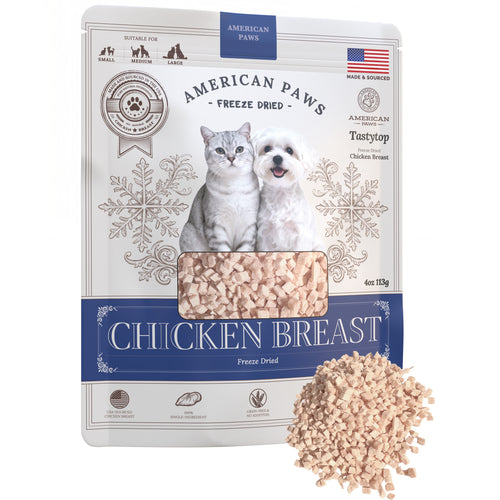
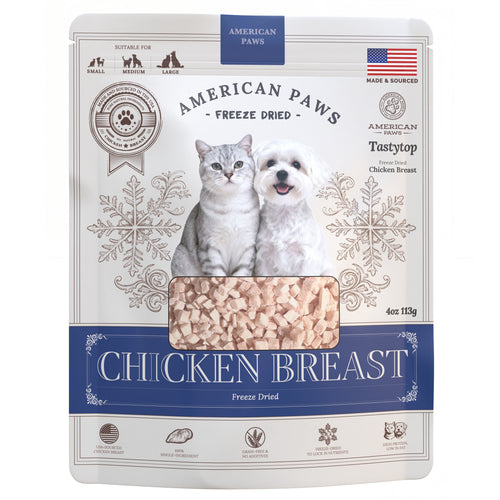
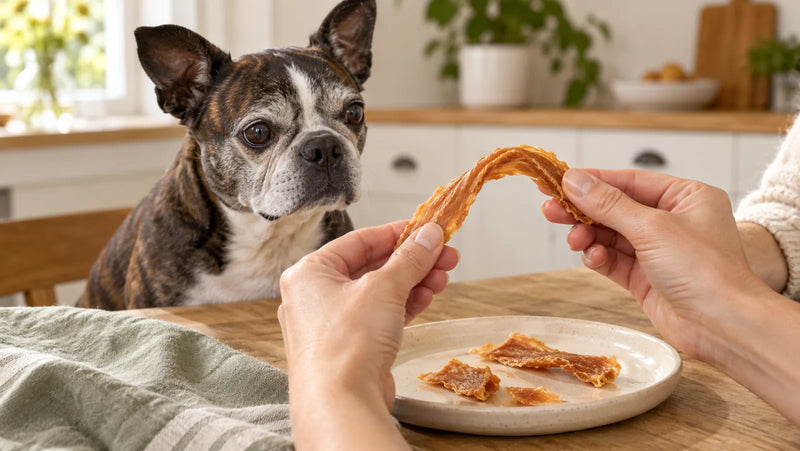
American Paws single-ingredient freeze-dried chicken is made from 100% USA chicken breast. Its light, crunchy pieces can be broken smaller before the hike, which makes it useful when you expect many low-distraction check-ins or want to carry very little weight.
Use a rigid, dry container rather than letting the pieces roll loose at the bottom of a pack. For a deeper routine on humidity, opened bags, and travel portions, see how to store freeze-dried dog treats. That guide owns the full storage question; on the trail, the short version is sealed, shaded, dry, and handled with clean hands.
Cut chicken jerky travels with less crumble
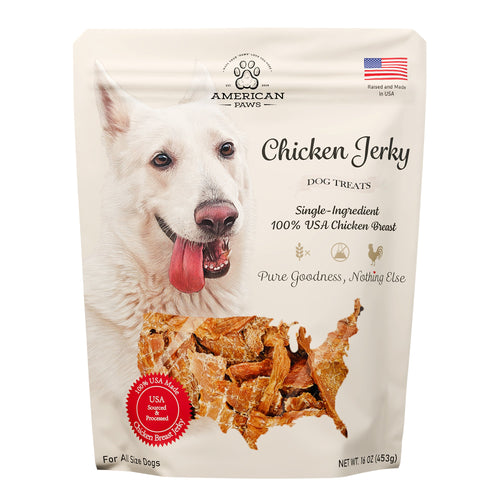
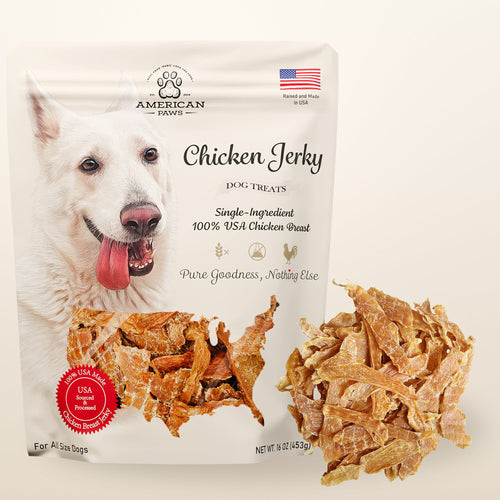
American Paws single-ingredient chicken breast jerky is a denser, whole-cut option. For hiking, cut the amount you intend to use into small pieces at home. That keeps the trail portion consistent and avoids trying to tear a long strip while managing a leash and other gear.
Jerky can be useful when your dog values a chewier texture or when fragile pieces would be crushed by the route. It is still food, not indestructible equipment. Keep it dry, follow the package directions, and supervise every reward. You can compare available sizes in the American Paws chicken jerky collection.
“Heat-safe” means no melting—not unlimited heat exposure
In a hiking context, heat-safe rewards are foods that do not melt or become greasy as quickly as cheese, frosting, or soft refrigerated treats. The phrase does not guarantee a product can sit indefinitely in high temperatures. No dry dog treat should be treated as safe in a hot vehicle or on a sun-baked rock.
Keep the day portion shaded, sealed, and dry
The FDA's pet-food and treat storage guidance says dry products should be kept in a cool, dry place below 80°F because excess heat or moisture can affect quality. It also recommends keeping the original package information and using a clean, dry container with a snug lid when food is transferred.
Leave the labeled main bag in a cool, dry place at home. Carry only the day portion, keep it inside the shaded part of the pack, and close the container between rewards. A reflective car windshield, exposed pack lid, or direct summer sun can create much hotter conditions than the surrounding air.
Never store trail treats in a parked car
A parked car is not a pantry, even for a product that looks dry and stable. Take the treat container with you, and do not leave an emergency bag in the glove box through summer. If a forgotten portion spent hours in extreme heat, the package was damaged, or the food smells, feels, or looks different, discard it rather than relying on appearance alone.
Heat protection is also a route decision. If conditions are too hot for your dog, a tidy treat container does not solve the problem. Change the time, shorten the route, choose shade, or skip the outing.
Pack a small dry portion, not the full bag
Start with the dog's daily calorie allowance and the calories listed for the chosen treat. Set aside the amount that can go on the hike, then divide it into tiny pieces. This creates a visible limit: when the container is empty, the planned trail rewards are finished.
- Wash and completely dry the travel container.
- Cut or break the planned portion on a clean surface.
- Pack crunchy pieces where they cannot be crushed.
- Keep the container apart from water bottles, wet cloths, and cooling gear.
- Close it after every reward stop.
- Discard pieces exposed to dirt, rain, sweat, or saliva.
- Clean and fully dry the container before its next use.
Do not mix a new batch into old crumbs. Do not pour the whole original bag into a trail box and leave its lot number and best-by date behind. The labeled package matters if there is a quality question or recall.

Use tiny rewards for recall and trail manners
Treats are most useful when the dog already understands the cue. Practice recall, check-ins, loose-leash walking, and “leave it” in easier places before expecting the same response around wildlife, cyclists, dogs, and unfamiliar scents.
Reward check-ins before you need an emergency recall
Notice voluntary attention. When your dog looks back, moves beside you as another person passes, or pauses at a cue, mark the behavior and deliver one tiny reward while stopped. Reinforcing ordinary check-ins helps make attention to you part of the hike instead of something requested only when danger appears.
The AKC's hiking-with-dogs guide recommends reliable obedience, leash control, fresh water, and dog treats among the essentials. It also notes that an off-leash dog should be allowed that freedom only where permitted and when reliable verbal control is already established. A high-value snack is not a substitute for a leash or route rules.
Separate cue practice from constant snacking
Reward deliberately instead of feeding a steady stream just because the container is accessible. Use easier, smaller rewards for routine check-ins and save a more valued piece for a difficult but safe success. If your dog is too distracted to eat, increase distance from the distraction or leave the situation; do not keep pushing larger pieces toward the dog's mouth.
For a full training method, start with our guide to reward-based dog training with treats. The hiking article stays focused on choosing and carrying trail rewards, not teaching an emergency recall from scratch.
Water comes before treats in warm weather
Dry hiking treats do not hydrate a dog. Bring enough fresh water for the route, a clean travel bowl, and a margin for delays. Offer water during breaks rather than waiting for obvious thirst, and never count a stream, pond, or puddle as the plan. The AKC warns that unknown water may contain parasites, bacteria, or other pathogens.
Dogs primarily cool themselves by panting and can be vulnerable to excessive heat. Avoid hiking in overly hot weather, choose shade and cooler hours, and watch the individual dog rather than the mileage goal. Heavy panting that does not settle, weakness, confusion, vomiting, collapse, or abnormal gum color requires ending the activity and seeking urgent veterinary help.
Puppies, seniors, flat-faced breeds, dogs carrying excess weight, and dogs with heart, respiratory, or orthopedic conditions may need shorter or different outings. Ask the veterinary team what is appropriate before taking on a strenuous route.
Count hiking rewards inside the daily 10% budget
A more active day does not automatically create an unlimited snack allowance. The AKC's dog-treat guidance uses the general rule that treats should make up no more than about 10% of a dog's daily calories, leaving at least 90% for complete and balanced food.
Use that number as a ceiling, not a target. The dog's size, age, body condition, main diet, health, and route all matter. Count trail rewards together with breakfast extras, chews, pill food, table bites, and anything planned for later. Do not casually reduce a complete meal to make room for more treats.
The practical method is simple: read the product's calories, set the day's total treat budget, subtract other extras, and put only the hiking share in the container. If the pieces are larger than you need, make them smaller; cutting one portion into more reward moments does not change its total calories. Our daily dog-treat calorie budget explains the calculation in more detail.
Trail mistakes that spoil or waste treats
- Taking the whole bag: it is easier to overfeed, crush the supply, or lose the lot information in the field.
- Leaving food in a hot car: a dry texture does not make a product immune to extreme heat.
- Using wet hands: water, sweat, and slobber can enter the container and affect the remaining portion.
- Trying a new treat on the trail: introduce it at home first, where an upset stomach does not strand you miles away.
- Feeding while moving: stop, reward, watch the dog chew and swallow, then continue.
- Offering large strips for repeated cues: pre-cut tiny rewards so one success does not consume a big share of the budget.
- Relying on natural water: carry fresh water and a bowl rather than planning around streams or puddles.
- Returning dirty leftovers: discard compromised pieces instead of contaminating the main supply.
A dog-hiking treat checklist
- Choose one familiar treat with a readable ingredient and calorie label.
- Cut or break the hiking allowance into small rewards at home.
- Use a clean, fully dry, snug-lidded container.
- Protect crunchy pieces from crushing and all pieces from moisture.
- Pack the container in shade, away from leaking bottles.
- Carry fresh water and a separate clean bowl.
- Reward while stopped and supervise swallowing.
- Count every trail piece with the rest of the day's extras.
- Discard wet, dirty, overheated, or changed food.
- Keep the original package and lot information at home.
Frequently asked questions
What are the best dog treats for hiking?
The best dog treats for hiking are familiar, dry, easy to divide into tiny pieces, and sturdy enough for the planned route. Freeze-dried chicken is light and breakable; pre-cut chicken jerky is denser and less crumbly. Choose by your dog's chewing style, the product label, and how the food will be protected from heat and moisture.
Are freeze-dried dog treats good for hiking?
They can be. Freeze-dried pieces are light and easy to break into training-size rewards. Their porous texture also makes them vulnerable to humidity and crushing, so use a rigid dry container, keep it sealed, and pack only the planned day portion.
Does chicken jerky stay safe in the heat?
Chicken jerky does not melt like cheese, but it is not heat-proof. Follow its label, keep it sealed and shaded, and do not leave it in a parked car. The FDA recommends storing dry pet treats in a cool, dry place below 80°F. Discard a portion after questionable heat exposure or any unexpected odor, moisture, stickiness, or appearance change.
How many treats should I pack for a hike?
There is no universal piece count. Start with the dog's daily treat-calorie ceiling, subtract every other extra, and pack only the share assigned to the hike. Read the product's calories and divide larger pieces before leaving. Ask the veterinary team for a specific plan when the dog has a medical condition, weight goal, or prescription diet.
Can treats replace food or water on a long hike?
No. Treats are supplemental rewards, not a complete meal and never a water source. Pack fresh water and a clean bowl, and discuss longer or strenuous outings with your veterinarian so the dog's conditioning, hydration, and full nutrition plan match the route.
Pack light, reward deliberately, and keep water first
Good hiking treats solve a small, specific problem: they give you clean, quick rewards without taking over the daypack or the dog's diet. Prepare tiny pieces at home, carry a sealed day portion, protect it from heat and moisture, stop to reward, and keep every bite inside the full daily allowance.
For a light, breakable option, consider single-ingredient freeze-dried chicken. For a denser reward you can cut before the hike, explore whole-cut chicken breast jerky. You can also browse all American Paws dog treats and choose the texture, label, and portion that fit your dog—then put fresh water at the top of the packing list.