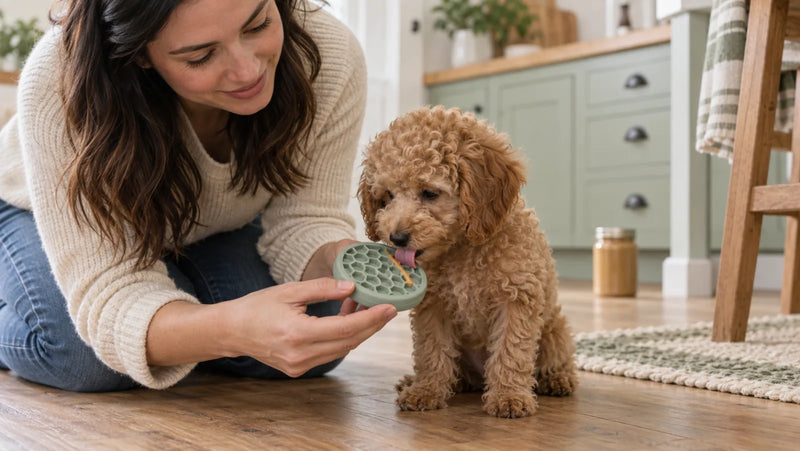

Chicken jerky for small dogs can be a good fit when each piece is prepared for the individual dog. Cut or tear the strip into a short, manageable reward, supervise every serving, and count it within the day’s treat calories. A natural full strip is not automatically a small-dog portion.
Texture matters as much as size. A pliable strip is easy to snip into tiny rewards, while firmer whole-cut jerky may suit a confident chewer who benefits from a one-ingredient label. Neither option is best for every toy or small breed, so watch how your dog handles the first piece instead of choosing by package language alone.
Chicken jerky for small dogs: the quick answer
Many small dogs can eat dog-formulated chicken jerky if they tolerate chicken and can chew and swallow the prepared piece comfortably. Use this quick checklist before serving it:
- Choose the texture for the dog: pliable for easy snipping or firmer for a dog that chews confidently.
- Prepare the piece first: do not hand over a long ribbon and hope the dog tears off a safe amount.
- Make the serving visible: set aside the day’s planned amount before excitement makes portions hard to track.
- Supervise the whole chew: small pieces reduce the serving size but do not eliminate choking risk.
- Skip chicken when it conflicts with the dog’s needs: a known allergy, dental pain, swallowing problem, or prescribed diet changes the answer.
The goal is not to find a strip labeled “for small dogs.” It is to turn an appropriate chicken jerky into a piece your particular dog can manage. Choosing that jerky starts with our chicken jerky for dogs guide.
Why size matters more for a small dog
A natural strip is not a ready-made serving
Whole-meat jerky varies in length, width, thickness, and firmness. That natural variation is part of the format, but it means the piece that comes out of the bag should be inspected before it reaches the dog. A strip that looks modest beside a human hand can still be awkward inside a Papillon, Chihuahua, Yorkie, or toy poodle’s mouth.
Mouth size is only one factor. A careful chewer may work through a firm piece slowly, while another dog of the same weight may gulp. Missing teeth, a short muzzle, competition with another pet, and excitement can change how a dog handles food. Breed size is a useful starting point, not a safety guarantee.
Small dogs have less calorie room for extras
A small dog generally has a smaller daily calorie budget, so one strip can use a meaningful share of the space available for extras. Breaking that strip into six rewards creates six training moments, but it does not reduce the calories in the starting strip.
Chicken jerky is a supplemental treat, not complete and balanced food. Keep the main diet at the center and treat every jerky piece, topper, chew, and table sample as part of the same daily extras total.
How to size chicken jerky for a small dog
Prepare short pieces before the dog gets excited
Work on a clean, dry surface. For a pliable strip, use clean kitchen scissors to make short pieces. For a firmer strip, test whether it tears or breaks cleanly; discard any piece with an unexpected sharp edge rather than serving it. Put the planned pieces in a dish or pouch, reseal the main bag, and wash the cutting tool afterward.
There is no universal safe measurement. For training, start with the smallest piece that remains motivating and is easy for the dog to take and finish. The reward should not hang from both sides of the mouth like a ribbon or require the dog to wrestle a large strip away from your hand.
Watch the first chew and adjust for the individual
Offer one piece while the dog is calm and upright. A workable size should be easy to take, reposition, chew, and swallow. Stop and choose a different size or texture if the dog repeatedly drops the piece, paws at the mouth, coughs, gags, tries to swallow it whole, or needs an unusually long time to finish.
Do not assume that cutting smaller always solves the problem. A determined gulper may swallow tiny pieces without chewing, and a dog with dental pain may struggle even with a soft strip. In those cases, another treat format or veterinary advice is more useful than continuing to resize jerky.
Treat training bites and recreational chews as different jobs
A training reward should be quick to eat so the dog can return attention to the next cue. Chicken jerky can work well because one prepared serving becomes several small rewards. A recreational chew has a different purpose and should not be created by giving a small dog an uncut jerky strip and walking away.
Jerky is food, not an unattended chew toy or a dental treatment. If you want a longer activity, choose a product specifically suited to that dog’s chewing style and supervise it according to its directions.
Soft strips vs whole-cut chicken jerky
American Paws offers two relevant textures. The important difference is not that one is universally safer; it is how each strip is made, what is in it, and how easily you can prepare it for the dog in front of you.
Pliable 2 lb strips: easy to snip, all-natural, not single-ingredient
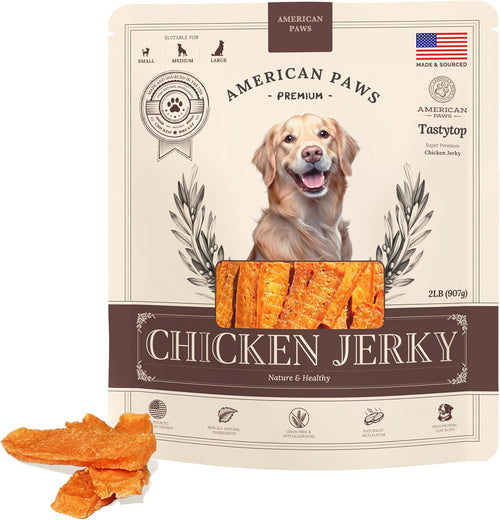
American Paws soft all-natural chicken jerky strips contain USA chicken plus a touch of natural glycerin, a plant-based humectant that helps keep the strips pliable. Their flexible texture makes them convenient to snip into small training bites.
These strips are all-natural and grain-free, but they are not single-ingredient. That distinction matters for shoppers comparing labels or managing an ingredient-elimination plan. Softness is a handling advantage, not proof that a dog can safely swallow a large piece without chewing.
Whole-cut jerky: firmer, 100% USA chicken breast, single-ingredient
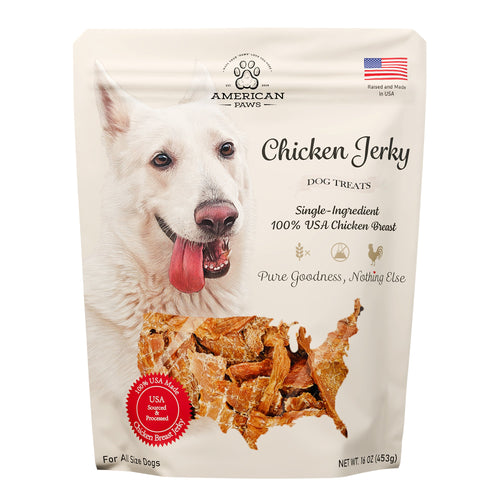
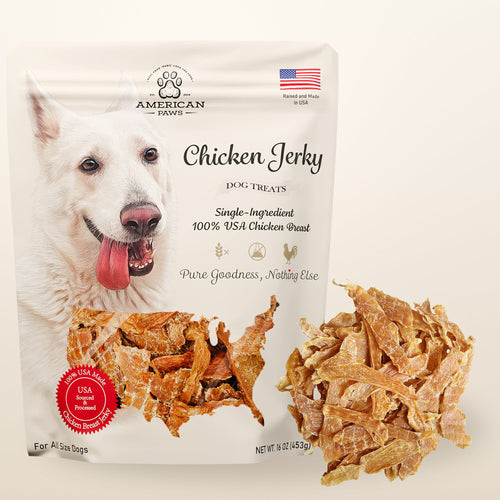
The single-ingredient whole-cut chicken breast jerky contains 100% USA chicken breast and nothing else. It is slow-dried whole rather than ground and formed, giving it a firmer, drier chew.
That simple label may be useful when a dog already tolerates chicken and the owner wants to avoid additional ingredients. The firmer texture can suit a deliberate chewer, but it may be a poor match for a dog with painful teeth, limited chewing strength, or a habit of gulping.
| Decision | Pliable 2 lb strip | Whole-cut strip |
|---|---|---|
| Texture | Soft and flexible | Firmer and drier |
| Ingredients | USA chicken plus natural glycerin | 100% USA chicken breast |
| Best handling feature | Easy to snip into small pieces | Can be torn or broken when the individual strip allows |
| Consider carefully when | The dog gulps soft food or needs a strict one-ingredient plan | The dog has dental discomfort or struggles with firm textures |

Compare both formats in the American Paws chicken jerky collection. Start with your dog’s chewing behavior and ingredient needs, then choose the strip that is easiest to serve responsibly.
Chicken jerky safety for small dogs
Supervise, separate fast eaters, and remove awkward pieces
Stay close enough to see the entire piece being handled. Give one prepared piece at a time, keep fresh water available, and do not offer jerky during rough play. If another pet’s presence makes your dog rush, serve animals separately.
Remove a piece that becomes difficult to manage, lands on a dirty surface, or develops an odd sharp edge. Store the rest sealed and dry according to the package directions. Discard jerky with mold, an off odor, unexpected moisture, or damaged packaging.
Know the choking and swallowing warning signs
Repeated coughing, gagging, pawing at the mouth, excessive distress, or difficulty swallowing means the serving should stop. Inability to breathe, blue or gray gums, collapse, or severe distress is an emergency that needs immediate veterinary help. Do not rely on an internet article to manage an active choking event; ask your veterinarian about pet first-aid training before an emergency happens.
Cutting jerky smaller can make portions easier to handle, but no size removes every risk. Supervision and the dog’s actual behavior remain the final checks.
Chicken intolerance, dental pain, and prescribed diets
A short ingredient list does not make chicken suitable for a dog with a known chicken allergy. Stop the new treat and contact your veterinarian if it is followed by persistent vomiting, diarrhea, itching, swelling, or another concerning reaction. Breathing trouble, facial swelling, collapse, or severe distress requires urgent care.
Dogs with missing, loose, fractured, or painful teeth; coughing or swallowing difficulty; pancreatitis; another medical condition; or a veterinary-prescribed diet need an individualized recommendation. A softer strip may reduce chewing effort, but it should not mask a new mouth or swallowing problem.
How much chicken jerky can a small dog have?
Use calories, not a universal strip count
A practical general ceiling is to keep all treats and extras at no more than about 10% of daily calories while complete and balanced food supplies at least the other 90%. The American Kennel Club’s calorie-based treat guidance emphasizes that the rule applies to calories, not the visible number or volume of pieces.
That matters especially for small dogs. There is no safe answer such as “one strip per day,” because dogs differ in weight, body condition, age, activity, main diet, and health, while natural strips vary in size. Read the calorie statement on the package in your hand and ask your veterinarian for the dog’s individual daily target when precision matters.
Count training pieces, chews, toppers, and table extras together
Start with the total jerky portion, then divide it. If one strip becomes ten rewards, record one strip’s calories, not ten imaginary low-calorie pieces. Combine that amount with every other extra given by family members during the day.
For the full calculation method, use our guide to calculate a chicken jerky portion. The sensible small-dog application is simple: begin below the maximum, make every reward purposeful, and reduce the amount if the dog’s regular meals or body condition are being affected.
A five-step serving routine for toy and small breeds
- Check the label. Confirm chicken and every added ingredient fit the dog’s known diet.
- Choose the texture. Pick pliable or firm based on chewing ability, not on a blanket claim that one is safer.
- Set the amount. Take out the planned daily or session portion and put the main bag away.
- Prepare and test. Make one short piece, offer it calmly, and watch the complete chew and swallow.
- Adjust or stop. Make later pieces smaller only if that improves handling; switch formats or ask a veterinarian if the dog still struggles.
This routine turns portion control and supervision into habits instead of decisions made while an excited dog is waiting.
How this choice differs from broader small-dog and senior-dog guides
This article is specifically about chicken jerky texture, sizing, and serving for small mouths. For comparisons with freeze-dried treats, liver, and other formats, read our broader guide to how to choose dog treats for small dogs.
Age creates a different decision. A small senior dog may need both size-specific handling and an age-related texture assessment, while a healthy young small dog may simply need a modest portion. Our guide to choosing chicken jerky for senior dogs covers changing teeth, chewing comfort, and older-dog considerations without assuming every senior needs soft food.
If you are still deciding whether jerky fits your reward routine at all, the cluster pillar explains why chicken jerky can be a good dog treat, including its real-meat format and practical uses.
Frequently asked questions
Can small dogs eat chicken jerky?
Many can when they tolerate chicken and the jerky is prepared in a manageable piece. Choose dog-formulated jerky, supervise, count the calories, and use another format if the dog gulps or struggles.
Is soft chicken jerky safer for small dogs?
Not automatically. A flexible strip may be easier to snip and chew, but a dog can still gulp it. Firm whole-cut jerky may suit a careful chewer. The safer practical choice is the texture the individual can handle under supervision.
How small should I cut chicken jerky?
There is no universal dimension. Use the smallest rewarding piece the dog can take, reposition, chew, and swallow comfortably. Watch the first piece and stop if coughing, gagging, repeated dropping, or difficulty occurs.
Can a small dog eat a whole jerky strip?
A whole natural strip is often larger than a sensible small-dog reward and can be awkward to handle. Portion it before serving instead of using the package piece as the serving unit.
What if my dog gulps instead of chewing?
Stop offering that piece or format. Smaller pieces do not always correct gulping, so choose another reward and ask your veterinarian for guidance if swallowing behavior concerns you.
Pick the strip your small dog can handle comfortably
The right chicken jerky for a small dog is not simply the softest strip or the shortest ingredient list. It is a verified product whose texture, prepared size, ingredients, and calories fit one dog’s mouth, behavior, and diet.
Choose pliable all-natural jerky strips when easy snipping is the priority, or firmer single-ingredient whole-cut jerky for a comfortable, deliberate chewer. Browse all chicken jerky options, or compare all American Paws dog treats when another texture would be a better fit. Prepare the piece first, supervise the serving, and let your dog’s comfort—not the size of the bag—make the final decision.