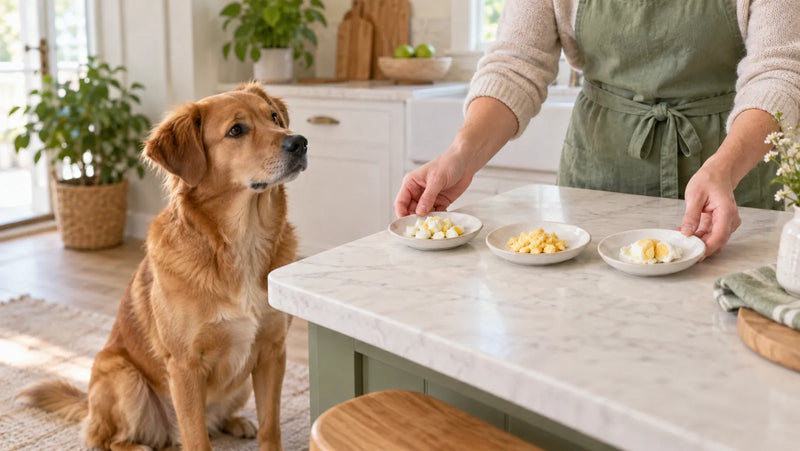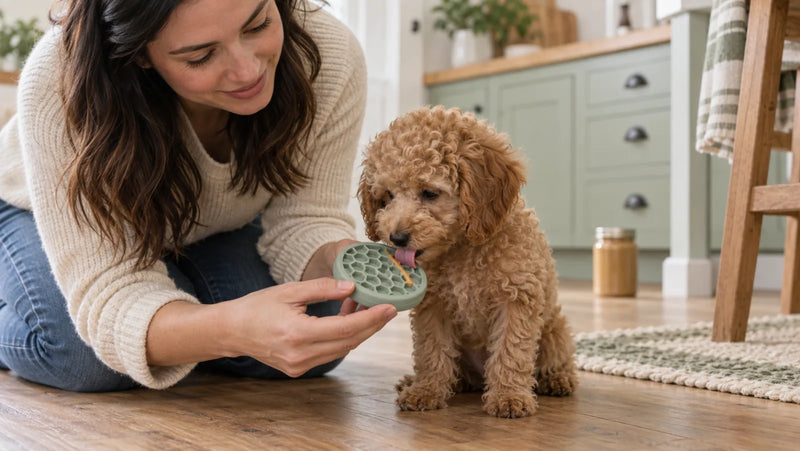

Chicken hearts for puppies can be an occasional treat after a healthy puppy is fully weaned, eating a complete growth diet reliably, and cleared for treats. Around eight weeks is a common earliest checkpoint rather than a guarantee. Start with one crumb-size piece of plain fully cooked heart, introduce no other new food that day, and keep every treat together within the puppy’s veterinarian-confirmed calorie plan.
Age is only one part of readiness. Expected adult size, current body weight, chewing and swallowing behavior, stomach stability, medical history, and the exact heart format all matter. A dry whole dehydrated heart and a tiny piece of moist cooked heart should never be treated as the same serving unit.
Chicken Hearts for Puppies: The Short Answer
| Question | Practical answer |
|---|---|
| Can puppies eat chicken hearts? | Many fully weaned, healthy puppies that tolerate chicken can try one tiny plain cooked piece |
| What age? | Often around eight weeks or later, after reliable solid-food intake; age alone does not create clearance |
| How much first? | One crumb or minced piece smaller than the puppy’s usual kibble, then stop for the day and observe |
| Raw, cooked, or dehydrated? | Plain fully cooked is the conservative home format; raw adds pathogen risk, and dehydrated pieces need extra size and calorie control |
| Can heart replace puppy food? | No; heart is a supplemental treat, while complete growth food supplies the required nutrient balance |
The adult guide to chicken-heart benefits and feeding explains the ingredient’s broader nutrition. Puppy use needs a narrower rule: the growth diet stays primary, the first portion stays extremely small, and the individual puppy determines whether the food continues.
What Age Can Puppies Eat Chicken Hearts?
Do not offer chicken-heart treats to a nursing puppy or use them to accelerate weaning. Milk, a veterinarian-directed milk replacer when needed, and a planned transition to complete puppy food serve different nutritional jobs. The heart belongs only after the puppy is fully eating solid food and maintaining normal appetite and stool.
AAFCO’s guide to selecting pet food explains that growth is a distinct life stage with different nutrient quantities and ratios and that treats are generally fed in addition to a complete diet. The nutritional adequacy statement on the main food—not the appeal of one ingredient—shows whether it is intended for puppy growth.
Around eight weeks is a useful conversation point because many puppies are fully weaned by then and moving to new homes. It is not a deadline to add treats. A puppy with diarrhea, vomiting, poor appetite, low weight, recent illness, a prescription diet, a vaccine-day stomach upset, or a stressful food transition should wait and receive veterinary guidance.
Breed size changes the duration of rapid growth. AAHA’s canine life-stage framework describes puppyhood as birth through the end of rapid growth—roughly six to nine months, with variation by breed and size. Large and giant breeds may need growth-focused feeding for longer, so a calendar month should never replace an individual nutrition plan.
Puppy Readiness and First-Portion Table
| Stage or situation | Chicken-heart decision | First portion or next step |
|---|---|---|
| Nursing or not fully weaned | Wait | Use the veterinarian’s milk-to-complete-food transition; no heart treat |
| Fully weaned, often around 8 weeks, but newly moved or changing food | Stabilize the main diet first | Use familiar puppy food as rewards until appetite and stool are reliable |
| Fully weaned, healthy, settled, and already tolerates chicken | A first trial may fit | One plain cooked crumb smaller than the usual kibble; no other new food that day |
| First trial tolerated | Use only inside the daily extras plan | Divide a measured allowance into many tiny rewards rather than offering a whole heart |
| Large- or giant-breed puppy in rapid growth | Keep growth-food precision first | Ask the veterinary team how any organ-meat treat fits the complete diet |
| Medical, diet, chewing, or swallowing concern | Pause | Obtain case-specific veterinary guidance before testing the ingredient or texture |
This is a readiness table, not a prescription. Two puppies of the same age can have different calorie needs and very different mouth size, body condition, food tolerance, and expected adult size. The correct next amount comes from the puppy’s complete diet and veterinary calorie target, not from multiplying the first crumb by age or weight.
Heart Is Working Muscle, Not a Substitute for a Growth Diet
A chicken heart is anatomically an organ and commonly grouped with giblets, but its tissue is hard-working cardiac muscle. That makes its texture and nutrient pattern different from liver. It is still an incomplete extra rather than a miniature balanced meal.
Protein is real, but complete amino-acid balance comes from puppy food
Chicken heart contains protein. Protein supplies amino acids used throughout normal growth and tissue maintenance, but one meat tissue does not provide every nutrient in the correct ratio for a growing dog. The AAHA puppy-feeding reference notes that most treats are not complete and balanced for growth and that large amounts can distort the intended nutrient balance.
Calling heart “high protein” does not make a larger portion better. Growth depends on coordinated energy, protein, fat, calcium, phosphorus, vitamins, trace minerals, and other nutrients. Let a complete puppy food do that formulation work, and use the heart only as a tiny optional reward.
Taurine is present, but heart is not a supplement or heart treatment
Animal tissues, including cardiac muscle, contain taurine. That fact is often expanded into a claim that every puppy needs chicken hearts for cardiac health. Merck Veterinary Manual’s small-animal nutrition reference explains the important species distinction: unlike dogs, cats require a dietary source of taurine.
A veterinarian investigating a diet-associated deficiency or heart condition uses the complete diet, breed and health history, examination, and appropriate testing. A variable piece of heart cannot substitute for that work or for a measured supplement prescribed by the veterinary team.
Raw vs Cooked vs Dehydrated Chicken Hearts for Puppies
| Format | Puppy-specific concern | Practical route |
|---|---|---|
| Raw | Foodborne germs and household cross-contamination; young pets are a higher-risk group | Choose a non-raw format and discuss any raw feeding plan with the veterinarian |
| Plain fully cooked | Must be cooled, minced small, kept unseasoned, and stored safely | Use one tiny piece after the thickest heart reaches 165°F |
| Dehydrated packaged heart | Dense, dry, and much larger than a puppy reward; package directions may target dogs generally | Read the exact label and divide a measured amount into puppy-size pieces |
Raw carries avoidable pathogen and household risk
FDA’s pet-food safety guidance says raw pet food poses significant health risks to pets and people because it is more likely than processed pet food to contain harmful bacteria. Raw poultry can also move germs through hands, utensils, bowls, surfaces, saliva, and stool to people and other animals.
Freezing, freeze-drying, or dehydrating a raw ingredient does not automatically eliminate every germ. Look for the word “raw” and the company’s handling directions, and ask what pathogen-control process applies. For the dog-side and household decision in depth, use the guide to raw chicken-heart safety.
Plain fully cooked is the conservative home format
FDA’s poultry-safety guidance says all poultry should reach a minimum internal temperature of 165°F and should be checked with a clean food thermometer. Use the thermometer in the thickest representative heart, transfer the cooked batch with clean utensils, cool it fully, and mince the first puppy piece.
Keep the batch plain: no onion, garlic, salt, broth powder, butter, oil, sauce, or seasoning. The detailed guide to cooking chicken hearts for dogs covers boiling, baking, heat-then-dehydrating, cooling, cutting, and cold storage. Its cooking controls apply; for a puppy, keep the portion to the crumb-size first piece described above.
Dehydrated is concentrated and must be divided for the puppy
Removing water makes a heart drier and more concentrated by weight. A whole dehydrated heart can also be dense and awkward for a small mouth. Do not use “one heart” as a stable unit across fresh, cooked, and dehydrated forms or across brands.
The current American Paws dehydrated chicken-heart dog treats page lists 100% U.S. chicken hearts with no additives or preservatives in a 4 oz resealable bag. The same page lists approximately 20 kcal per piece, and its feeding guide is written in whole hearts per day for dogs from 5 lb upward. It is a dog treat rather than complete puppy food. Check the current package, break or cut the selected amount well below a whole adult-size piece for a young puppy, and ask the veterinarian how its calories fit the growth plan.

How Much Chicken Heart Can a Puppy Have?
There is no responsible universal hearts-per-day table for puppies. Whole hearts vary in size and attached fat, cooking changes water weight, dehydration changes concentration, and a puppy’s energy needs change quickly with age, expected adult size, activity, and body condition.
Use this four-step portion method:
- Find the puppy’s daily calories. Use the amount set from the complete growth food and veterinary team, not an adult dog calorie table.
- Set the extras ceiling. The WSAVA treat guide uses no more than 10% of daily calories for treats. Treat that number as a ceiling, not a target.
- Subtract every other extra. Include training rewards, chews, toppers, table tastes, medication food, and treats from every caregiver.
- Measure the exact heart form. Use the current package calorie information or a veterinarian-approved reference for the same preparation. If the number is unavailable, ask instead of guessing from size.
The puppy-specific guide to how many treats a puppy can have per day shows how growth stage and the current food plan shape that calculation. The broader daily dog-treat allowance guide explains the shared-ceiling logic that continues into adulthood.
A useful training strategy is to reserve most repetitions for measured puppy kibble and use a few tiny heart crumbs only for harder moments. The guide to choosing puppy training treats explains why fast-to-eat size, texture, motivation, and total calories matter more than offering a large reward.
Introduce Chicken Heart One Variable at a Time
- Choose a stable day. Avoid the first day home, a main-food change, travel, vaccination-related appetite change, or an upset-stomach day.
- Pick one format. Use one crumb of plain fully cooked heart or a veterinarian-approved labeled product, not a mix of raw, cooked, and dried pieces.
- Make it smaller than the usual kibble. A tiny piece rewards just as effectively and is easier to chew and swallow.
- Offer it during a calm repetition. Hand the piece low and gently; do not toss a dense piece toward the back of the mouth.
- Stop for the day. Keep other food familiar so a reaction is easier to interpret.
- Observe appetite, stool, skin, and behavior. Contact the veterinarian for repeated vomiting or diarrhea, facial swelling, breathing trouble, marked lethargy, pain, or another concerning sign.
Do not keep retesting a suspected chicken reaction. Heart is still chicken even when the label has one ingredient. A clear label makes the exposure easier to identify; it does not make the protein allergy-safe or suitable for an elimination trial.
Heart vs Liver, Gizzard, and Green Tripe for a Puppy
Organ-style treats are not interchangeable. Heart is cardiac muscle. Liver is a metabolic and storage organ with a much more concentrated vitamin A profile. Gizzard is dense muscular digestive tissue. Green tripe is unbleached ruminant stomach tissue. Each has its own texture, nutrient pattern, food-safety questions, and product evidence.
The beef-liver-for-puppies guide covers liver-specific richness and vitamin A moderation. The green-tripe evidence and safety guide examines raw-pathogen concerns and unsupported probiotic or enzyme claims. Neither portion should be copied onto chicken heart.
For the broader map of liver, heart, gizzard, kidney, and other tissues, use the organ-meat guide for dogs. A varied label vocabulary does not create a balanced homemade puppy diet; a board-certified veterinary nutritionist should formulate any home-prepared diet that supplies a meaningful share of growth calories.
Which Puppies Should Wait or Ask the Veterinarian?
- Not fully weaned or not eating reliably: stabilize the complete growth diet first.
- Diarrhea, vomiting, poor growth, low weight, or recent illness: identify the problem before adding a new organ-meat treat.
- Chicken reaction or elimination trial: heart contains chicken protein and can disrupt the plan.
- Prescription diet or chronic disease: calories, fat, protein, minerals, and ingredients may be individually controlled.
- Pancreatitis history or prescribed low-fat plan: “high protein” does not establish a suitable fat allowance.
- Dental pain, swallowing difficulty, or gulping: dense dry heart may be the wrong texture even when minced cooked heart is easier.
- Large- or giant-breed rapid growth: protect the complete food’s energy and mineral balance and ask how extras fit.
Veterinary input is especially useful when a puppy needs many rewards for training. The solution may be dividing the measured main meal into training portions rather than adding a large volume of separate dog treats.
Frequently Asked Questions
Can an 8-week-old puppy eat chicken hearts?
An 8-week-old puppy may be able to try one tiny plain fully cooked crumb if fully weaned, healthy, settled on complete puppy food, and cleared for treats. Eight weeks is not automatic permission. Wait if appetite or stool is unstable, the puppy is underweight, or the veterinarian has set a special diet.
Can puppies eat raw chicken hearts?
Raw poultry carries foodborne-pathogen and household cross-contamination risk, and FDA says raw pet food poses significant health risks to pets and people. Plain fully cooked heart is the conservative home choice. A raw feeding plan for a puppy belongs with the veterinarian or a board-certified veterinary nutritionist.
Can puppies eat dehydrated chicken hearts?
A labeled dehydrated heart may fit some puppies, but the dry whole piece can be dense and too large. Confirm that the puppy tolerates chicken, read the exact label, cut a measured amount into very small pieces, supervise, and count the calories with all other extras.
Can a puppy have chicken heart every day?
Daily use is usually unnecessary. If heart will be a regular reward, the veterinarian should help set the amount from the puppy’s complete diet, calories, growth rate, body condition, and all other treats. Repetition does not turn a supplemental food into balanced growth nutrition.
Are chicken hearts good puppy training treats?
They can be motivating for a puppy that tolerates chicken when the heart is plain, safely prepared, and divided into tiny fast-to-eat pieces. Use measured kibble for many easy repetitions and save a few heart crumbs for higher-value moments so calories and stomach load stay controlled.
Keep the Piece Tiny and the Growth Diet Primary
The safest useful pattern is simple: wait until the puppy is fully weaned and stable on complete growth food, start with one plain cooked crumb, introduce no other new food that day, and watch the individual puppy. If heart continues, calculate it inside the same small extras allowance as every other reward.
Want a labeled chicken-heart option? Review the current American Paws dehydrated chicken-heart dog treat with the puppy’s veterinarian, then cut the approved amount into puppy-size pieces rather than using a whole heart as the serving unit. If another protein or texture fits better, compare the live labels in the American Paws dog-treat collection.